What makes a Lamborghini so special? – News

What makes a Lamborghini so special? – News

By Jaser Davari

Published: Thu 2 Mar 2023, 12:45 PM

Last updated: Thu 2 Mar 2023, 3:26 PM

When you talk about supercars, Lamborghini is a brand that can’t go unnoticed. Known for their stunning design and extraordinary performance, the cars produced by Lamborghini resonate with every car enthusiast. Perhaps, you have already heard enough about the brand and its legacy, but there’s always more to explore. In this article, we delve into the lesser-known facts about the Italian automaker and the aspects that make Lamborghini so special.


Specialities of Lamborghini

Ever since its inception, Lamborghini has substantially transformed the supercar industry. With their out-of-the-box designs and raw performance, the car has set an example for other supercar manufacturers.

There are four major components that we discuss that make a Lamborghini so special. Before we dive into all the specialities of this flamboyant Italian performance car, you can experience the immense thrill of driving one by renting a Lamborghini in Dubai.

● Engine

● Design

● Interior

● Brand prestige

Engine

Lambo engines are crafted to provide maximum performance using innovative technologies, variable valve timing, overhead camshafts and direct injection. The engines are designed to be incredibly powerful and are available in naturally aspirated or turbocharged versions.

The advanced lightweight materials and fuel delivery systems ensure maximum power output. Lamborghini engines are generally exclusive and are never used in other cars, which makes them even more alluring and appealing.

Design

Unique eye-catchy designs of Lamborghini make them recognisable from a distance. The meticulous design of these cars makes them visually innovative and stunning. Aventador and Huracan are the two most liked Lamborghini cars in terms of design.

The bold lines, sharp angles, and futuristic design make these cars stand out from other supercars.

Active aerodynamics

Lamborghini has developed advanced aerodynamic technology that has been used in many modern designs. The technology includes vents, air intake, and diffusers that work together to provide maximum stability and performance. Other aerodynamic elements include rear wings, flaps and spoilers that are adjusted according to the driving conditions.

The best example of Lamborghini’s active aerodynamics is Huaracan EVO, having flaps on both the front and rear wings. These flaps improve traction control providing a smoother and more controlled driving experience.

Interior

The interior of Lamborghinis is designed to put the driver in control. Primary controls of the car are centred around the driver’s seat and angled toward the driver at the best possible position. Like the exterior, the interior of a Lamborghini is also very aggressive, with sharp and bold lines paired with contrasting colours.

Modern Lamborghinis use an advanced entertainment system with features such as smartphone integration, voice recognition, a large touchscreen display and much more.

Brand prestige

Lamborghini was officially founded in 1963. Before that, the company was involved in manufacturing tractors. The owner of the Lamborghini,

Ferruccio owned many sports cars even though he was not interested in racing cars. The dissatisfaction with the cars he owned made him produce a better sports car.

Lamborghini is known for producing high-end supercars, from the very first model 350 GT to the newest one, Lamborghini Aventador Ultimate. There are a total of 35 Lamborghini models in 60 years.

Ad personal programme

When we talk about customisability, there are very few supercars that offer full customisation. Lamborghini offers customisation of all in-production models, like the Huracan and Aventador, from the interior to the exterior, you can spec anything you want as per your liking.

A client can have a bespoke Lamborghini but will have to pay extra for these upgrades. For complex customisations, it can take several months to complete, while customers are kept informed about the progress. No doubt, many other cars allow customisation, but Lamborghini has taken it to a whole new level.

Interesting facts about Lamborghini

Lamborghini is one of the most successful supercar brands, but behind its success, there are many interesting facts that you would be amazed to know.

First Lamborghini

The very first Lamborghini 350 GT had to be showcased at the 1963 Turin auto show. The design was ready, but the company failed to place the engine in it perfectly, as it was designed in mere four months.

But Ferruccio decided to showcase the car without an engine. The car’s design was highly appreciated and just two months after its debut, production of the car officially commenced.

Model name

As Ferruccio was a bullfighting admirer, most of the Lamborghini models are named after actual fighting bulls. Each name of Lamborghini has a history associated with it.

● Miura and Isrelo were named after the Miura family and the line of its Spanish fighting bulls.

● Urraco and Jalpa were named after a famous breed of bulls.

● Diablo was named after a bull from the 1860s.

● Aventador was named after the bull who fought in 1993, while the Huracan fought in 1879.

Not for racing

You will be surprised to know that the Lamborghini was not made for racing, it was marketed as a high-performance grand tourer car. The high performance and handling on corners made this part of the motor racing industry. Even though Lamborghini was not meant to be a racing car brand, these cars have won many races.

Concluding word

Compared to other supercar brands, Lamborghini is almost new in the car industry but has left others behind. The high-end performance, design and comfort of these supercars make them extremely special. Drive a Lamborghini today, and imbibe the racing spirit of this extravagant Italian supercar.

Jaser Davari is a head of content at NeverStop Media.

Tesla Model 3 maintenance: what you can expect

Tesla Model 3 maintenance: what you can expect

One particular of the significant promises of electric autos is that they involve much less maintenance than a gasoline-run automobile, and hence price tag much less more than time. That’s mostly for the reason that EVs have a entire great deal fewer shifting sections. When you do not have an motor, you never have to be concerned about oil modifications, spark plugs, or exhaust programs, to name just a few illustrations.

The Tesla Model 3 is no diverse in that regard. Even though Tesla cars and trucks notoriously go through from issues like panel gaps and other manufacturing unit flaws, Tesla covers these repairs beneath guarantee, as very long as you buy the automobile from Tesla alone. After that, there are few costs associated with servicing at all. Here’s a rundown of the maintenance prices you can be expecting as a Tesla Design 3 owner.

Tesla Product 3 upkeep

Here’s a look at the conventional routine maintenance that you can expect from a Tesla Product 3.

Tire rotation

Maybe the most typical advised upkeep for a Tesla Product 3 is a tire rotation. Tesla endorses that shoppers rotate their tires each 6,250 miles, or when the change concerning front and rear tire tread depth reaches 2/32 inches or much more.

Tire rotations, thankfully, are not incredibly costly. An ordinary tire rotation should really charge you among $35 to $45, in accordance to RepairPal.

Windshield wiper substitution

For best visibility on the road, Tesla recommends replacing your windshield wipers each individual 6 months. A quality pair of windshield wipers typically prices between $20 and $50, building it most likely the least expensive-price factor of sustaining the Model 3.

Cabin air filter replacement

Upcoming up is the cabin air filter, which stops factors like pollen and dust from getting into the cabin of your car or truck. Tesla says the cabin air filter should really be replaced each and every two many years on the Model 3. A cabin air filter alternative costs concerning $60 and $200 on the Tesla Model 3.

Tesla warranty

Tesla delivers a very thorough warranty for other defects that you may operate into. In reality, the Product 3 is included by Tesla’s warranty, which lasts eight yrs or 100,000 miles — whichever will come first. As typical, the warranty won’t cover points that the driver is at fault for — but it will deal with repair and substitute of areas put in by Tesla, and that would use under typical use. This also contains battery alternative or restore, so if you have challenges with the car’s battery, Tesla will choose treatment of it, if it’s beneath guarantee.

Conclusions

As you can see, it’s effortlessly cheaper to sustain a Tesla — or any other electric powered car or truck for that matter — when compared to a fuel-run automobile. In a especially high priced 12 months of normal servicing, you may possibly commit $400, and that’s only if all of the higher than upkeep is due in the very same yr. That is significantly considerably less than other cars, which demand oil improvements and other fluids, spark plug improvements, and a lot more.

Editors’ Suggestions


U.S. auto parts supplier signs deal to buy Quebec’s Uni-Select in $2.8-billion deal

U.S. auto parts supplier signs deal to buy Quebec’s Uni-Select in $2.8-billion deal

MONTREAL — LKQ Corp. has signed a offer to buy Quebec-dependent Uni-Decide on Inc. in a about $2.8-billion deal that aims to enhance the U.S. automotive equipment supplier’s aftermarket small business amid a thriving current market.

Below the arrangement, LKQ will spend $48 for each Uni-Pick out share in funds for the aftermarket vehicle sections distributor. The buy marks a 19.2 for each cent premium above the $40.28 closing selling price of Uni-Find shares on the Toronto Inventory Exchange on Friday.

The transaction, which needs shareholder approval, also requires antitrust clearances in Canada, the U.S. and the U.K. and approval less than the Expenditure Canada Act.

LKQ chief govt Dominick Zarcone stated the offer will bolster the company’s car or truck pieces distribution and broaden its presence in Quebec.

Uni-Select’s North American operations are a enhance to LKQ’s existing footprint and will present broader product or service distribution, Zarcone explained in a information release.

In link with the offer, Chicago-centered LKQ reported it plans to market GSF Motor vehicle Parts U.K., Uni-Select’s U.K. dependent mechanical elements distribution small business.

Uni-Decide on is known for the distribution of automotive paints, industrial coatings, add-ons and other car solutions for the aftermarket, which refers to elements and providers purchased just after the first sale to the client.

Started in Boucherville in 1968, the firm has additional than 5,200 personnel, 15 distribution centres and a lot more than 400 branches. It supports in excess of 16,000 automobile mend stores and one more 4,000 shops via its fix-installer and automobile refinishing banners.

Some of its 95 company-operated retailers work underneath the names Bumper to Bumper, Auto Sections Plus and Finishmaster.

The aftermarket — everything from tire modifications to brake repair — saw revenue jump more than the earlier two years as offer chain snarls sparked by the COVID-19 pandemic pushed up prices, whilst some funds not invested on holidays went towards property and vehicle advancements.

“The automotive aftermarket remained buoyant in 2022 with a greater part of stores observing increasing product sales and anticipating even further progress through 2023,” Andrew King, taking care of associate at DesRosiers Automotive Consultants, wrote in a be aware this thirty day period.

“Nevertheless, persistent troubles surrounding components source and costs remain problematic across the business.”

Desjardins analyst Benoit Poirier reported LKQ’s offer you for Uni-Pick was “opportunistic.”

“The industry thinks there is additional upside to be captured,” he reported in a observe to traders, contrasting the $52-for each-share average target stock price with the $48-for every-share purchase rate.

“On the other hand, management and shareholders may possibly be happy with the existing supply supplied the place the inventory was about two several years back — $9.07 prior to Brian McManus’s appointment as govt chair — the probable lack of interest in the GSF asset, its compact measurement vs. the gorilla U.S. players and the attainable problem in Uni-Decide on closing a transformative deal at a sensible valuation.”

Poirier extra that he would “not be stunned” if an activist trader or huge U.S. elements player offers an additional offer, noting that the break up price is unfamiliar.

In a cell phone interview, McManus claimed the board of directors is in the long run liable for weighing the offer.

“Is a certain value at $48 greater than a better rate in the long term with the connected threats? This is the concern that a shareholder will have to inquire himself. We think the selling price is appropriate,” the CEO mentioned.

This report by The Canadian Push was initial posted Feb. 27, 2023.

Firms in this story: (TSX:UNS)

— With files from Stéphane Rolland.

Christopher Reynolds, The Canadian Press

6.7L Turbocharged Cummins Engine – Engine Builder Magazine

6.7L Turbocharged Cummins Engine – Engine Builder Magazine

Diesel of the Week is presented by

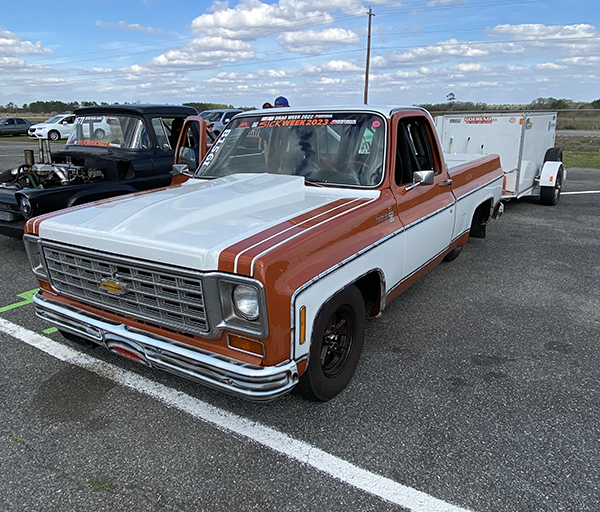
Jessie Harris’ 1975 Chevy C10 has been handed down for generations. His grandfather procured it new in ’75, ahead of offering it to Jessie’s father in ’78, and then Jessie got his fingers on it in the ’90s the moment he got his license.

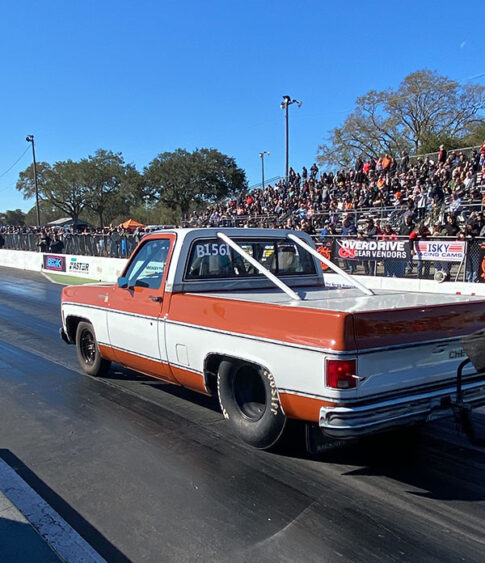
Practically 50 several years afterwards and that exact same C10 has long gone by way of really a couple of variations. In truth, the two-wheel-travel Chevy just lately acquired Swiftest Diesel honors at Ill 7 days 2023. The equipment was one particular of only a several diesels at the celebration and proved to be a stunner on the drag strip. It is been known to go away the line with 50-psi of enhance on faucet and pull the entrance wheels off the ground in route to 1.1-second 60-foot moments.

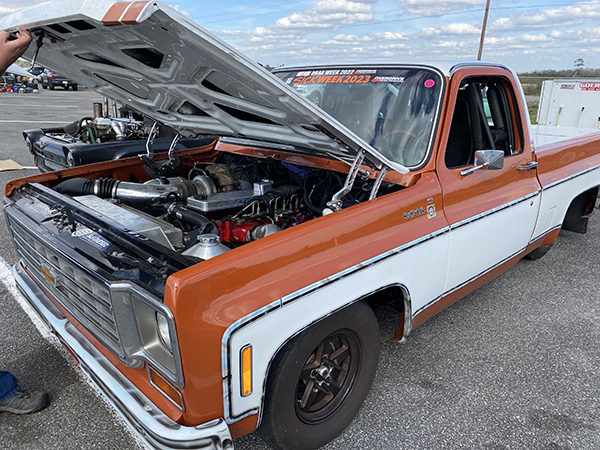
Just before Unwell 7 days, Harris’ truck could be noticed at Rocky Mountain Race Week and Very hot Rod Drag 7 days on many situations. He’s been racing the Cummins-run truck considering that 2015, but just before that, the truck was functioning gasoline, e85 or alcohol. Its diesel existence commenced with a 5.9L P-pumped 24v Cummins that Harris experienced taken off from his tow truck and dropped into the Chevy. Now, it offers a turbocharged 6.7L Cummins that turns heads anywhere it goes.

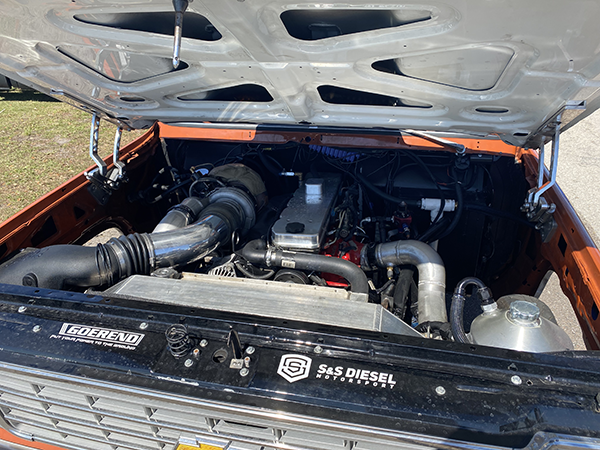
The engine is constructed close to a stock block and has a stock crankshaft, Carillo rods, and Arias pistons. The head was accomplished by Wagler Competitiveness Merchandise and has a Financial institutions consumption on it, and the camshaft is a Hamilton 188/220. It also has inventory rocker arms.

“For the turbo setup we went with a single turbocharger, an S484/96 with a DPS Turbonator VGT housing,” Harris suggests. “The fuel procedure is S&S Diesel Motorsports, it’s their 400{49e09b23eae7466ccc7574c19ebb3019301c9a11d2999feff81a3526451546a5} more than injectors and 14mm race pump. The rest of the gasoline system is Aeromotive.

“I bought the intercooler from True Road Effectiveness in Florida. I desired a significant core, and most people today didn’t want to speak about it, but they could do it. The front address is a Wagler device and it’s capable of driving 4 pumps, while I’m driving one gasoline pump and 1 dry-sump oil pump. Not lots of people today do dry sump on diesels, but my oil pan clearance pressured me to, and I don’t regret it.”

As Harris carries on to improve and alter his engine set up, the tune from his EFI Live also will get modified. For a prolonged time, he was generating just around 900 horsepower, but Harris believes that range was turned up to close to 1,200-hp through Sick Week.

The target for Sick Week was to get underneath 8.70 – sadly that did not come about, but Harris characteristics that to turning up the motor too quickly. The engine tune is ideal where by is requirements to be, but Harris has far more work to do on the chassis to pull every little thing collectively. The top intention will be do get the truck over the 1,500-horsepower barrier.

Diesel of the Week is sponsored by AMSOIL. If you have an motor you’d like to emphasize in this sequence, please email Engine Builder Editor Greg Jones at [email protected]

My Honda Civic Feels Much Cooler With This Retro Shift Boot

My Honda Civic Feels Much Cooler With This Retro Shift Boot

Honda Civics might be the most commonly modified cars in America—there’s not much you can do with one that hasn’t been done before. But I’ve never heard of anybody backdating an eighth-gen by running an accordion-style shift boot. While small and simple, this little project put a nice twist on the cockpit’s look. And it was really fun to do.

I care about performance tuning, but my real car-customization passion is in design. Specifically, details—easter eggs, aesthetic themes, tiny pieces of personalization that seamlessly blend into a car yet elevate the vehicle’s distinctiveness. This shift boot retrofit job I did here is very much in that vein of modding.

Flip through our whole catalog of project car adventures here.

Inspiration

Most manual-transmission cars have what is basically a little leather napkin between the shift knob and center console covering the linkage—this is known as a shift boot. However, in the ’80s and early ’90s, it was common for shift boots to be rubber with hard edges and a defined shape, looking like pyramids.

This is what I’m talking about—my Nissan Z31 300ZX has the classic accordion-style shift boot. Andrew P. Collins

These accordion-style boots largely fell out of fashion when car interior design evolved to be less geometric, and I don’t think we’ve seen one as a factory feature on a car for almost 20 years.

To give my FG2 (eighth-gen two-door) Civic a more retro vibe, and for the sake of being different, I wanted to see if I could replace the napkin-style boot with an accordion one. While conceptually easy, it was actually pretty tough to find just the right boot and then work out how to mount it.

Research

Funny enough, it took me a lot of research to realize the Civic Si that came out right before mine (the EP3-chassis hatchback from the mid-’00s) actually had the part I was looking for.

My first searches for an accordion boot came up with a few results for muscle cars (those were too big), semi-trucks (way too big), and some old Nissans and Mitsubishis. Quite a few old SUVs used accordion-style boots on their 4WD and transfer case gear selector, too. I also learned that these boots sometimes can be found on tractors and other agricultural machines. I even thought about trying a boot made for an axle or steering rack, but nothing I found quite made sense dimensionally. If you’re inspired by this project and want to try something similar on another car, try some of the things I just mentioned as search terms to get your research started.

I guess if money is no object you could get one custom-molded, but I can’t imagine that’d be worth the effort for anyone. Speaking of expensive though, at least one semi-recent Singer Porsche has an accordion-style shift boot. So clearly I’m not the only person who’s still into them. I wonder where that one came from … would they admit it if they lifted it from some old tractor?

I feel validated in my love of accordion shift boots knowing Singer has used at least one, as seen here in a recent factory tour from Top Gear. Top Gear/YouTube screenshot

At any rate, most of the accordion boots I was finding were square-shaped at the bottom, and my Civic’s plastic shifter bezel (the little piece that frames the boot) has a circular hole. I considered trying to make my own bezel or doing away with it entirely, but before I could figure out how to do that I found the obvious answer for the boot I needed I should have thought of from the beginning: The stock shift boot from the EP3 Civic that I mentioned earlier!

The EP3 Civic isn’t remembered as one of the better-performing Hondas, but I really like the look of it. Image made from Honda press photo and parts catalog

It’s accordion-style, it’s round at the bottom, and it’s a factory Honda part. Heck, it’s even a factory Civic Si part—good odds for compatibility in both dimensions and vibes. Later I learned that the manual-shift Honda Element used something very similar, which probably would have worked too.

Unfortunately for me in this particular situation, the EP3 and Element have atypical shifter placement. Instead of coming straight out of the center console like most cars, they protrude from the dashboard at an unusual angle. This was the only thing that made me skeptical about fitment. “But it’s rubber,” I said to Bramble the dog, who was sleeping under my desk while I surfed eBay. “Surely it’ll just bend to the orientation I need.”

Development

I got one, Honda part number 77275-S6A-G04ZB, from some dude in Miami who thankfully included the little plastic retaining frame that goes on the bottom—I couldn’t find this plastic piece listed Honda’s parts catalog, but it became essential to the project so I’m glad I had one. The eBay seller also sent me the chrome outer trim piece (part 77298-S5T-G01ZB) which would have gone on top of the boot on the EP3’s dashboard, but I didn’t end up using it.

I could tell right away it’d be possible to pop this in—the sizing was so close! Andrew P. Collins

Once I had the boot, I fiddled with a few different methods of test-fitting while Bramble climbed into the back of the car and slept. Straight away I could see that the sizing was pretty much perfect—I was stoked! The boot was clearly designed to rest at the EP3’s odd shifter angle, but as I played with it I was confident it wouldn’t mind being bent a little.

With the size and shape confirmed as viable, I began to realize the most challenging aspect of this project would be getting it to attach to my car’s console without popping out when I changed gears.

The EP3 housing didn’t quite work. Andrew P. Collins

After removing my Skunk2 shift knob, cutting a cable tie that held the standard leather boot at the bottom of the shift knob, and pulling up the stock shift boot, I realized that the leather was stapled to a plastic retention frame which was then screwed into the console bezel with four Torx screws. With the screws out, the plastic bezel (plastic thing that visually frames the shift boot, has the big circular hole) came free from the stock boot and its plastic frame.

I pulled the staples and compared the FG2 boot frame with the EP3 one. The sizes were similar, but the shapes … not so much. Namely, the EP3 unit only had three screw holes for attaching to the bezel. Hmm.

First I thought I’d use the plastic under-frame from my car’s normal shift boot, knowing the shifter doesn’t run into that. But I couldn’t make it work — the rubber boot just wouldn’t fit nicely over the plastic piece made to go with the leather one.

Next, I tried the EP3 boot with the EP3 frame and my car’s stock bezel, but that didn’t quite work either. The shifter itself was bumping into it and that was completely unacceptable. Eighth-gen Civic transmissions are fragile enough as it is, no way could I be missing gears because of some stupid little rubber doohickey.

Then, I decided to adapt the EP3 boot frame by cutting it and trimming it. This version fit together nicely and looked great sitting static, but as soon as I shifted, the whole console came apart. I needed to figure out how to attach the new boot and modified new frame to the car’s existing shifter bezel without disrupting the little clips that hold it to the console.

Intermission—Bramble break. Yep, this is where she goes whenever I’m working on the car interior. Andrew P. Collins

I rummaged around my magical miscellaneous hardware bin and struck pay dirt, finding some metal strips with holes in them that were firm but malleable in my vice. I cut them down and turned them into short little fingers; I bent them to clutch the shift boot and frame to the console bezel, and then screwed them into the bezel itself using the screws and threaded holes that had previously held the stock shift boot.

I’m embarrassed to say I lost my pictures of this critical step and it’s way too cold out to take the console apart again right now. But what you need to know if you’re doing something similar: Have some sort of way for your shift boot to firmly attach to a frame that firmly attaches to the console bezel. Or, if your bezel is shaped in such a way that allows for it, affix it directly to the bezel. You need something stronger than just gravity, though.

Very close, but needs a lot of cleaning up. Andrew P. Collins

A test ride confirmed about 97{49e09b23eae7466ccc7574c19ebb3019301c9a11d2999feff81a3526451546a5} of perfection on fitment. With the EP3 boot and modified EP3 boot frame in place, the FG2 bezel doesn’t lock in as perfectly flat as it did with the stock boot—it’s like it doesn’t quite make it over the plastic lip it sits on. But it doesn’t move, it doesn’t interrupt shifter action, and best of all the minor misalignment is not visible from the driver’s seat.

Finishing Touches

Before screwing my shift knob back down and calling this job done, there was one more finishing touch required—a shift boot collar. That’s exactly what it sounds like: A little retention piece that holds the top of the boot neatly in place and mates up to the shift knob.

The EP3 boot I got on eBay didn’t come with the factory one, and I wasn’t crazy about the stock unit’s look anyway (it’s chrome, as I’d seen in pictures) so I pawed through the plentiful aftermarket options. Accordion shift boots might be rare, but custom boots and knobs are quite common so I had plenty of custom boot collars online to pick from.

I settled on this unit from a company called Acuity that specializes in Honda tuning products because I really liked the satin red finish. Once it arrived I was blown away—the packaging was gorgeous, and the company even had a super-clear installation video I watched (not that I needed to; the only thing easier to install than this would be a floor mat).

To install it, you screw on a little metal piece to the threaded shifter, set it at the height you want your shift knob (this helps you orient your knob correctly if it has gear position graphics on it like mine) then the collar through the small opening at the top of the boot, the boot attaches to the collar with a simple super-thin cable tie that Acuity included in its package and the collar snaps onto the small metal piece with a satisfying click.

I mean come on, how slick is that? I upgraded (removed) my seat covers too, and you’ll also be hearing about those amazing CocoMats floor mats soon. Andrew P. Collins

With my Skunk2 knob screwed back on, we can call this iteration of this project complete.

Project Pieces

The Drive and its partners may earn a commission if you purchase a product through one of our links. Read more about that here.

Steps

  • Research parts, dimensions, potential compatibilities
  • Dismantle stock shift boot and retention
  • Test-fit custom boot, identify weak points
  • Fabricate custom boot retention
  • Re-install and let it ride

Parts

Tools

  • Husky folding Torx radial tool ($13.99 on Amazon)
  • Chicago Electric rotary tool ($24.99 on Harbor Freight; it’s a knock-off Dremel)
  • Tin snips aka metal-cutting scissors ($14.05 on Amazon for a nice-looking Irwin unit)
  • Cable ties aka ZipTies ($11.86 on Amazon for a nice set of low-profile ones, which you’ll want for snugging a shift boot up to a boot collar)
  • Hack saw blade (suboptimal for plastic, but we got it done)

Team

  • No helpers needed, just Bramble the dog doing supervisor duty

Next Moves

I know that was a lot of words about a minor mod, but I hope you appreciated the combination of art, science, and shadetree engineering in this little project. There are bigger Civic write-ups coming including suspension and engine computer tuning.

Directly related to this project you just read about, I’ll share some more ways the car’s being cosmetically backdated and more impressions on some new Acuity products including the company’s brand new eighth-gen Civic short-throw shifter and shifter cable bushings.

The Pros and Cons of Turo

The Pros and Cons of Turo

Turo is a peer-to-peer car sharing platform that allows car owners to rent out their own cars to regular people. Consider it a sort of Airbnb for cars.

Given high rental car prices and often limited rental car availability, alternative rental car services like Turo can be a lifesaver. After all, skyrocketing rental car prices became one of the biggest pandemic-era travel stories as they hit record highs in July 2021.

The story of rental cars experiencing massive price increases since the pandemic continues. According to the U.S. Bureau of Labor Statistics, January 2023 car rental prices were up 36{49e09b23eae7466ccc7574c19ebb3019301c9a11d2999feff81a3526451546a5} versus January 2020, the last comparable month before COVID lockdowns in the U.S.

Peer-to-peer car sharing platforms, meanwhile, have continued to grow in popularity. The global car sharing market surpassed $2 billion in value in 2020 and is expected to grow 20{49e09b23eae7466ccc7574c19ebb3019301c9a11d2999feff81a3526451546a5} annually from 2021 to 2027, acccording to July 2021 data from market researcher Global Market Insights.

But while Turo can provide an excellent rental car alternative, it’s not necessarily better. Here are some of the times you might consider booking with Turo, and what to look out for.

When you find lower prices on Turo

Traditional car rental prices are especially high compared to pre-pandemic times, but Turo prices are more variable. Sometimes they can be cheaper than traditional rental cars because car owners set the prices.

A car owner who now works from home and has minimal need for a car during the week might be inclined to make it available on Turo at a low price to make some extra cash or even to get some mileage out of a car that’s otherwise sitting idle.

Many owners offer discounts for longer trips, and some offer discounts to guests who book at least a week in advance.

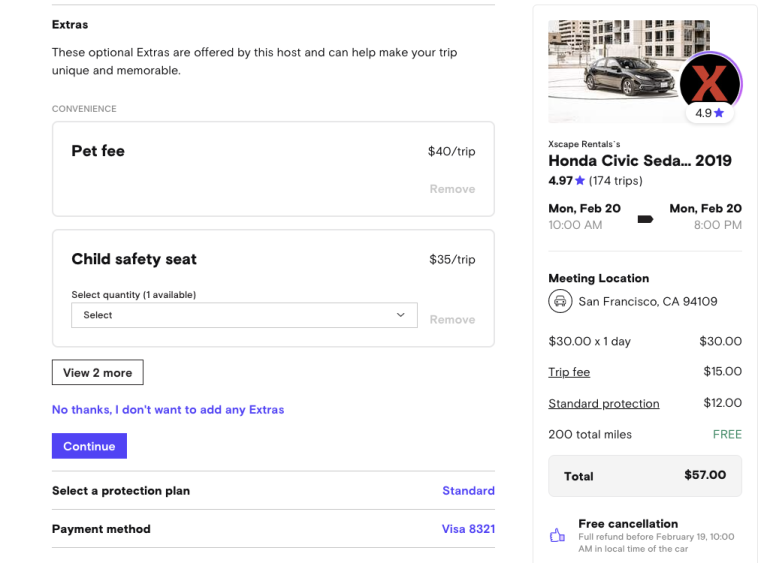
The total cost to rent on Turo might balloon once extra fees kick in.

A 10-hour rental advertised at $30 per day can easily become twice that. In this example, there’s a mandatory $15 trip fee. Then, Turo adds standard protection for $12 by default (though you can decline damage protection). You might include extras such as a pet fee ($40), child safety seat ($35), unlimited mileage ($80) or prepaid refuel ($75).

Here are some examples of Turo fees you may be on the hook for before checking out:

  • Turo trip fee. Turo adds a trip fee at checkout that goes to Turo (not the owner). Fees vary, but in the U.S., trip fees range from 2.5{49e09b23eae7466ccc7574c19ebb3019301c9a11d2999feff81a3526451546a5} to 100{49e09b23eae7466ccc7574c19ebb3019301c9a11d2999feff81a3526451546a5} of the overall price. 

  • Turo young driver fee. Folks under 24 owe a young driver fee (a minimum of $50 per day if under 21 or $30 per day if under 25 in the U.S.).

  • Miscellaneous extras. You may also owe other fees including airport fees, pickup or return fees, and optional extras like unlimited mileage (many rentals have a mileage cap).

And the fees might not end there, adding to why Turo could be wrong for folks anxious about potentially unknown costs.

  • Reimbursement bills. Hosts can send renters a reimbursement invoice for fuel replacement, distance overages, tickets and tolls, if applicable. 

  • Turo cleaning fees. If you return a car in a condition that violates Turo’s cleaning and disinfection policy, the host can report the issue to the company. If Turo sides with the host, you’ll owe $150 for the cleaning violation plus a 3{49e09b23eae7466ccc7574c19ebb3019301c9a11d2999feff81a3526451546a5} processing fee.

(Photo courtesy of Turo)

Turo explicitly says that renters “aren’t expected to clean or disinfect the car before returning it,” but there’s a gray area between what Turo considers normal wear and tear versus what teeters into violation territory.

“Significant amounts of pet hair” are a violation, as are “major stains or residue,” but “minor food or beverage spills” are OK.

Plenty of renters have documented negative experiences of receiving violation penalties they felt were unjustified, leading to back and forths with customer service to get those fees removed — or just paying the fine.

If you don’t rely on car rental coverage through a credit card

Turo offers three optional protection plans at an additional cost, each with increasingly more insurance coverage: a minimum, standard and premier plan.

Depending on the level of add-on insurance from Turo selected, prices in the U.S. start as low as $10 per rental day. It’s pretty easy to compare and add plans at checkout.

You can decline protection, but you (or possibly your own personal insurance company, if covered) are responsible for all costs related to physical, mechanical, and interior damage, plus administrative claims fees and appraisal costs.

When renting on Turo, don’t assume your personal auto insurance policy or credit card coverage works in the same way it applies to traditional rental cars.

“Turo is not a rental car company,” according to a post on Turo’s site. “We’re a peer-to-peer car-sharing platform, so credit card companies may provide no coverage for a car booked through Turo.”

If you can pay for your rental car upfront

Turo has a generous cancellation policy, allowing you to cancel free of charge up to 24 hours before the trip starts. Trips canceled within 24 hours of the start time are typically entitled to a partial refund.

Refunds are issued immediately, though it can take three to five business days to receive the money.

While Turo’s cancellation policy is relatively generous, you still must pay upfront.

In contrast, most rental car companies allow payment at the counter. That’s convenient because if your travel plans change and you can no longer rent the car, you likely won’t be on the hook for a rental car reservation you didn’t show up for (though some do charge a no-show fee).

If Turo is more convenient to your destination

Turo operates in the U.S., Australia, the U.K. and Canada.

What’s unique about Turo is the range of places you’ll find the vehicles. Traditional rental car companies typically operate in places with a lot of tourists, such as airports, downtowns and hotels. But with Turo, you could very well find a car available from the home next door.

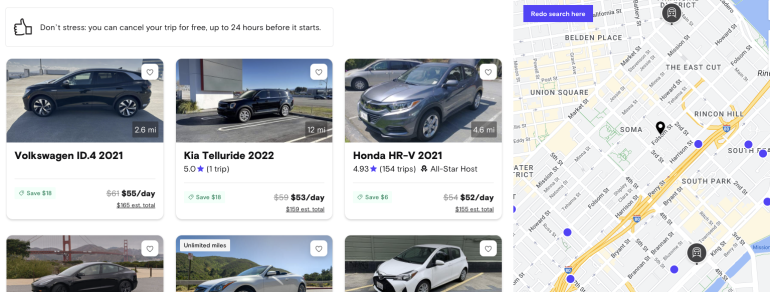
The map’s purple dots indicate available vehicles. You might find one in a location far more convenient than the nearest traditional rental car.

That’s convenient for someone who is usually car-free but wants to rent one every once in a while from a neighbor. Travelers who want a car only for part of their trip might skip the airport rental car and rent a Turo nearby for the days they need it.

But Turo isn’t available in every city. While it’s now available in all 50 states, it wasn’t until June 2022 that Turo launched in New York state. And within each state, Turo is still expanding. Availability is largely contingent upon whether a host is willing to post their car for rent. 

If you need special pickup and drop-off

When renting from many rental car companies, you’re tied to their operating hours. That’s annoying if your flight lands at 9 p.m. but the rental car company closes at 8.

Many Turo rentals, however, are available for drop-off and pickup 24/7 because of a built-in service called Turo Go. Turo Go allows renters to unlock cars directly from the Turo app, thus never needing to meet the host in person.

Other hosts prefer in-person exchanges. The owner might pick you up at the airport and drive you to your hotel before handing over the keys (typically for an additional fee, though some hosts offer the service for free).

Turo’s delivery service can be especially convenient if you want the car for only a few days or a few hours. 

While the range of pickup options can certainly be a pro, it also adds layers of complication — and it means your next Turo experience won’t be exactly like your last.

Read the pickup and drop-off rules carefully, as they vary by owner. Some cars are parked in facilities requiring a fee to exit. While Turo requires hosts to disclose such fees in their vehicle listing, it’s still one more annoying cost.

While Turo Go can certainly be convenient, you must have Wi-Fi or cellular data to unlock the car at the start of the trip. And you won’t have in-person customer support, which might pose challenges if you run into any problems upon pickup.

For one-way rentals, it’s tricky. You’re not able to book one location for pickup and a different location for return. 

🤓Nerdy Tip

There is a one-way rental workaround where you can request to change your pickup or drop-off location once the trip is booked, but you’d have to work that out with the host — and it’s not guaranteed they’ll accept.

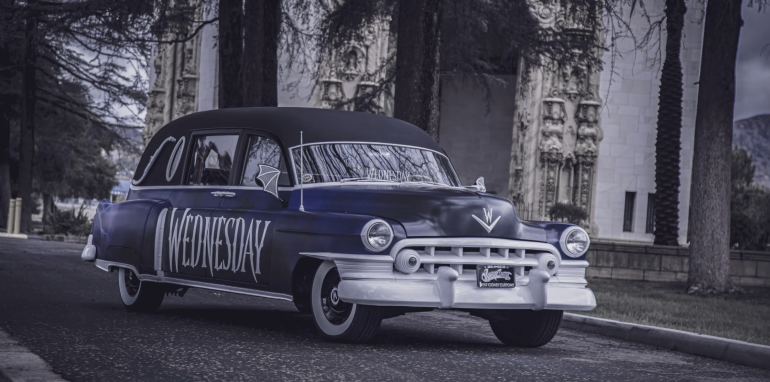
In a promotion for Netflix’s “Wednesday,” Turo once offered a hearse for rent in Los Angeles. (Photo courtesy of Turo)

Turo can provide myriad benefits. Especially in big cities, you might find a car in far more convenient locations. Turo Go enables pickup and drop-off at any hour, so you’re not constrained by rental car companies’ operating hours. 

Because much of the rental price goes directly back to the car’s owner, more money stays in local communities. Turo often offers a range of cars, from a tiny Smart Car to electric vehicle rentals to flashy muscle cars.

But renting on Turo also entails high variability. The experience is rarely consistent, nor are the cars (or their owners). A vehicle might have squeaky brakes, and some owners might have higher cleaning standards than others.

Sometimes it’s cheaper, but once the fees add up (and you realize your credit card car rental insurance likely won’t kick in), it’s not always as budget-friendly as you might think.

How to maximize your rewards

You want a travel credit card that prioritizes what’s important to you. Here are our picks for the best travel credit cards of 2023, including those best for: