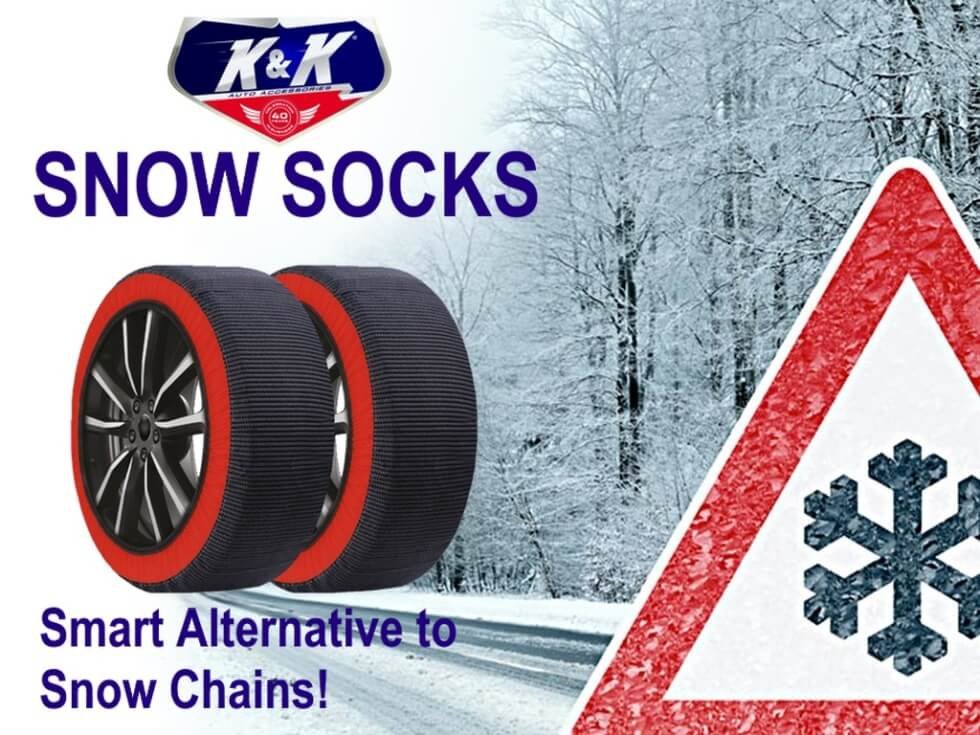
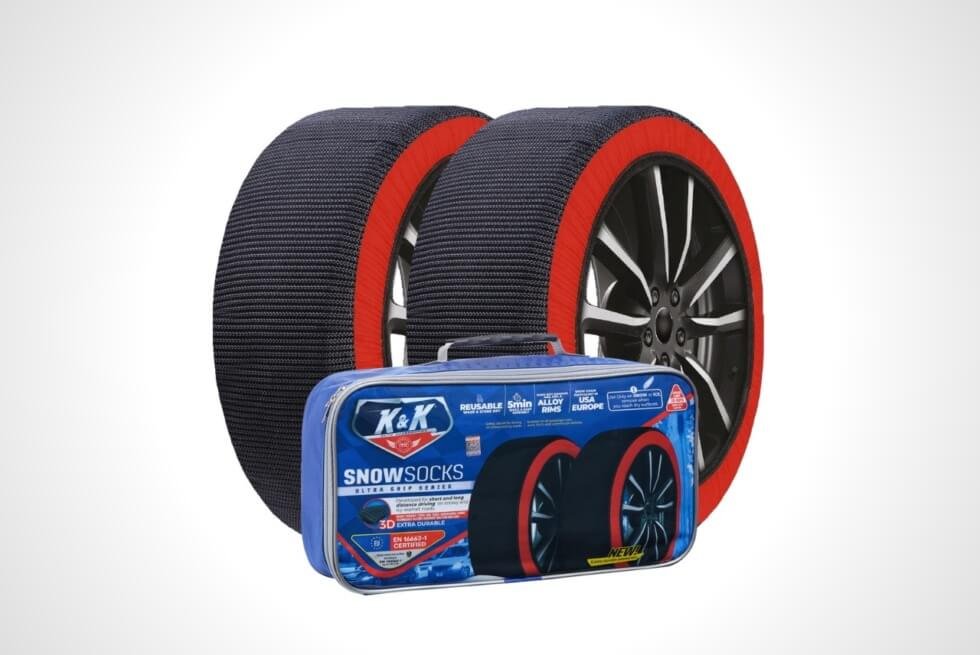
Based on the person’s outlook, the snow period can carry about a large amount of exciting or some grueling problems. The former commonly requires leisure routines, athletics, and maybe the vacations. On the flip aspect, snowfall can result in a myriad of concerns for property owners and motorists alike. The latter faces an even even larger problem when the roads come to be slippery thanks to ice buildup. Thankfully, we can equip cars with these Snow Socks Pro Collection from K&K Auto Add-ons.
Technically, there are quite a few methods you can go about it. The normal is to slap on some chains or tire traction products. One more approach, albeit a time-consuming one particular, is to swap out your normal rubber for wintertime tires. Nevertheless, it involves you to put the common kinds back in once the period adjustments. With the K&K Vehicle Add-ons Snow Socks Pro Sequence, on the other hand, the approach is easy and easy.
Why Need to You Get The Snow Socks Professional Sequence As an alternative?
As we pointed out before, classic traction aids entail time, work, and may even force your persistence to the brink of collapse in some situations. What drew us to consider the use of snow socks, in general, is the set up treatment. As long as the neighborhood legislation does not need cars to switch to winter season tires, these negative boys need to get the work accomplished.
It does not even make any difference if the vehicle is an all-wheel-travel able beast because it will continue to shed grip. Chains and cables are mainstays for the duration of winter season but can hurt your wheels and tires if they’re hooked up improperly. As a result, the K&K Auto Add-ons Snow Socks Professional Collection is an great resolution to be certain basic safety and effectiveness when the roads turn into slippery from snow or ice. Also, they’re a breeze to place on and are out there in a wide range of tire dimensions.
Layout And Engineering
The Snow Socks Pro Sequence is crafted out of lightweight but heavy-responsibility cords and “three-dimensional cloth technology” that provides optimum grip and traction in snowy disorders. While the typical variant sporting activities a white colorway with black trims, this flagship edition is in dim gray with purple for distinction. The elastic sections on the outer edges present a snug healthy as it hugs the sidewalls.
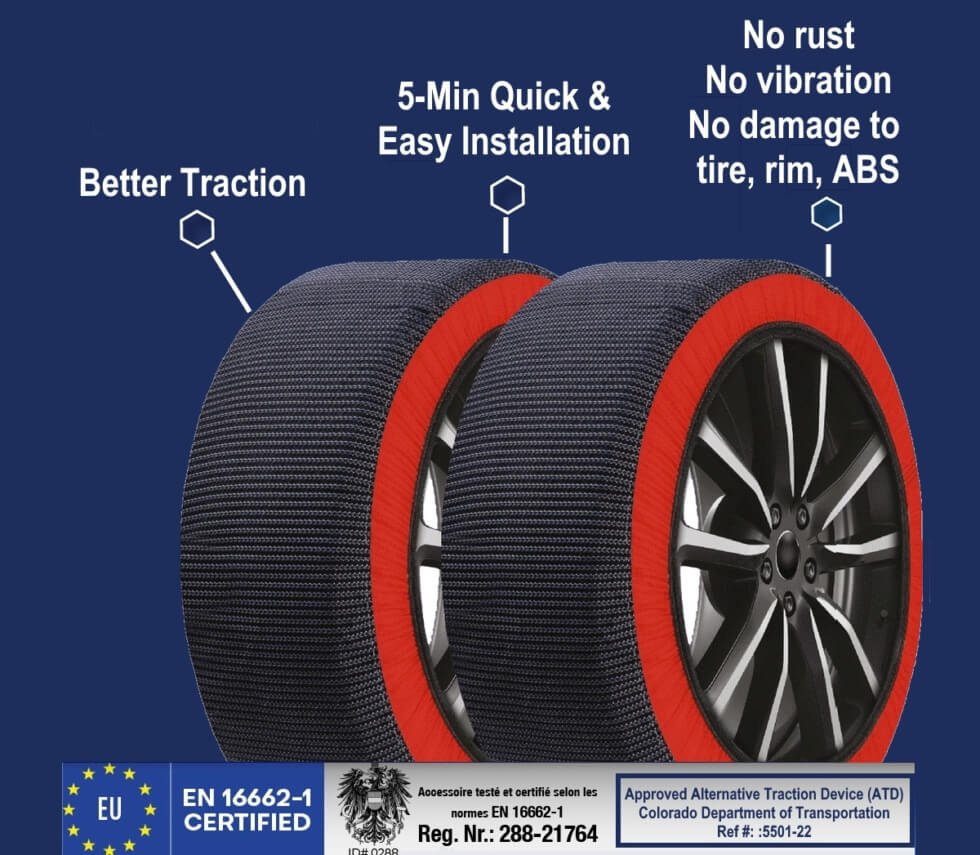
“Our snow socks are the outcome of decades of study and innovation. Our products are analyzed by impartial EU labs in Austria and accredited for their superior efficiency,” reads the shop site. The company notes that the Snow Socks Pro Series are “EN-16662-1 and DAkkS certified, Approved Alternate Traction Gadgets (ATD) for each Colorado Section of Transportation (Ref #:5501-22).” Furthermore, these are authorized snow chain alternatives in all 50 states in the U.S.A.
Serious-World Screening And Set up System
A current movie by The Quickly Lane Motor vehicle on YouTube shows the amazing distinction it will make on a Toyota 4Runner. The staff operated the mid-size SUV in 2WD and 4WD modes with and devoid of the K&K Vehicle Components product. The device admirably tried using its ideal to do an uphill climb and attempt a downhill quit with stock Dunlop all-time tires. As envisioned, it unsuccessful.
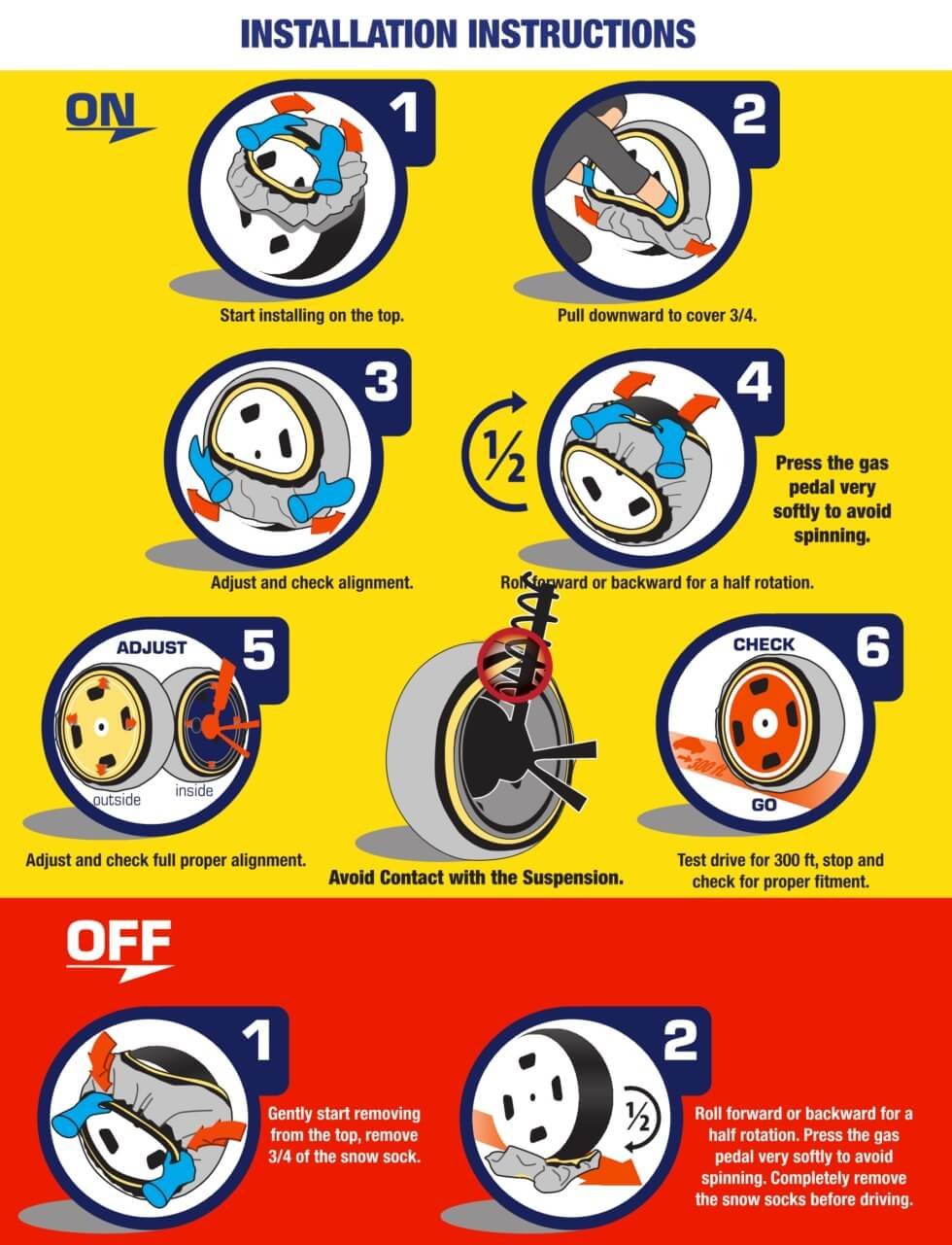
They then ran the same checks but this time with the add-ons on the rear (traction) tires. To their surprise, the effects ended up extraordinary. The offer consists of a set of two Snow Socks Professional Series, a white bag for when they are damp, a black bag for storage, and a pair of gloves. As the name states, these slip on over your vehicle’s tires like socks on your feet.
Soon after about 3/4 of the way, you have to have to push forward or backward a bit to fully deal with almost everything with the remaining little bit. The edges ought to sit just previously mentioned or a minor over the rims, but adjustments can be produced quickly together the way. Once the alignment is satisfactory, perform a check generate to examine if the traction gadgets retain their position. If so, then you are superior to go.
Preserve in thoughts to confirm the proportions of the tires to pick the suitable measurement ahead of obtain. K&K Automobile Components suggests that the products is supposed for speeds of up to 25 mph only. Similarly, these should not be utilized on mud, sleet, sand, or gravel. The maker created it specially for seamless installation and removing. Do not neglect to choose them off at the time you reach a dry highway to prevent needless problems.
Our Takeaway
Provided how snow can simply make driving unsafe when a car is unprepared, K&K Car Add-ons understands specifically what customers need to have. Even though the necessity of chains and other kinds of traction aids will not always go absent at any time before long, it’s terrific to see options like the Snow Socks Pro Series in the market. These are useful in a pinch and preferably, just consider about 5 minutes to attach or get rid of.
MONTREAL — LKQ Corp. has signed a offer to buy Quebec-dependent Uni-Decide on Inc. in a about $2.8-billion deal that aims to enhance the U.S. automotive equipment supplier’s aftermarket small business amid a thriving current market.
Below the arrangement, LKQ will spend $48 for each Uni-Pick out share in funds for the aftermarket vehicle sections distributor. The buy marks a 19.2 for each cent premium above the $40.28 closing selling price of Uni-Find shares on the Toronto Inventory Exchange on Friday.
The transaction, which needs shareholder approval, also requires antitrust clearances in Canada, the U.S. and the U.K. and approval less than the Expenditure Canada Act.
LKQ chief govt Dominick Zarcone stated the offer will bolster the company’s car or truck pieces distribution and broaden its presence in Quebec.
Uni-Select’s North American operations are a enhance to LKQ’s existing footprint and will present broader product or service distribution, Zarcone explained in a information release.
In link with the offer, Chicago-centered LKQ reported it plans to market GSF Motor vehicle Parts U.K., Uni-Select’s U.K. dependent mechanical elements distribution small business.
Uni-Decide on is known for the distribution of automotive paints, industrial coatings, add-ons and other car solutions for the aftermarket, which refers to elements and providers purchased just after the first sale to the client.
Started in Boucherville in 1968, the firm has additional than 5,200 personnel, 15 distribution centres and a lot more than 400 branches. It supports in excess of 16,000 automobile mend stores and one more 4,000 shops via its fix-installer and automobile refinishing banners.
Some of its 95 company-operated retailers work underneath the names Bumper to Bumper, Auto Sections Plus and Finishmaster.
The aftermarket — everything from tire modifications to brake repair — saw revenue jump more than the earlier two years as offer chain snarls sparked by the COVID-19 pandemic pushed up prices, whilst some funds not invested on holidays went towards property and vehicle advancements.
“The automotive aftermarket remained buoyant in 2022 with a greater part of stores observing increasing product sales and anticipating even further progress through 2023,” Andrew King, taking care of associate at DesRosiers Automotive Consultants, wrote in a be aware this thirty day period.
“Nevertheless, persistent troubles surrounding components source and costs remain problematic across the business.”
Desjardins analyst Benoit Poirier reported LKQ’s offer you for Uni-Pick was “opportunistic.”
“The industry thinks there is additional upside to be captured,” he reported in a observe to traders, contrasting the $52-for each-share average target stock price with the $48-for every-share purchase rate.
“On the other hand, management and shareholders may possibly be happy with the existing supply supplied the place the inventory was about two several years back — $9.07 prior to Brian McManus’s appointment as govt chair — the probable lack of interest in the GSF asset, its compact measurement vs. the gorilla U.S. players and the attainable problem in Uni-Decide on closing a transformative deal at a sensible valuation.”
Poirier extra that he would “not be stunned” if an activist trader or huge U.S. elements player offers an additional offer, noting that the break up price is unfamiliar.
In a cell phone interview, McManus claimed the board of directors is in the long run liable for weighing the offer.
“Is a certain value at $48 greater than a better rate in the long term with the connected threats? This is the concern that a shareholder will have to inquire himself. We think the selling price is appropriate,” the CEO mentioned.
This report by The Canadian Push was initial posted Feb. 27, 2023.
LKQ Corp. has signed a deal to acquire Quebec-primarily based Uni-Find Inc. in a roughly $2.8-billion offer that aims to enhance the U.S. automotive devices supplier’s aftermarket small business amid a thriving industry.
Write-up written content
Under the arrangement, LKQ will spend $48 for every Uni-Choose share in hard cash for the aftermarket automobile-pieces distributor. The invest in marks a 19.2-for each-cent high quality above the $40.28 closing price tag of Uni-Decide on shares on the Toronto Stock Exchange on Friday.
Write-up content material
The transaction, which desires shareholder approval, also involves antitrust clearances in Canada, the U.S. and the U.K. and approval less than the Investment Canada Act.
LKQ chief govt Dominick Zarcone claimed the offer will bolster the company’s auto-parts distribution and broaden its existence in Quebec.
“Uni-Select’s North American automotive refinish paint and mechanical-sections distribution operations complement LKQ’s existing footprint and will make it possible for us to distribute a broader array of products and solutions to our clients,” he claimed in a news release.
Short article written content
In relationship with the deal, Chicago-based LKQ reported it will glimpse to market GSF Automobile Elements U.K., Uni-Select’s U.K.-dependent mechanical-pieces distribution business.
Uni-Find is recognized for the distribution of automotive paints, industrial coatings, components and other car products for the aftermarket, which refers to pieces and solutions procured following the preliminary sale to the purchaser.
Founded in Boucherville in 1968, the firm has extra than 5,200 workers, 15 distribution centres and much more than 400 branches. It supports additional than 16,000 vehicle-restore outlets and an additional 4,000 retailers via its repair-installer and vehicle-refinishing banners.
Some of its 95 firm-operated shops function underneath the names Bumper to Bumper, Vehicle Areas In addition and Finishmaster.
Report articles
The aftermarket — almost everything from tire variations to brake restore — saw product sales bounce over the previous two several years as source chain snarls sparked by the COVID-19 pandemic pushed up rates, whilst some dollars not invested on holidays went toward house and motor vehicle advancements.
“The automotive aftermarket remained buoyant in 2022 with a greater part of stores seeing growing profits and expecting additional advancement during 2023,” Andrew King, managing associate at DesRosiers Automotive Consultants, wrote in a take note this thirty day period.
“However, persistent issues bordering areas offer and prices remain problematic across the industry.”
Uni-Select CEO Brian McManus stated the deal will gas efficiencies and give liquidity to shareholders.
“We see wonderful chances to gain our consumers, workers, suppliers and brand names by combining our complementary strengths inside the larger, multi-disciplinary and developing LKQ team.”
Cibc World Markets Corp trimmed its stake in Advance Auto Parts, Inc. (NYSE:AAP – Get Rating) by 25.7{49e09b23eae7466ccc7574c19ebb3019301c9a11d2999feff81a3526451546a5} in the 3rd quarter, according to the company in its most recent filing with the Securities and Exchange Commission. The institutional investor owned 11,043 shares of the company’s stock after selling 3,810 shares during the period. Cibc World Markets Corp’s holdings in Advance Auto Parts were worth $1,726,000 at the end of the most recent quarter.
→ How the Ultra Rich Pick Their Stocks (From Vantage Point)
A number of other institutional investors also recently added to or reduced their stakes in the stock. JPMorgan Chase & Co. lifted its position in shares of Advance Auto Parts by 22.4{49e09b23eae7466ccc7574c19ebb3019301c9a11d2999feff81a3526451546a5} during the second quarter. JPMorgan Chase & Co. now owns 2,636,189 shares of the company’s stock valued at $456,297,000 after buying an additional 482,858 shares during the last quarter. Vanguard Group Inc. boosted its stake in Advance Auto Parts by 3.9{49e09b23eae7466ccc7574c19ebb3019301c9a11d2999feff81a3526451546a5} in the first quarter. Vanguard Group Inc. now owns 6,970,480 shares of the company’s stock valued at $1,442,611,000 after acquiring an additional 261,715 shares in the last quarter. Arrowstreet Capital Limited Partnership increased its position in shares of Advance Auto Parts by 202.5{49e09b23eae7466ccc7574c19ebb3019301c9a11d2999feff81a3526451546a5} during the first quarter. Arrowstreet Capital Limited Partnership now owns 390,826 shares of the company’s stock worth $80,885,000 after purchasing an additional 261,608 shares in the last quarter. Victory Capital Management Inc. grew its stake in Advance Auto Parts by 367.4{49e09b23eae7466ccc7574c19ebb3019301c9a11d2999feff81a3526451546a5} during the 3rd quarter. Victory Capital Management Inc. now owns 190,905 shares of the company’s stock worth $29,846,000 after buying an additional 150,058 shares during the last quarter. Finally, Clearbridge Investments LLC increased its holdings in shares of Advance Auto Parts by 3.6{49e09b23eae7466ccc7574c19ebb3019301c9a11d2999feff81a3526451546a5} during the first quarter. Clearbridge Investments LLC now owns 3,313,689 shares of the company’s stock valued at $685,801,000 after acquiring an additional 114,789 shares in the last quarter. Institutional investors own 96.04{49e09b23eae7466ccc7574c19ebb3019301c9a11d2999feff81a3526451546a5} of the company’s stock.
Advance Auto Parts Stock Performance
NYSE:AAP opened at $142.01 on Friday. The company has a market cap of $8.54 billion, a price-to-earnings ratio of 18.25, a price-to-earnings-growth ratio of 0.97 and a beta of 1.11. The company has a quick ratio of 0.23, a current ratio of 1.13 and a debt-to-equity ratio of 0.44. Advance Auto Parts, Inc. has a 52 week low of $138.52 and a 52 week high of $231.43. The company has a fifty day simple moving average of $148.56 and a two-hundred day simple moving average of $163.33.
Analyst Upgrades and Downgrades
A number of brokerages have recently weighed in on AAP. DA Davidson dropped their price objective on shares of Advance Auto Parts from $200.00 to $170.00 in a report on Thursday, November 17th. Barclays assumed coverage on Advance Auto Parts in a research report on Tuesday, February 7th. They issued an “underweight” rating and a $145.00 target price on the stock. The Goldman Sachs Group decreased their price objective on shares of Advance Auto Parts from $230.00 to $197.00 and set a “buy” rating for the company in a research note on Thursday, November 17th. Truist Financial cut shares of Advance Auto Parts from a “buy” rating to a “hold” rating and reduced their target price for the stock from $228.00 to $147.00 in a report on Wednesday, November 16th. Finally, Guggenheim lowered Advance Auto Parts from a “buy” rating to a “neutral” rating in a research note on Thursday, November 17th. One research analyst has rated the stock with a sell rating, ten have given a hold rating, four have given a buy rating and one has issued a strong buy rating to the company’s stock. According to data from MarketBeat.com, Advance Auto Parts has a consensus rating of “Hold” and a consensus price target of $170.44.
Advance Auto Parts, Inc engages in the supply and distribution of aftermarket automotive products for both professional installers and do-it-yourself customers. It operates through the following segments: Northern Division, Southern Division, Carquest Canada, Independents and Worldpac. Advance Auto Parts offers replacement parts, performance parts, accessories, oil and fluids, engine parts, brakes, batteries, accessories, and tools and garage.
Further Reading
This instant news alert was generated by narrative science technology and financial data from MarketBeat in order to provide readers with the fastest and most accurate reporting. This story was reviewed by MarketBeat’s editorial team prior to publication. Please send any questions or comments about this story to contact@marketbeat.com.
Before you consider Advance Auto Parts, you’ll want to hear this.
MarketBeat keeps track of Wall Street’s top-rated and best performing research analysts and the stocks they recommend to their clients on a daily basis. MarketBeat has identified the five stocks that top analysts are quietly whispering to their clients to buy now before the broader market catches on… and Advance Auto Parts wasn’t on the list.
While Advance Auto Parts currently has a “Hold” rating among analysts, top-rated analysts believe these five stocks are better buys.
Help us!
GearJunkie could generate a small fee from affiliate one-way links in this article.Study A lot more
Amazon is escalating its auto pieces business enterprise and encouraging you skip the supplier. The on line retailer is doing the job with original products organizations like GM, Stellantis, and BMW to aid deliver you supplier-good quality sections and extras — OEM components that can be delivered to your residence, held for in-retail store/dealership pickup, or even despatched proper to your favourite mechanic.
“Since 2020, we have witnessed an regular 20{49e09b23eae7466ccc7574c19ebb3019301c9a11d2999feff81a3526451546a5} maximize yearly in the selection of vehicles US customers have saved in the Amazon Garage, displaying a crystal clear customer interest in shopping for areas and equipment for their motor vehicles very similar to the way they shop for other buyer goods,” explained Ernie Linsay, Amazon’s director of automotive.
These parts and add-ons have arrive from a large combine of producers. These are typically aftermarket alternative and tailor made components and components from a great number of makes, so the listings have been restricted in what was supplied. Amazon explained the progress in saved motor vehicles and desire in shopping for OEM areas and accessories pushed it to do the job with authentic machines makers (OEMs) to increase to the on the internet store’s collection.
Amazon Garage Gives You Large Entry
(Image/Amazon)
Even though you could skip the dealership, the new Amazon Garage collaboration can essentially support the two you and your neighborhood vendor. Discovering the right component from your dealer now normally implies a series of phone calls or an in-person visit, and then having no plan if the rate you got was aggressive or way too considerably.
The new Amazon garage will consist of dealerships on the checklist of on line sellers. Amazon states sellers will be in a position to present their sections stock to community and countrywide buyers. They’ll also be able to offer reductions particularly to customers in their assistance spot or pitch discounts nationwide.
Working with the new Amazon Garage has the likely to make buying parts easier for customers, also — even individuals who want a shop to set up the element in its place of undertaking it by themselves.
Set up Set up From Residence
(Image/Amazon)
Clients can uncover the OEM aspect or accent they want, and then get a vary of alternatives on how to get it. Consumers can select a collaborating community store or supplier and ebook an installation appointment immediately by means of Amazon. They’ll also be equipped to have their buy delivered to their residence as regular. Amazon explained that same-working day pickup may be offered in some conditions. Decide a vendor shut by, and you could have your new accessory mounted the exact same working day.
Even though the internet site has just launched, as of February 21, there were much more than 30,000 components listings. Every main new motor vehicle brand is on the checklist, like BMW, Dodge, Jeep, Ford, GM, Honda, Hyundai, Kia, Subaru, and Toyota. There are also powersports organizations including BRP, Polaris, and Yamaha.
Seller-Only Sections Now On the net
The checklist of components consists of OEM fluids and filters, including oil, transmission, and cabin filters. There are also manufacturing unit-match paint touchup pens and parts like head gaskets. The range of accent pieces includes the two on and off-street kits for hundreds of motor vehicles. There are parts like manufacturing facility-permitted seat handles, roof racks, and bash bars, as perfectly as emblems and badges.
Most beneficial for the significant Do it yourself mechanic is the addition of additional intricate components. These areas incorporate OEM window and door switches, wiring pigtails, and other bits that are commonly only sold at the vendor — and fairly frequently only introduced in via a distinctive (and highly-priced) nonrefundable purchase.
Amazon Garage will let you filter by 12 months, make, and product, as properly as other motor vehicle-dependent categories, and then save your experience in your garage. Amazon’s regular distinct merchandise price tag and delivery charges will be noticeable, and there is in depth solution details to help you make confident you’re finding the correct part.
The massive disruptions of the last few years may be starting to fade in the rearview mirror, but the ripple effects are still with us. Broken supply chains left automakers struggling to produce a third, a fifth, a tenth as many new cars as before, and both new and used car prices spiked as a result. In turn, drivers started keeping their existing cars on the road longer than ever; in 2022, the average age of a car on American roads leapt to 12.2 years, an all-time record.
Increasingly, one place they turn to for help to maintain their aging cars is CarParts.com. With a name straight out of the original dot-com era, CarParts.com has been around for 28 years, but only in the last four has re-emerged as a real force amid the larger e-commerce boom. We all know being a Web 1.0 pioneer with a great domain doesn’t guarantee anything—see Pets.com. By 2019, after years of stale management, CarParts.com was limping along with just $2 million in cash against $20 million in debt. It had no real vision or path to compete with the AutoZones and O’Reilly’s of the world, let alone home delivery titans like Amazon.
That’s the mess current CEO David Meniane stepped into in 2019. A serial entrepreneur with an MBT from the University of Southern California and an appearance on CNBC’s Shark Tank under his belt, he was drawn by the challenge to shake up a moribund business. He joined as a dual COO/CFO along with a friend from college named Lev Peker who signed on as CEO. They immediately focused on four things—the customer experience, logistics, talent, and the data necessary to better forecast what parts they should be selling. And crucially, how much they should be stocking in warehouses as pandemic-related issues began roiling supply chains in early 2020.
David Meniane
Together, they engineered a frankly stunning turnaround, taking CarParts.com to a market cap of over $800 million in late 2021 before the broader market downturn set in last year. Even with those headwinds, CarParts.com has seen 11 straight quarters of growth (as of Q3 2022). Still, it’s a challenging time to run a business like this. Inflation and computerization, the right to repair wars, the looming electric vehicle switch—the parts game is changing faster than most companies can adapt.
But Meniane’s not concerned. He’s right that auto parts is still a massively under-optimized industry, entrenched in decades of convention. He’s got big ideas to own more of the process, connecting customers with vetted shops to install their purchases, handling more of the logistics, getting as vertically integrated as possible. Right now, the business of selling you a new headlight looks pretty much the same to consumers as it did a decade ago, maybe just a little quicker. Meniane thinks things will be a lot more different in another ten years. Ultimately, his goal is to reach the same awareness as an Amazon. You think of car parts, he wants you to think of CarParts.com.
The Interview
The Drive: We’re talking at a really interesting time. The phrase inflection point, I think, gets thrown around a little too much, but there is really no other way to describe this moment where you’ve got electrification underway with new cars. You’ve got used cars on the road being older than ever. You’ve got this boom in ecommerce. You’ve got the supply chain crunch. You’ve got this inflationary environment. Just from a basic level, it’s been a crazy four years since you started at CarParts.com. How is the business structured now versus when you started? What changes have you seen and brought into the fore?
David Meniane: You know, I’ll tell you, everything you’ve said, I see opportunity, opportunity, opportunity, right? Number of cars on the road going up, average age of a car going up, online penetration, direct to consumer model—opportunity. Now, inflation is definitely something to consider, but for me, it’s an opportunity to double down on the fundamentals and still kind of deliver that value to the customer at competitive prices. We’ve made a lot of changes over the last four years. But also, our business is pretty robust and has a long history. We started 25 years ago, and we started offline, delivering headlights to body shops in California. And over time, we transformed into this ecommerce platform. And really, four years ago, the big pivot was to leverage that ecommerce platform, and start tacking on supply chain and data.
And so over the last four years, the majority of the investments that we’ve made—sure, we’re investing in customer experience and with the front end, the user journey. But the majority of the investments that we made were in the supply chain, expanding our warehouse, adding inventory, building up data science and data analytics. Over the last four years, we’ve opened four buildings, we’ve invested literally hundreds of millions of dollars in our supply chain, millions of dollars in data science capabilities, and that’s the big piece.
And, you know, I think if you look at some of the other direct to consumer retailers, the supply chain, the data, the customer experience, these are the three pillars of their success. So we took that and applied it to our business model.
TD: Data is in some ways controllable, you know, you can get a lot of smart people in a room and put together all the modeling you need to predict how the market’s gonna move. You can invest a lot into expanding how much control you have. But ultimately, if you’re not making the parts themselves, you’re still beholden to the supply chain. You’ve run up against the bump stop of how much of the process you can own right now. How do you manage these relationships with factories to keep the parts coming in, and build that inventory?
DM: What’s really interesting about our business, and what makes it very unique, is long tail aspect of the assortment. We carry anywhere from 80 to 90,000 individual SKUs in our warehouses. The data science investments that we’ve made really align with those inventory investments in that we have to figure out how much to carry of each SKU in what building.
And so when the pandemic hit in 2020, we made a big commitment, and we knew that inventory was gonna be the main driver to our success. We made huge commitments to overbuy inventory almost immediately. We were one of the first ones in the business to go to our suppliers and tell them that we wanted to buy more. We expanded our footprint and extended the levels of safety stock.
What the supply chain disruption created was variability in that supply, where one day you have inventory, the other day, you don’t. And you don’t really know when it’s going to arrive. And the one thing that you can do as a distribution company or supply chain company like us is overbuy and overstock. So for the last two years, we bought so much more inventory that we could kinda withstand the ebbs and flows in the supply chain. Now, it’s not perfect. There’s port disruption, there’s COVID, you’ve got a lot of things going on. But if you look at some of our competitors, when they were announcing results that were good, our results were exceptional. We had 11 consecutive quarters of double digit growth, and a lot of that was driven by just being proactive and making additional investments just to carry more inventory.
TD: What kind of risks do you open yourself up to by overbuying as a default practice so you can maintain those margins?
DM: You take on less risk than in a perishable business, you know, like in grocery or seasonal items, where if you overbuy, then you’re gonna be stuck with it. For us, the good thing is that our inventory is gonna last for 10 to 15 years.
A lot of times, our sweet spot is when a car’s going to be between eight and 15 years old, so we’re going to carry extra inventory. But if we don’t sell it today, we’ll sell it tomorrow or the day after. A lot of what we do is replacement items, so lights, mirrors, bumper covers, brakes, suspension, pumps, sensors. People need those parts today, and they’re going to need those parts tomorrow.
We don’t do a lot of discretionary items, where you’re going after that discretionary income, when someone buys a brand new car and wants to buy accessories. That’s not our bread and butter. It’s mostly replacement parts. But I think we do it better than anyone else because of the direct supply chain. You get the best product on the market, but it’s 50{49e09b23eae7466ccc7574c19ebb3019301c9a11d2999feff81a3526451546a5} cheaper because it’s direct to consumer. We got a good business going.
“OEM parts, they do certain things great. Aftermarket parts, you know, there are a lot of things that we have going for us. It’s a $300 billion industry. I think there is a need for both.”
David Meniane, CarParts.com CEO
TD: So it’s need-based, not want-based.
DM: And that’s the terminology we use internally, yes.
TD: I’m always curious about how businesses actually function, like, on a day-to-day, real operational level. Walk me through the process of identifying a part that you don’t currently carry and saying, “Okay, we really wanna stock this.” How does that part then end up for sale on the site?
DM: You bring up a good point, because I think what makes our business so good is that it’s always SKU by SKU. And you see a lot of companies out there, the bigger they grow, the more averages they use, and the more formulas they use. We have a very different approach. We built merchandising, inventory forecasting, and data science capabilities, but we also have a lot of people at our headquarters. And the reason we have more people than a traditional retailer is we look at it line by line.
We get different demand signals from different sources. Sometimes, it comes from the manufacturer saying, “Hey, I’m expanding into this category,” or, “I have these new part applications.” Sometimes, we look at what’s on the market, and we look at where we have gaps. We carry multiple brands, so we carry national premium brands, and we also carry our own brands. We’re always looking at gaps in the assortment.
Then the last thing is that we’ve developed some good capabilities, internal models, that look at vehicles in operation, specific part names, specific categories, and then we look for gaps. For example, you’ll look at a 2008 Ford F-150 XLT and identify that these are all the part names we need to carry. So, what are we selling, what are we not selling right now for that truck?
One good example, if you look at industry data, is foreign nameplates. Historically we’re very strong in, you know, GM, Chrysler, and Ford. But the fastest growing segment out there is Korean nameplates. It’s Hyundai, it’s Kia. We’re making a lot more investments in Korean name plates because it’s not the biggest segment, but it’s the fastest growing segment. 7.7{49e09b23eae7466ccc7574c19ebb3019301c9a11d2999feff81a3526451546a5}. You also have the rise of EVs, right?
TD: It’s interesting—on the new car sales side, we see the numbers going up for Kia and Hyundai. We see the direct impact that product changes on their end have made in the popularity of those cars and those brands here in America. We don’t often think about how there’s a rising tide affecting ancillary industries, like car parts, like the aftermarket. But, of course, there would be more parts that you would want to stock for those cars because more people are driving them now.
And the electric vehicle business is the question of the day. The common line that EVs are less complicated with fewer moving parts and that’s a problem for the aftermarket—it’s an overstatement, but there is some truth there. How do you see EV parts supply both tracking and being different from the current ICE supply?
DM: It’s still very early for EVs. It’s 2 or 3{49e09b23eae7466ccc7574c19ebb3019301c9a11d2999feff81a3526451546a5} of the cars on the road today. And a lot of times, we have a lot more cars [we’re] trying to catch up with because the sweet spot for us is, like I said, 8 to 15 years, right? For a car to get into that zone for us, it takes time. Having said that, the majority of what we sell, about 90{49e09b23eae7466ccc7574c19ebb3019301c9a11d2999feff81a3526451546a5}, is agnostic to the powertrain. Whether it’s a combustion engine or an EV, we’ll sell the parts. They all still need brakes, suspension, bumpers, lights, mirrors, et cetera. Some parts are gonna be different, and some parts are gonna be the same.
The other thing too is as we expand our assortment, there’s opportunities for us to work with different factories that make different investments. You talk about the ripple effect on the demand side, which is the parts, but on the supply side, all the manufacturers, especially overseas, are seeing it. EVs are pushing forward, and so we need to start making investments in toolings and developing parts for EVs.
If in 10 years, you don’t carry parts for Tesla, you’re gonna be behind, right? Obviously. So, we’re working with our manufacturer tooling, and we’re working with our manufacturers to just get ahead of it. The good news is we have plenty of time.
“The majority of what we sell, about 90{49e09b23eae7466ccc7574c19ebb3019301c9a11d2999feff81a3526451546a5}, is agnostic to the powertrain. Whether it’s a combustion engine or an EV, we’ll sell the parts.”
David Meniane, CarParts.com CEO
And, you’re in the business so you know that there’s also… the infrastructure for the country has to catch up on EVs. Pricing has to come down. At some point, the government subsidies, they’re gonna go away. But really, it’s the infrastructure that has to catch up. If you wanna go from LA to Vegas in an EV, sometimes it’s not that simple.
TD: It brings up another question, and that is about your relationship with OEMs. Because especially as they’re dealing with their own supply constraints as they are trying to bolster their own part departments and keep those businesses going, you’re both supporting their products and also competing with them. How is it between you and OEMs? Do you talk to them? Do you meet with them? Is it more of like a don’t ask, don’t tell situation?
DM: We talk to them, but I think there is also a line between OEM and aftermarket. Our OEM cousins, I like to call them. When I think about right to repair and some of these other things, I just wanna be on the side of the consumer, and I wanna empower the consumer to decide. Do they want OEM parts? Or do they want aftermarket? They can choose.
The odd thing too is that the calculation is also very economic-driven, in that after a certain time, if your car’s 15 years old, 16 years old, sometimes 20 years old, it doesn’t make economic sense to buy an OEM part. Maybe you can’t find an aftermarket replacement, so, you know, there is a need for an OEM part, specifically around insurance-driven business. I drive a six-year-old pickup truck. In a couple of years, I’ve had to replace a couple of parts. It’s not gonna make sense for me to buy an OEM part now. If I can buy an exact same part aftermarket for half the price or 60{49e09b23eae7466ccc7574c19ebb3019301c9a11d2999feff81a3526451546a5} of the price, I have to look at the residual value of my car and how much I can get for it when I sell it, and I gotta look at the part.
OEM parts, they do certain things great. Aftermarket parts, you know, there are a lot of things that we have going for us. It’s a $300 billion industry. I think there is a need for both.
TD: It’s funny you use that example, because I have a 20-year-old BMW. And when I first got it five years ago, I thought, “I really just wanna get OEM parts for it. I wanna keep it as OEM-stock as possible.” And then after the first $1,000 bill, it’s like, “Well, I guess I can choose something cheaper.” That’s a realization a lot of people have, I think.
DM: It depends on the job. It depends on your level of sophistication. If you’re DIY and you’re brand loyal, there are a couple of things where you’re gonna buy a branded part. And some things that maybe are less important to you or you’re comfortable with aftermarket. Sometimes, when the consumer is getting pinched, the difference between an aftermarket and OEM part is the difference between having done the repair and not doing it at all.
You know, we can sell you a headlight for $80 or $90. If you go to the dealer for an OEM part and have them install it, it might cost you 350 or $400 for the exact same headlight. What I want is the consumer to be able to decide. If I have the $350 and I want to go to the dealer, right, no problem. Our OEM cousins will take care of it. If they’re looking for maybe a more cost-effective solution, direct to consumer, hey, we can deliver the same part in two days for 90 bucks. Great.
“When I think about right to repair and some of these other things, I just want to be on the side of the consumer, and I want to empower the consumer to decide. Do they want OEM parts? Or do they want aftermarket? They can choose.”
David Meniane, CarParts.com CEO
TD: Right to repair is a huge topic of interest for the automotive community in general. Casual owners may not quite have a full grasp on what this fight could mean long term for the cars of the future. Are you involved in any way, or is there an official company stance, on the right to repair legislation being debated in multiple states?
DM: Yes. We have an official stance, and we are actually investing financially in it. We’re members of the Car Coalition that directly funds efforts to empower the consumers to give them that choice. We want the consumer to be able to choose between OEM and aftermarket, we want the consumer to own their data, and we want the consumers to be educated so that they can make their own decision.
TD: Semi-related, one specific area I wanted to cover is related to subscription features. Car manufacturers are now announcing plans to put options like heated seats behind a paywall, where you have to pay a monthly fee to keep using that feature. Say someone at CarParts.com identifies a white space for you in products that are designed to circumvent that subscription paywall. A company or factory says, “Hey, we can build a product that allows you to plug it into your car to get around that.” Is that something you would consider selling? Is that too adversarial? Is that poking the bear? This must have been talked about at some point already for you guys.
DM: Hey, Kyle, I would call my lawyer and ask him what I can or cannot do.
DM: I’ve learned a long time ago and when I say a long time, four years ago, that some questions I have to be careful with. The answer is I don’t know. I would call my lawyer.
TD: Got it. Got it. Back to the supply chain—Owning as much of it as possible is a key part of long-term success. This is obviously moving in the direction of a whole vertical integration model. The ultimate conclusion of that is owning your own factory and making parts. That’s not where you’re at now. But last year, you came out with a “Get It Installed” program, connecting customers to shops so someone can actually schedule an installation appointment at the point of purchase with you. How far does it go? How many more pieces of this entire chain can you grab for yourself?
DM: Listen, I think it’s about putting the consumer first, and empowering the consumer to make choices. So, the Get It Installed initiative is really to empower the customer to either get the tools and information and the parts that they need to fix their car, if they feel comfortable doing it. I have a lot of people that work with us that can do the repairs themselves. For me, I’m not as handy as I want to be. For certain jobs, I need help. It’s about giving the choice to the customer to say, “Hey, I feel comfortable doing this job, I’m going do it myself. If I can’t, it’s oh, here’s a mechanic that I can trust that will do the job for me.”
Most people are looking for a solution where someone you can trust will give you a couple of options. Hey, actually, this is not a big deal. You could do it yourself with a 15-minute video on YouTube. Or actually, it is a big deal and if you don’t fix it today, your car is gonna get worse, and I have a solution where you could buy the parts and the service.
The one thing on the vertical integration that is not really public but I think is really interesting is on the payment side. Because sometimes, our consumers and our customers are a little pinched on cash. You know, if they can’t afford a $1,000 repair at the mechanic, is there a way for us to do the parts and the service and allow them to stretch that payment over 12 months? You’ve seen a lot of direct to consumer retailers, especially for larger purchases, usually above $500, where they allow a customer to pay in four or pay in 12 installments.
The payment side for the consumer, allowing them to do a more expensive repair where you can bundle in the parts and service and pay over 12 months—I think that becomes really interesting.
TD: So, in that model, would you be fronting the cost, paying the shop, and then the consumer pays you back over over time?
DM: There are partnerships you could do where someone else takes on the economic risk. Because we’re a public company, there are only so many things we can do. We could act as kind of the front man for the customer, where we’d supply the parts, we’d connect them to the shop, we’d collect the payment, and someone else takes home the economic risk. There are companies out there that just focus on that.
“Sometimes, our consumers and our customers are a little pinched on cash… If they can’t afford a $1,000 repair at the mechanic, is there a way for us to do the parts and the service and allow them to stretch that payment over 12 months?”
David Meniane, CarParts.com CEO
TD: And what about logistics being another piece of the puzzle? Everyone struggles with the last mile problem. You’ve pointed to a 16-minute timeline from click to delivery as an ultimate goal. Doesn’t getting it that tight require owning the logistics?
DM: It’s a long-term vision. You start with a couple of days, and then you start checking that timeline. Especially in key markets, as we think about opening more distribution centers. If you’re in the Vegas market or in the Dallas market, we have to have a big footprint there, so there are ways for us in the long term to do that.
But in the meantime, we have partnerships with national carriers, FedEx included, where especially if you’re close to a distribution center, you can get the part the next day, or you could ship it directly to the shop. Obviously, the Get It Installed initiative is new to us. It’s just the beginning. But I think that as we keep moving forward, there are going to be opportunities to tighten up the whole experience and make the logistics better and better. It’s been done in other industries. It’s been done in tires really well. I think there’s an opportunity for us to do the same thing with other parts.
TD: With the talk of distribution centers, two-day shipping, owning the whole cycle… it’s hard to avoid comparisons to a certain company called Amazon. I have to assume they’re an inspiration, but also they’re competition. How do you see the task of taking a customer who’s years into buying everything in one place and getting them to consider a different, more specialized, but hopefully equally convenient source?
DM: Interestingly enough, Amazon is a distribution channel for us. If you’re on Amazon and you start buying auto parts, chances are you’re going to be buying one from us. Amazon powers the front end and the consumer experience, but in the background, we have fitment data, we have supply chain, we have logistics, and that’s kind of what we focus on. Amazon has done a good job at being a store for everything. For us, we’re really trying to focus ourselves on being that destination just for auto parts. Also, fitment is extremely important in auto parts. That’s the secret sauce. We have 100 people here that only work on fitment data, and all the data is proprietary thanks to our relationships with the manufacturers.
The way our supply chain is set up, it allows us to store anything as small as a door handle or as big as a hood. Amazon’s really good at automated warehouses where everything fits in a nice square box. For car parts, the supply chain looks quite different. And the other thing I’ll say is CarParts.com is a pretty awesome name. The goal is to build CarParts.com as the direct destination for anything car parts. If you think car parts, you’re going to go to CarParts.com.
TD: I will say the URL is strong. The domain authority is strong. Although when I searched it earlier, there’s this other site, carpart.com, that pops up too.
TD: You guys gotta take them down somehow, I think. I don’t know.
DM: I know. Well, listen, we have a hundred million visitors a year in CarParts.com. I don’t think they’re anywhere close to that, but point taken.
“Amazon has done a good job at being a store for everything. For us, we’re really trying to focus ourselves on being that destination just for auto parts. Also, fitment is extremely important in auto parts. That’s the secret sauce. We have 100 people here that only work on fitment data.”
David Meniane, CarParts.com CEO
TD: As you try to keep growing and identify these new areas where you’re not playing currently, what is the process? This expands to your existing business too. What is the process for making sure these parts actually do what they say, and quality control in general? Since you’re not actually manufacturing anything yourself, how do you ensure that the part actually fits the thing the manufacturer says it’s going to or, you know, isn’t going to explode.
DM: You know, we’ve just rolled out our new core values for CarParts.com—after 25 years, we’ve decided to roll out core values [laughs]. The first one is safety first. And it aims at the safety of our people, but also the safety of our customers by really investing and focusing on quality control.
We have a team in Taiwan, we have a team in Shanghai. It’s factory visits, it’s factory inspections, it’s quality control, it’s independent testing. We have to do all of that. I think for a company like us that’s been through a big transformation, you could always do more. But what I can say is that our commitment is safety first. It’s literally number one.
TD: I like the nuts and bolts. I like the nitty gritty. So you have a team of people who go to the factory to check on things—do they then install the part in a test car and make sure it works the way the manufacturer claims? How does that actually happen?
DM: The teams that go to the factory, it’s mostly about manufacturing standards and tooling. For the quality control, we usually have an independent company do it. We also have a ton of automotive experts on the team, and most of them sit here [at HQ]. The way we built the teams is that everyone on the team has a different area of expertise, so we have experts for lights and mirrors, we have experts for body parts, we have experts for catalytic converters. We have a guy that only does brakes, rotors, and calipers. There’s a lot of expertise that we built. We’re a dot com company on the outside, but we’re really an automotive company. We’re run by car people. I’m pretty much the only guy that’s not a car guy, but most of the team are obsessive.
TD: On the idea of safety and quality, there was something else I wanted to bring up, and that’s the new lifetime replacement guarantee you rolled out last year. It reminds me of the famous L.L.Bean “return” policy where you could return anything at any time, even years later when the product is all worn out, and they’d just give you a new one. They don’t do that anymore. How does a lifetime guarantee translate into a sustainable business, so you’re not just giving people free parts after they buy the first one for the rest of their lives? But also, so you’re not attaching too many strings and annoying consumers with those?
DM: If you’re referring to fraud or abuse, there are always edge cases. We have mechanisms in place to control fraud. Ultimately, it’s more about messaging to our customers that we stand behind our products. We stand behind our company. We’ve been around for 25 years, and we expect to be around for 100 years. If you’re not happy with the quality of your product or you changed your mind, call us. Our return rate is actually extremely low compared to the rest of the industry. And I think it’s because we spend so much time and effort on fitment and on quality.
Ultimately, the goal is to have the customer come to us and then come back and come back and come back. The majority of our customers have more than one car. The majority of our customers are, you know, kind of DIY and so they can do the work themselves. So, to the extent one of our customers has three or four cars, and they’ll do some body work, they’ll do replacement work, they’ll do brakes. Ultimately, every customer is an opportunity to sell 10 different parts over 10 years or 20 parts over 20 years. A lot of times, if there’s one or two parts they’re not happy with or something happens, we stand behind it. It’s a long term play, and it’s been working really well.
TD: For the customer, in your experience, is there a switch that’s flipped at a certain moment that takes them from passive vehicle owner to, “My headlight’s stopped working, so I’m gonna buy a replacement on CarParts.com and fix it,” versus taking it into my shop and letting them deal with it?
TD: How do you guys gauge consumer intent and, and figure out when that person’s gonna actually go for a purchase?
DM: I think that’s the biggest opportunity. I think what we’re finding is that reaching the consumer in the age of social media and everyone on their phone, it’s becoming harder and harder. And that we have to be top of mind, and we need different points and times of interaction. A lot of times, they’ll do a Google search, and we come up. They’re not gonna do a purchase yet. Then, they go to YouTube, we come up. Then, they go to social, then they go to TikTok, and we’re there. The strategy is that we have to be everywhere, so that every time there is the beginning of a purchasing intent for auto parts, we’re there.
And we may not capture that customer on the first interaction, or the second interaction, or maybe the fourth. I think we have to take a long-term focus and just be there. It takes time.
TD: So you guys are on TikTok?
DM: We’re on TikTok, yes. We have to be.
TD: Same thing on our end. You know, as much as we would like to just like to write beautiful articles and have people read them and collect ad revenue the same we always did, you gotta go—
DM: You have to do something, right?
TD: You have to do something.
DM: You’re on YouTube and you’ll have long-form content. You’ll have the blog, you’ll have email newsletters. You just gotta be everywhere. Content is becoming really important for becoming a destination for auto repair. Like, having the parts is great, but maybe we could provide information, even if that information doesn’t get monetized. I just want to be top of mind for auto parts in general. Whether we make money or not. I think that’s the ultimate goal.
“We’re on TikTok, yes. We have to be.”
David Meniane, CarParts.com CEO
TD: On that note, obviously every stock has suffered recently, so whatever declines anyone has seen, there are broad, macroeconomic trends coming to bear right now. But even prior to this, it was pretty striking to a lot of us in the auto industry how a SPAC-backed EV startup could be valued higher than GM or Ford in terms of pure market cap.
TD: Just based off the fact that oh, EVs are the future, so let’s invest in that, right? That’s a simplification, but really that’s the base logic there. So in an industry like yours that is very entrenched in the old way of doing things, ripe for disruption but also not a very sexy business, how do you stand out? How do you catch the market’s attention as a good investment when people are content to just dump money into speculative EV stocks? This EV will be out in five years. Give us a hundred million. Oh okay, great. Sure.
DM: That will only get you so far. But ultimately, if you don’t have a robust business model, it doesn’t matter how much you raise, that money’s going to run out. If you have negative unit economics and you’re just spending money left and right, that money runs out. And it runs out really quickly. You’ve seen it in a lot of these SPACs.
The main focus for us is how we can be “sexy” to the customer? How do we offer a destination and the parts and the tools and the information that they need? With positive unit economics, delivering a great experience, having that customer come back, that’s a sustainable business. Listen, I’ve seen our stock at 88 cents and I’ve seen it at $24. I know our company is gonna get much more valuable over time if we put in the work. The main focus is parts, it’s supply chain, it’s technology, it’s the customer. Create a great business.
Today, we have a great business. It’s 11 consecutive quarters of growth, positive unit economics. We’re profitable as a company. We’re growing, and we have a very clean balance sheet. So, I’m excited about the next few years because I think we’re in a good spot. The stock price will go up and down, but, again, literally, when I joined we were 97 cents. A couple of years later, $24. That doesn’t change anything for me. We just have to keep executing and deliver value to the customer.
TD: And the lack of friction in the experience, I think, is key. I swear this isn’t a plug, but I bought a part on CarParts.com last fall, GM’s famous multifunction control stalk for my old truck, for those who know what I’m talking about. Then I was on the site yesterday preparing for this. And the cookie was still there, even though I don’t have a user account. The site remembered that I had typed in 1988 Chevrolet K5 Blazer as my model months ago and was ready to search for those parts again. It’s not rocket science, but with most other parts sites, I feel like they don’t invest in recapturing customers like that. It was seamless in a way that surprised me.
DM: We have a lot of work to do on that, but I think, yeah, it’s a start. And thank you for your business, by the way. I appreciate it. Every customer counts. Every part sold counts.
TD: Maybe it’s a stupid question, but is there any sense in exploring a brick and mortar version of CarParts.com?
DM: A lot of the direct to consumer retailers have done that. You know, things like YETI and Warby Parker. Or business is really year-make-model specific, fit specific. Never say never. I think for the next couple of years, our roadmap is pretty full in terms of expanding our supply chain footprint. But yeah, I’m saying never say never.
Some of the retail that’s working these days is the experiential retail. It’s not so much about buying a part, it’s about brand building and creating an experience and a destination. So from a marketing standpoint, you could make the argument there is a role to brick and mortar somewhere at some point.
TD: Perhaps also an install center, right? Instead of maybe-
TD: – instead of contracting that, you actually operate your own shops that install CarParts.com parts.
DM: Yeah. As long as we can get our name out there, it’s a potential opportunity for us to consider.
TD: Listen, I’m going to come knocking for credit for that idea in three years if it turns into something.
DM: Okay. [Laughs] I’ll remember it. I have a good memory, so I’ll remember it.
This interview has been edited and condensed for clarity.




 Cibc World Markets Corp trimmed its stake in Advance Auto Parts, Inc. (NYSE:AAP –