Electric powered motor vehicles (EVs) are quickly getting a lot more common, with additional and extra models hitting the sector just about every 12 months. While electric powered cars supply quite a few advantages above regular gasoline-powered automobiles, they also demand a unique method to fix and maintenance. In this post, we’ll take a appear at how electric powered autos will be set in the future and what it implies for customers.
One of the most sizeable dissimilarities among electric powered cars and trucks and common autos is the drivetrain. EVs use an electric motor and battery pack to push the wheels, whereas standard cars use an inside combustion motor (ICE). This implies that electric powered automobiles need specialized instruction and devices to repair, and not all vehicle outlets are equipped to handle them.
Even so, this is set to alter in the future. Vehicle mend outlets are now beginning to adapt to the expanding range of EVs on the street, and several are investing in specialised training and machines to fulfill the wants of their shoppers.
Just one of the greatest issues in restoring electrical automobiles is the battery pack. Whilst batteries are a single of the most important parts of an EV, they are also 1 of the most high-priced to substitute. However, there are new systems being formulated that can lengthen the life of a battery, or even restore it in some situations. For case in point, a startup identified as Freewire is producing a cellular battery repair service provider that can resolve batteries on-web page, lessening the require for high priced replacements.
One more way that electrical autos will be fastened in the long run is through remote diagnostics. Numerous EVs are now outfitted with sensors that can detect difficulties with the motor vehicle and send that facts to the company. This can assistance discover difficulties prior to they grow to be a lot more really serious, and can even let for distant repairs in some conditions.
Overall, the future of electric powered vehicle mend is wanting vibrant. As extra EVs strike the highway, vehicle stores are adapting to fulfill the wants of their customers, and new technologies are being designed to make repairs easier and much more economical. Shoppers can be expecting a smoother, a lot more streamlined restore approach in the many years to arrive.
In conclusion, electrical cars and trucks are poised to modify the way we feel about car repair. As the variety of EVs on the highway carries on to grow, car retailers are investing in specialised education and equipment to meet up with the requires of their shoppers. New systems, these kinds of as cell battery maintenance solutions and distant diagnostics, are also being made to make repairs less difficult and additional reasonably priced. If you individual an electrical motor vehicle, it truly is important to come across a fix shop that specializes in EVs to guarantee that your auto is adequately taken care of and repaired.
We know it is only a make a difference of time before Dodge drops its next turbocharged Challenger or Charger muscle car now that the Hurricane I-6 is out. Even so, Stellantis engineers are currently looking at means to affix the turbo to the head as motor bays get far more and a lot more cramped. When some brands have absent the route of the “sizzling Vee” and Stellantis on their own have removed the exhaust manifold from their turbocharged engines, the engineers are searching to radically alter how the turbo is attached to the cylinder head.
That radical transform arrives from a U.S. Patent filing previously this thirty day period, in which it describes how to integrate the entire turbocharger housing into the unit’s cylinder head. We are not speaking about just integrating a manifold or even the turbine aspect of the housing, but the comprehensive turbocharger housing which includes the compressor.
The plan is that this casting would have provisions for automatic arms to grab on to and the cartridge would also have guideline pins with matching bores to line it up with the integrated housing just before becoming bolted in. From there, a compressor housing protect would be hooked up to the integrated housing, sealing the compressor facet and forming the aperture wherever the compressed air would scroll by ahead of heading to an intercooler or straight into the consumption. The wastegate is also built-in into the head casting, lowering parts even further by not demanding new warmth shields.
Why Integrate the Turbo Into the Cylinder Head?
There are numerous advantages that the patent lays out on the reasoning for this radical integration of turbo and head. The most evident part is reduction in components, as you get rid of the manifold and forged the turbo straight into the head, you lose the require for some numerous gaskets, added fasteners, and some of the complexity through motor assembly at its plant. This could also make servicing a bit simpler, as properly, as you are going to be ready to switch a complete cartridge without the need of tearing the turbo off the manifold and then consider it even more apart. You would just unbolt the entrance go over, unbolt the cartridge, and change that part of the assembly.
Then there is a thing you’ve most likely not considered of: noise, vibration, and harshness (NVH). Though you will not see points that are bolted alongside one another relocating (provided the assemblies are mounted effectively), everything that is bolted on creates microscopic movements. The more you need to have to fasten alongside one another, the extra individuals actions incorporate up and enhance noises and vibrations inside of certain frequencies. Then there is the integration of the wastegate, which also eliminates noises associated to the resonance produced when it opens and closes, the noises of the airflow from the manifold (that is no for a longer period there) to the turbocharger and wastegate, and some whine from the rotor group wherever some unbalance can occur.
The closing advantage to point out is the expense in each the reduction of sections but also the velocity of installation time, but the patent does not truly mention how integrating the turbo housing to the head does that. We would level out that there would be further charges in the casting, and not just since of it getting a new casting. In purchase to get some of the turbocharger’s interior functions into this integrated sort, use of expenditure casting would be necessary.
How Would You Even Forged This “TurboHead?”
If you happen to be unfamiliar, this is a casting course of action that forms a temporary mould. In this unique situation, a short-term mold would be put among the mould of the principal casting for the internal characteristics of this integrated turbocharger. This internal mildew would then be damaged apart or melted (relying on how the inside mold was produced) in advance of finish machining is executed.
This means that you wouldn’t just need a mold for the most important casting, but an extra mildew plus product to produce the financial investment cast. The excellent news is that expense cast mold content can be reused after breaking it down once more, so there is a reduction of some expenditures right after the first operate, but that does not account for the supplemental labor and time to take away it. The only other way is to use 3D printing, which it seems the patent does leave open to interpretation by declaring, “In purchase to decrease or avoid these kinds of problems in the existing disclosure, the turbocharger housing is integrated (e.g., forged) into an aluminum cylinder head…”
Sad to say, 3d metallic printing hasn’t pretty achieved this amount of generation. When elements by enthusiasts and smaller providers perform for a compact or individual scale of output, the velocity and precision necessary for mass production is continue to a approaches out for this kind of generating elements.
Again, as with any patent, this doesn’t issue to any instant manufacturing of just about anything. It is an concept that has been set to paper and probably into a single part to show an illustration of explained thought. While all Stellantis manufacturers are going to be fully electric powered at some point in the in close proximity to long run, the autos that will continue on to use ICE and require as a lot engine bay home as attainable will see a fantastic gain from this patent coming to production fruition.
Rising demand for high-performance vehicles, coupled with growing utilization of car tuning services, is expected to boost market growth
Increasing use of automotive tuning & repair services and rising demand for high-performance vehicles are among the major factors driving market revenue growth. ”
— Emergen Research
VANCOUVER, BC, CANADA, February 2, 2023 /EINPresswire.com/ — The latest report, titled ‘Global Car Tuning Market,’ comprises a profound analysis of the fundamental parameters contributing to the global Car Tuning market scenario. Increasing use of automotive tuning & repair services and rising demand for high-performance vehicles are among the major factors driving market revenue growth. Over recent years, boom in automobile production and sales, rising disposable incomes of the population, growing demand for luxury sports cars such as crossover SUVs, especially among car enthusiasts, and advances in car tuning techniques have driven market revenue growth to a significant extent. Car tuning, also referred to as automotive tuning, is the process of modifying a car to improve its performance based on specific user needs. Tuning improves engine function and provides better fuel economy and torque to the vehicle, enhancing its overall performance. Generally, car tuning involves the addition, replacement, or alteration of various automotive parts and systems. It thus helps to increase the vehicle’s power output and enhances its appearance altogether.
The research report provides the reader with an in-depth interpretation of the Car Tuning market dynamics, including the crucial drivers, opportunities, threats, and challenges. The report also describes the key business strategies, demand and supply ratios, leading regions, and the renowned market players, in a nutshell, offering a futuristic outlook of the overall Car Tuning industry. The market intelligence report is a prototype of the 360° overview of the global Car Tuning industry, shedding light on the estimated market value, share, growth trends, gross revenue, competitive overview, prominent manufacturers and buyers, available product types, and end-use applications.
The global Car Tuning industry is highly consolidated owing to the presence of renowned companies operating across several international and local segments of the market. These players dominate the industry in terms of their strong geographical reach and a large number of production facilities. The companies are intensely competitive against one another and excel in their individual technological capabilities, as well as product development, innovation, and product pricing strategies.
The Leading Market Contenders Listed In The Report Are:
Among vehicle type segments, the global car tuning market is segmented into passenger vehicles, light commercial vehicles, and heavy commercial vehicles. The passenger vehicles segment is expected to reach the largest market share over the forecast period due to favorable factors. Rise in production and sales of passenger vehicles globally, increasing demand for car tuning and engine remapping services, expanding transportation & logistics sector, and growing need for high-performance vehicles are among the major factors boosting the growth of this segment.
Based on modification area, the global car tuning market is segmented into audio, interior, body tuning, engine tuning, suspension tuning, tires, and others. The engine tuning segment is expected to dominate other segments with the fastest revenue growth rate during the forecast period. Growth of this segment is mainly attributed to rising need for dynamic vehicle performance and improved fuel-efficiency, increasing use of engine tuning and remapping solutions such as chip installation, OBD (on-board diagnostics) tuning, tuning boxes, and advanced ECU remapping, and emergence of highly advanced engine tuning techniques such as EFI (electronic fuel injection) and EEPROM reprogramming.
North America was the most dominant regional market in the global car tuning market in 2020, accounting for the largest revenue share. Primary factors driving the revenue growth of this regional market are rapid adoption of advanced automotive technologies, rising focus on improving vehicle power and fuel economy, increasing use of automotive tuning & remapping services among car enthusiasts, and presence of top industry players such as COBB Tuning, Derive Systems, and AEM Electronics Inc., in the region.
For the purpose of this report, the global car tuning market is segmented on the basis of fuel type, vehicle type, modification area, tuning stage, sales channel, and region:
Fuel Type Outlook (Revenue, USD Million; 2018–2028)
Gasoline
Diesel
Vehicle Type Outlook (Revenue, USD Million; 2018–2028) Passenger Vehicles
Light Commercial Vehicles
Heavy Commercial Vehicles
Modification Area Outlook (Revenue, USD Million; 2018–2028)
Besides offering a vivid depiction of the global Car Tuning business sphere and its fundamental operations, the latest report provides the industrial chain analysis and list down the current and future market trends and growth opportunities.
The report includes information on the present and historical market scenarios, which helps forecast the market conditions over the next eight years (2020-2028).
The report scrutinizes the salient factors influencing the growth of the market in the near future.
The strategic marketing recommendations, crucial information related to the new market entrants, and expansion plans of various businesses are poised to provide the reader with a competitive edge in the market.
Key Benefits of the Report:
Comprehensive analysis of the competitive scenario and its changing dynamics
Analytical data with detailed SWOT analysis and Porter’s Five Forces analysis
In-depth 8 year analysis of the Global Car Tuning Market
Critical assessment of the key market segments
Comprehensive analysis of the drivers, restraints, trends, and opportunities
Detailed regional analysis and extensive company profiling
Extensive assessment of current and emerging trends of the market
Emergen Research is a market research and consulting company that provides syndicated research reports, customized research reports, and consulting services. Our solutions purely focus on your purpose to locate, target, and analyze consumer behavior shifts across demographics, across industries, and help clients make smarter business decisions. We offer market intelligence studies ensuring relevant and fact-based research across multiple industries, including Healthcare, Touch Points, Chemicals, Types, and Energy. We consistently update our research offerings to ensure our clients are aware of the latest trends existent in the market. Emergen Research has a strong base of experienced analysts from varied areas of expertise. Our industry experience and ability to develop a concrete solution to any research problems provides our clients with the ability to secure an edge over their respective competitors.
Eric Lee Emergen Research +91 90210 91709 sales@emergenresearch.com Visit us on social media: Facebook Twitter LinkedIn
Car Tuning Market: A Comprehensive Overview of the Industry’s Players and Trends
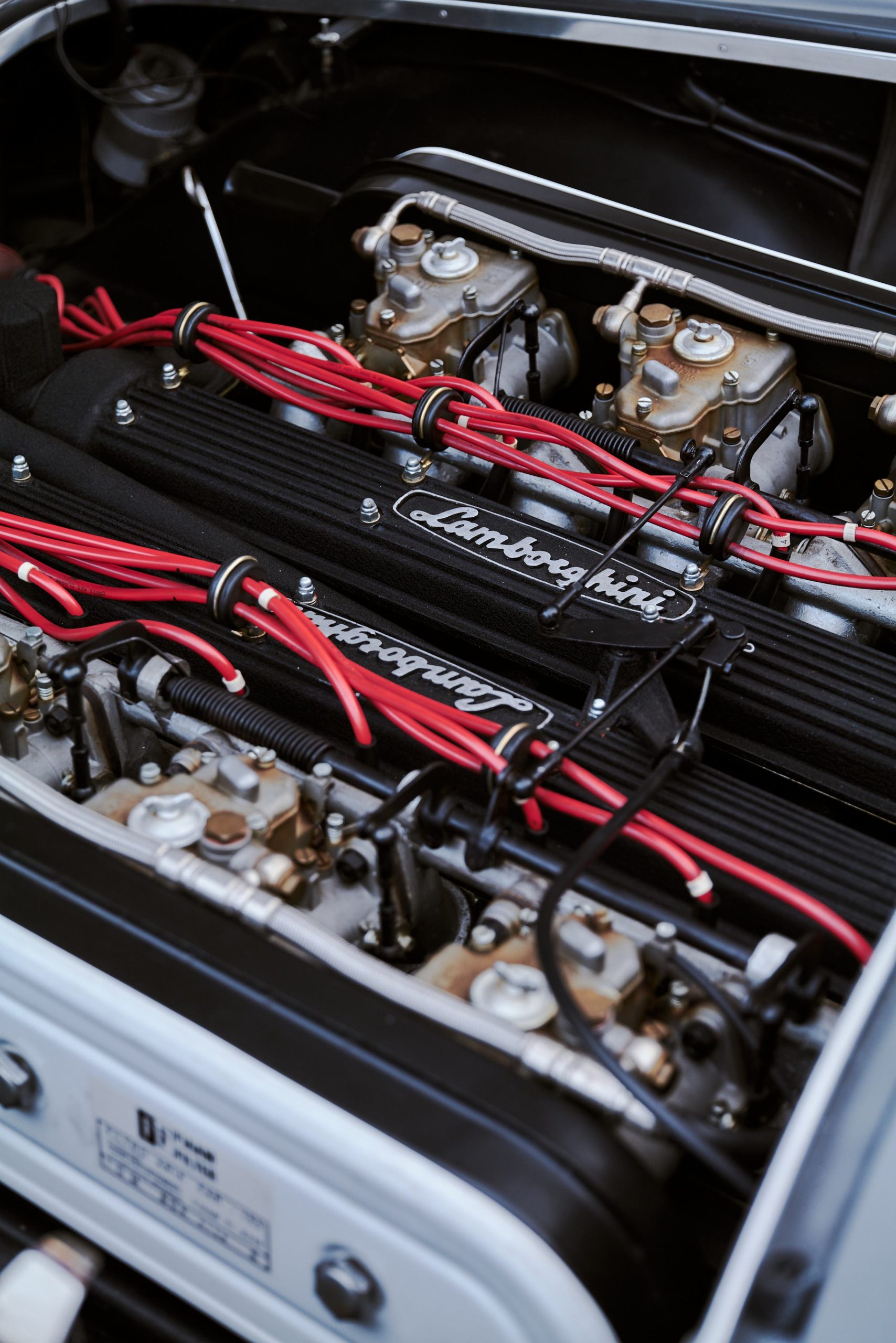
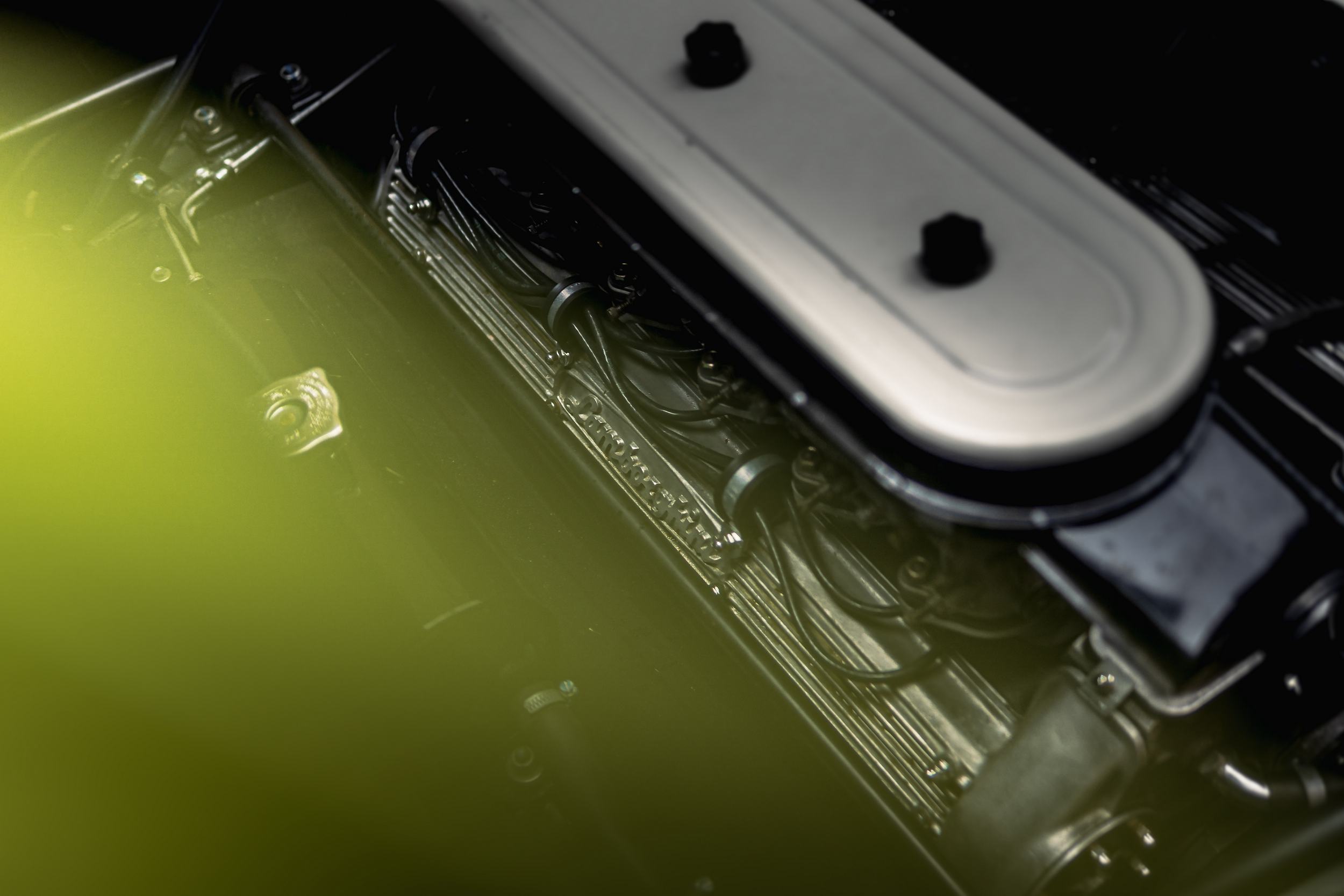
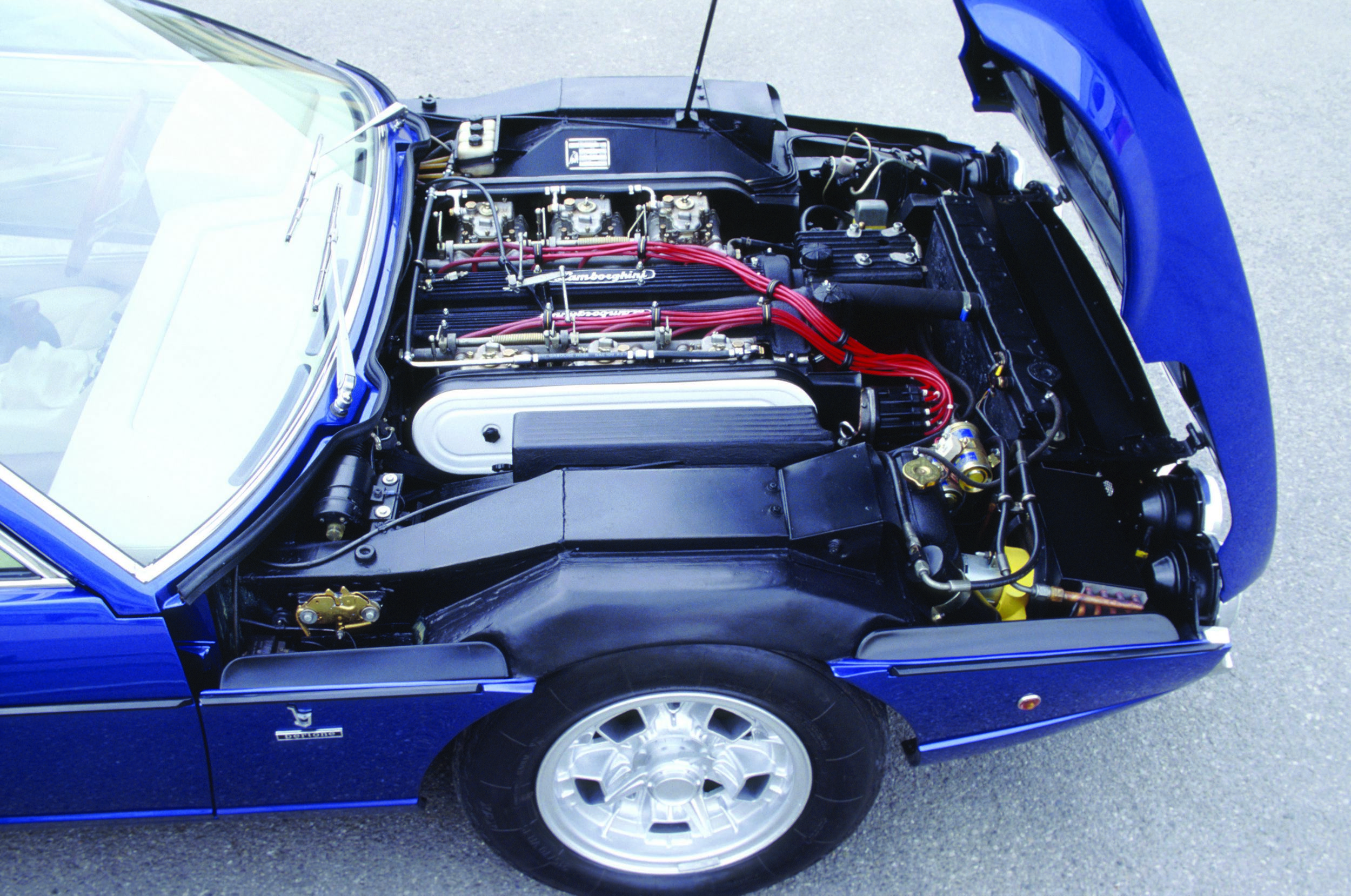
Lamborghini has lived, laughed, and loved with the V12 engine since 1963. That love affair isn’t set to end, but it’s going to change very soon. Before it does, let’s look back at the history of the Lamborghini V12.
At the start of the 1960s, tractor-maker Ferruccio Lamborghini set out to build a sports car that could beat Ferrari. Not on the track, though. On the road. The businessman was tired of sports cars he thought were quick, yet had no business being used every day.
Lamborghini V12 Origins
Lamborghini 400 GT V12; (photo/Lamborghini)
He snagged a big win when he asked Società Autostar to design the engine for his first car. Lamborghini wanted a V12 and the company he commissioned was owned by Giotto Bizzarrini. The very same engineer who had designed the Ferrari V12 engines Lamborghini wanted to best.
Bizzarrini’s new V12 was ready for the Lamborghini 350 GTV, a concept car that made its first appearance at the 1963 Turin Auto Show. The next year it went into production, under the long hood of the 350 GT.
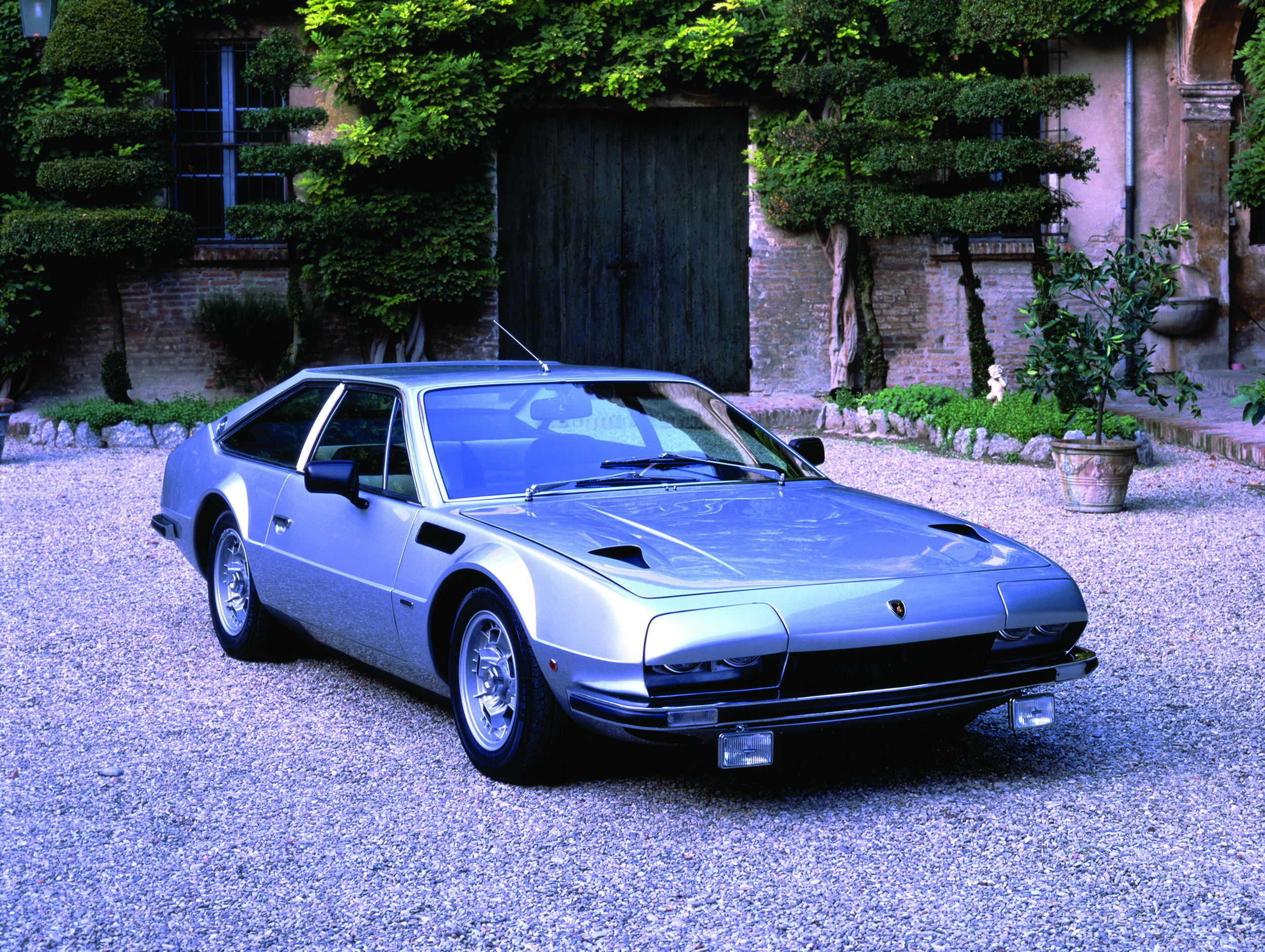
Lamborghini Jarama; (photo/Lamborghini)
In the 350 GT, the four-cam (Ferrari only had two at the time) Bizzarrini engine made 270 horsepower. That was enough to push the car to 158 mph. Thanks to an aluminum block, heads, and pistons, it only weighed 511 pounds.
“The Lamborghini story was born with the V12,” said Maurizio Reggiani, former chief technical officer at Lamborghini. “It is clear that in the 1960s, the V12 represented the pinnacle of technology, luxury, and sportiness of every car.”
First Supercar, Same V12
Lamborghini Miura V12; (photo/Lamborghini)
When the Miura came along in 1966, it marked the origin of the supercar. Lamborghini took the same V12, rotated it 90 degrees, and stuffed it behind the driver instead of in the front.
Lamborghini Espada; (photo/Lamborghini)
For the Miura, Lamborghini increased the engine’s displacement. Now it was 3.9 L and made 345 horsepower. Later, Miura 400S and P400 SV models boosted power even higher, first to 365 horsepower and then to 380. That same year, the 350 GT got a new engine (still mounted in the front) and became the 400 GT.
It would go on to be used in the Espada, Islero, and Jarama — all front-engine grand tourers.
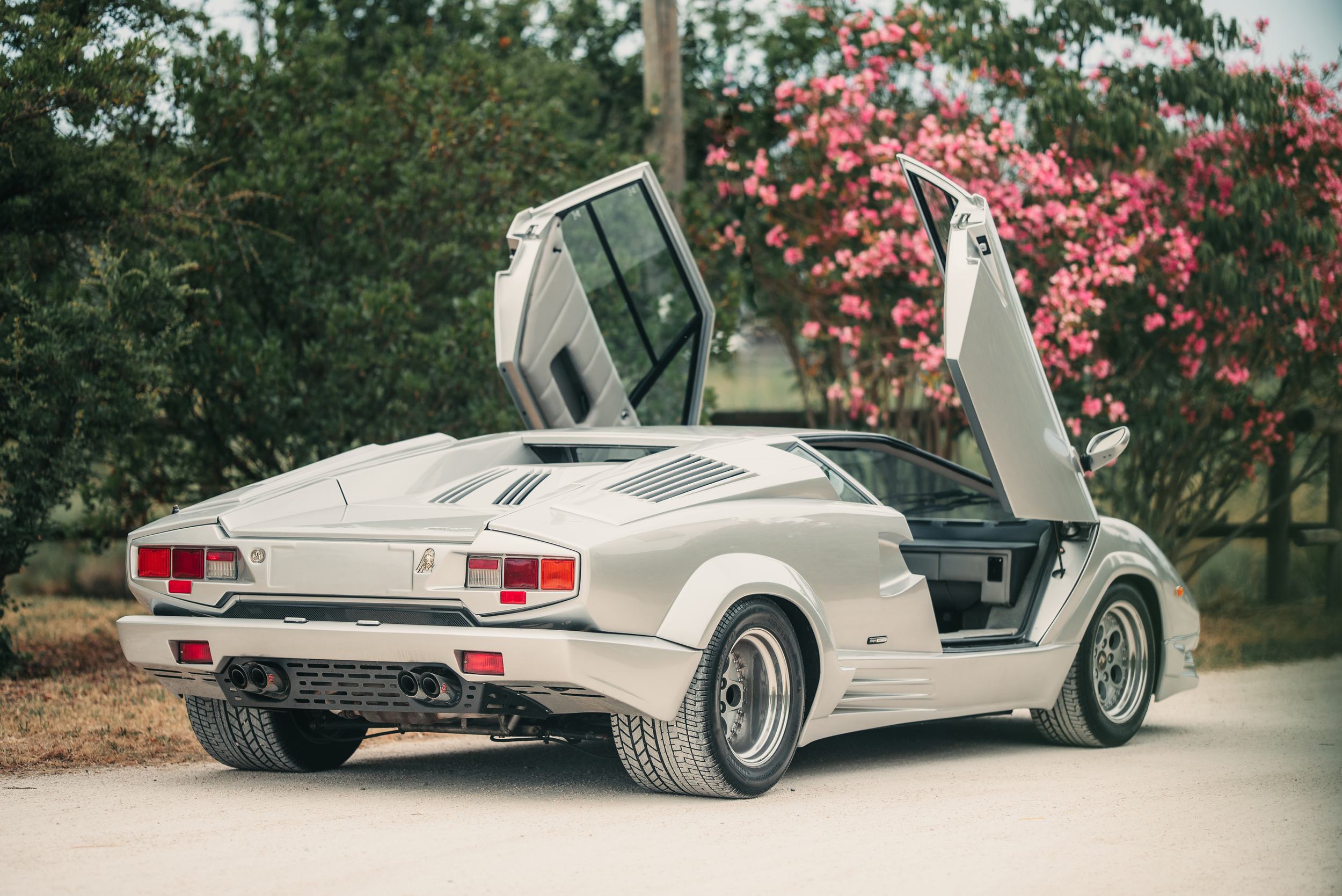
Countach 25th anniversary; (photo/Lamborghini)
When the Lamborghini Countach came along in 1971, it used the same V12. But this time it was turned another 90 degrees, so now the flywheel pointed forward. The transmission was mounted between the engine and the driver, with a drive shaft running back through the oil sump to the rear.
Lamborghini boosted displacement over the years, first to 4.8 L in the Countach LP500 S and then 5.2 L in the 5000 QV. In 5000 QV form, the engine made 449 horsepower and 369 pound-feet of torque.
Lamborghini LM002; (photo/Lamborghini)
In 1986, Lamborghini took the latest V12 and took it off road. The LM002 (also called the Rambo Lambo) was a failed attempt at a military vehicle and a not-exactly-successful attempt at an SUV. The LM002 saw the 5.2L V12 placed in the front driving all four wheels. Rather short-lived, just 328 were produced over 7 years.
30 Years: One Powerful Engine
Lamborghini Diablo; (photo/Lamborghini)
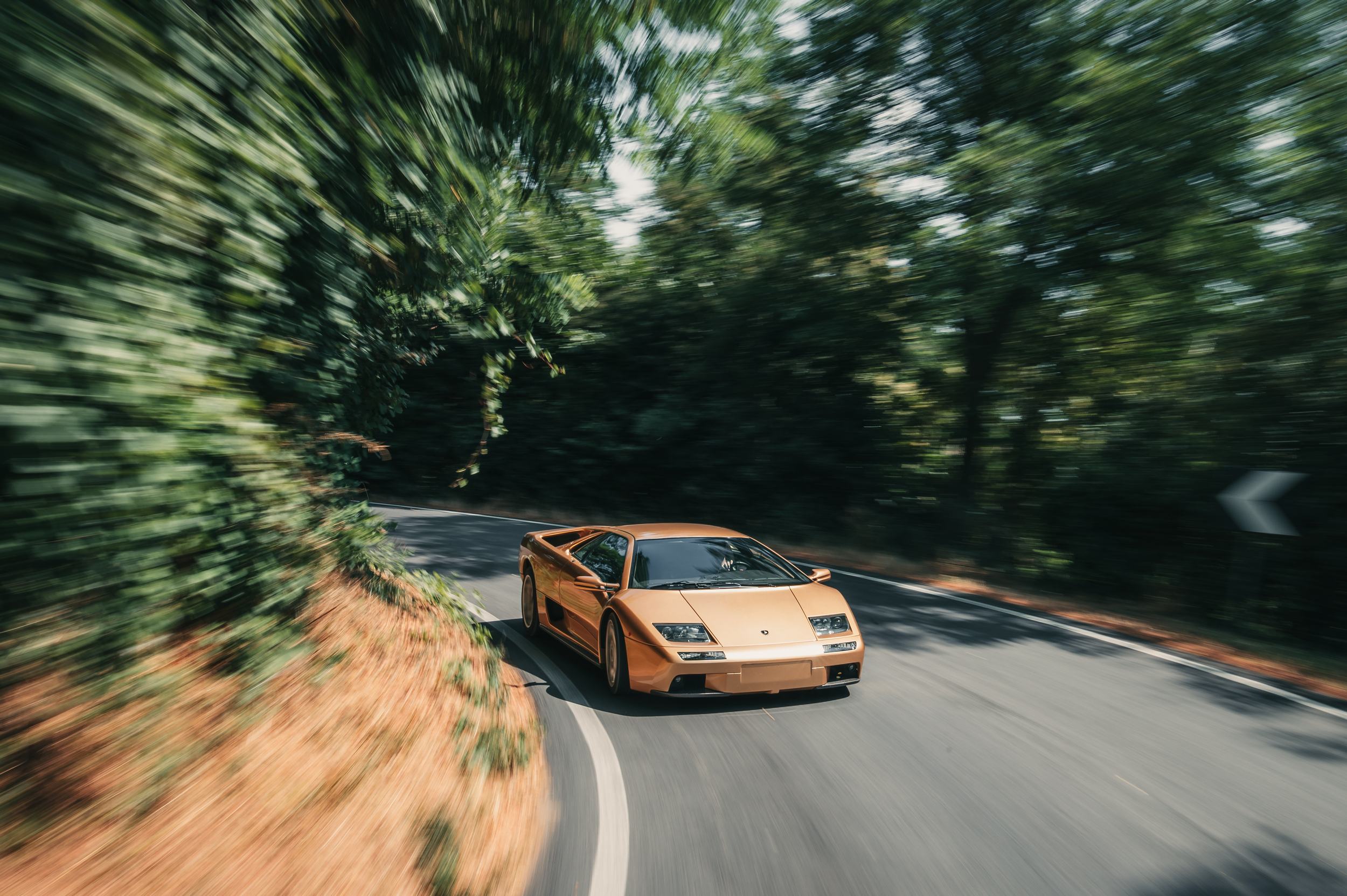
The Countach was replaced by the Diablo in 1990, but after nearly 30 years the Bizzarrini V12 wasn’t ready to be put out to pasture just yet. For the Diablo displacement grew again, to 5.7 L. The power levels grew as well, to 485 horsepower and 428 pound-feet of torque. By the end of the Diablo’s run in 2001, it displaced 6.0 L and made 575 horsepower.
In 2001, the Lamborghini Murciélago arrived, but even though the company’s V12 had been working long enough to collect a pension, the car company wasn’t done with it.
Lamborghini Murcielago V12; (photo/Lamborghini)
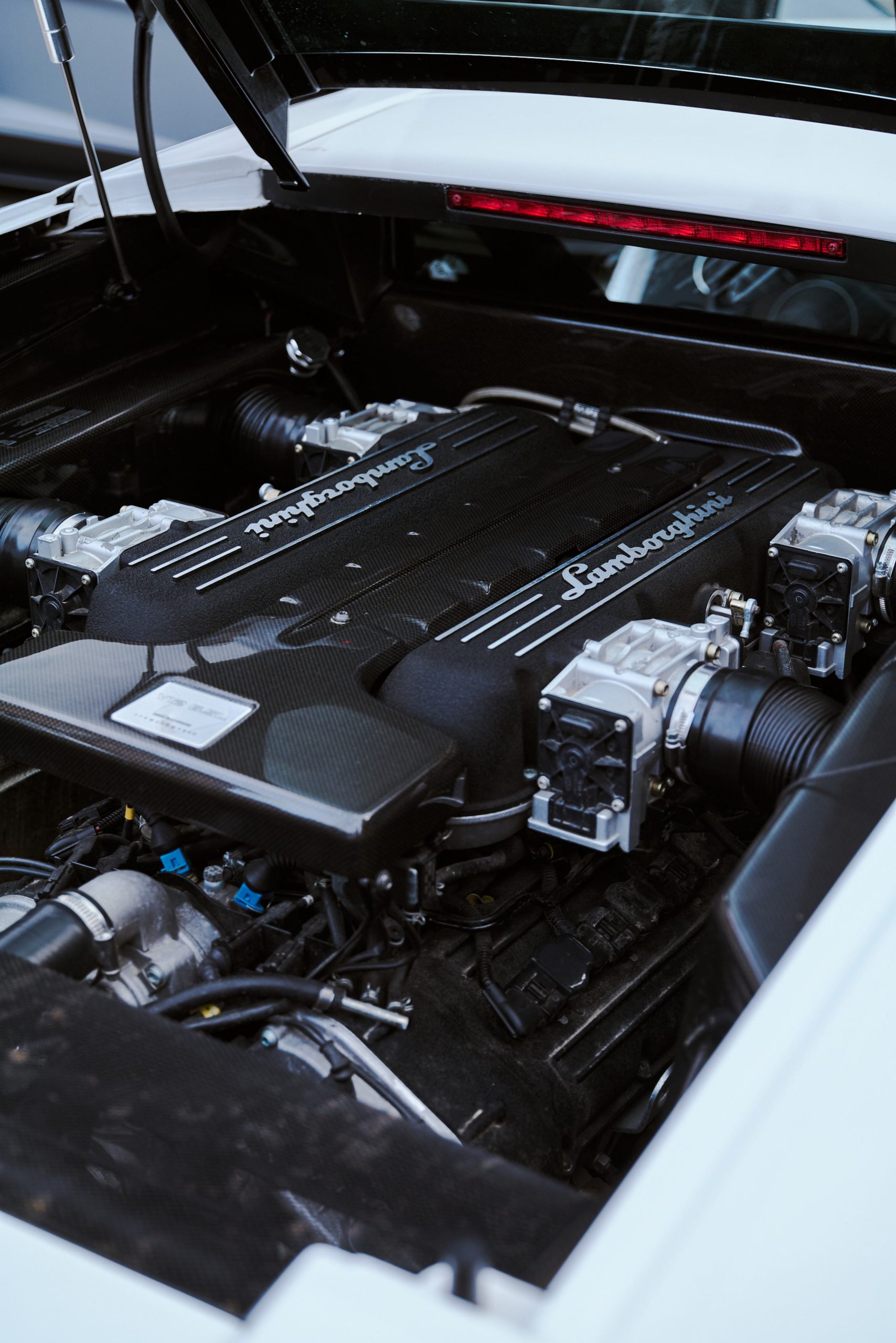
Serious internal changes saw the engine grow just slightly from 6.2 to 6.5 L, but power was way up. The V12 made 661 horsepower, and upgrades like a dry sump oil system helped lower the car for better handling.
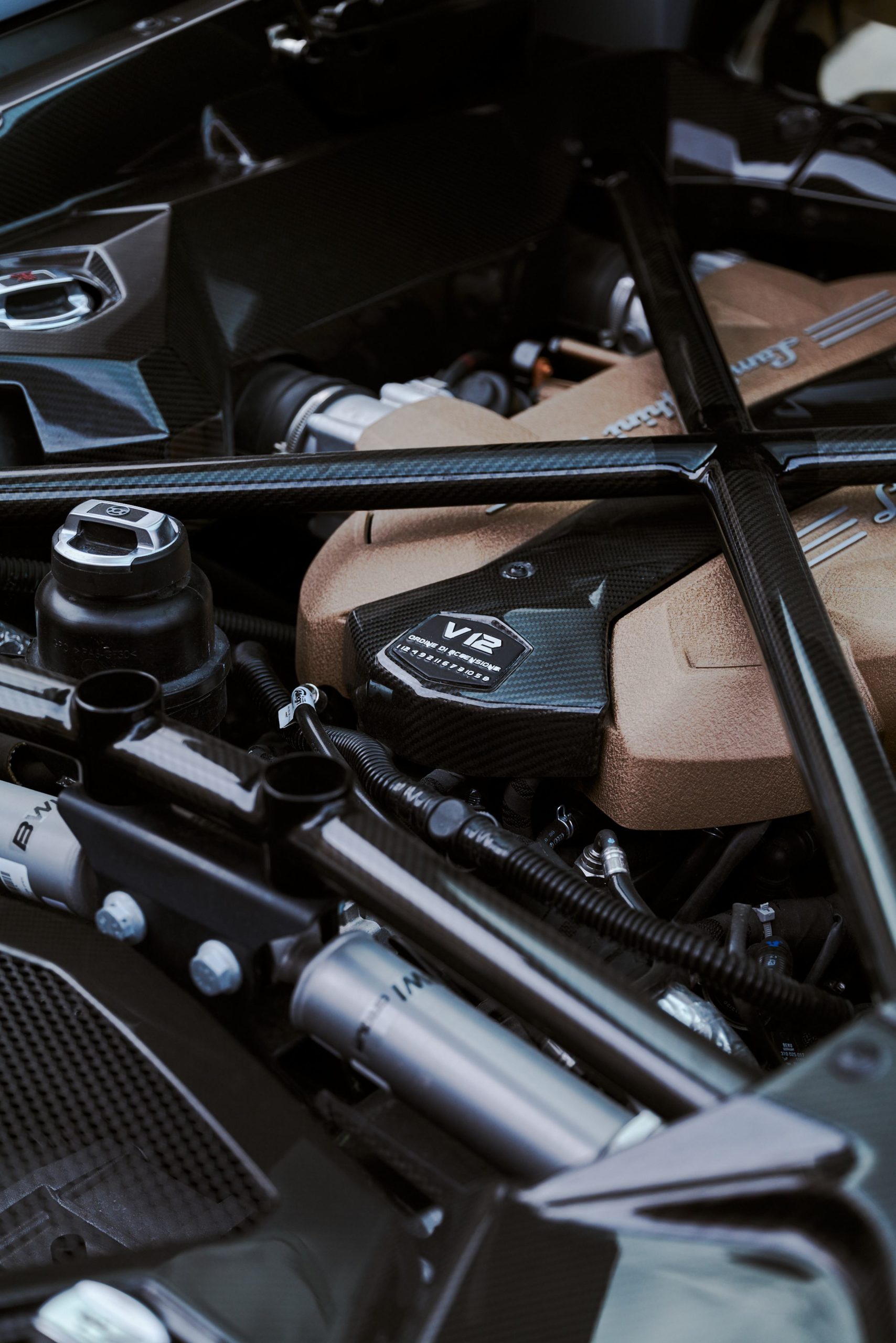
In 2011, the Bizzarrini V12 finally got a break. The Lamborghini Aventador arrived and it had an all-new V12. The clean-sheet design was lighter and vastly more modern, starting with 6.5 L and 690 horsepower. The beating heart of Lamborghini was stronger than ever.
Over the Aventador’s lifetime, the engine would be tweaked to eventually make 770 horsepower. The engine saw duty in Aventador-based ultra-special models, including the 2013 Veneno and the 100th birthday gift to the company’s founder, the 2016 Centenario. In the Aventador-based, track-only Essenza, it made 830 horsepower.
With incredibly tough new emissions laws and a new Lamborghini flagship coming soon, is this the end of the company’s relationship with the V12? Absolutely not.
Lamborghini Sian FKP 37; (photo/Lamborghini)
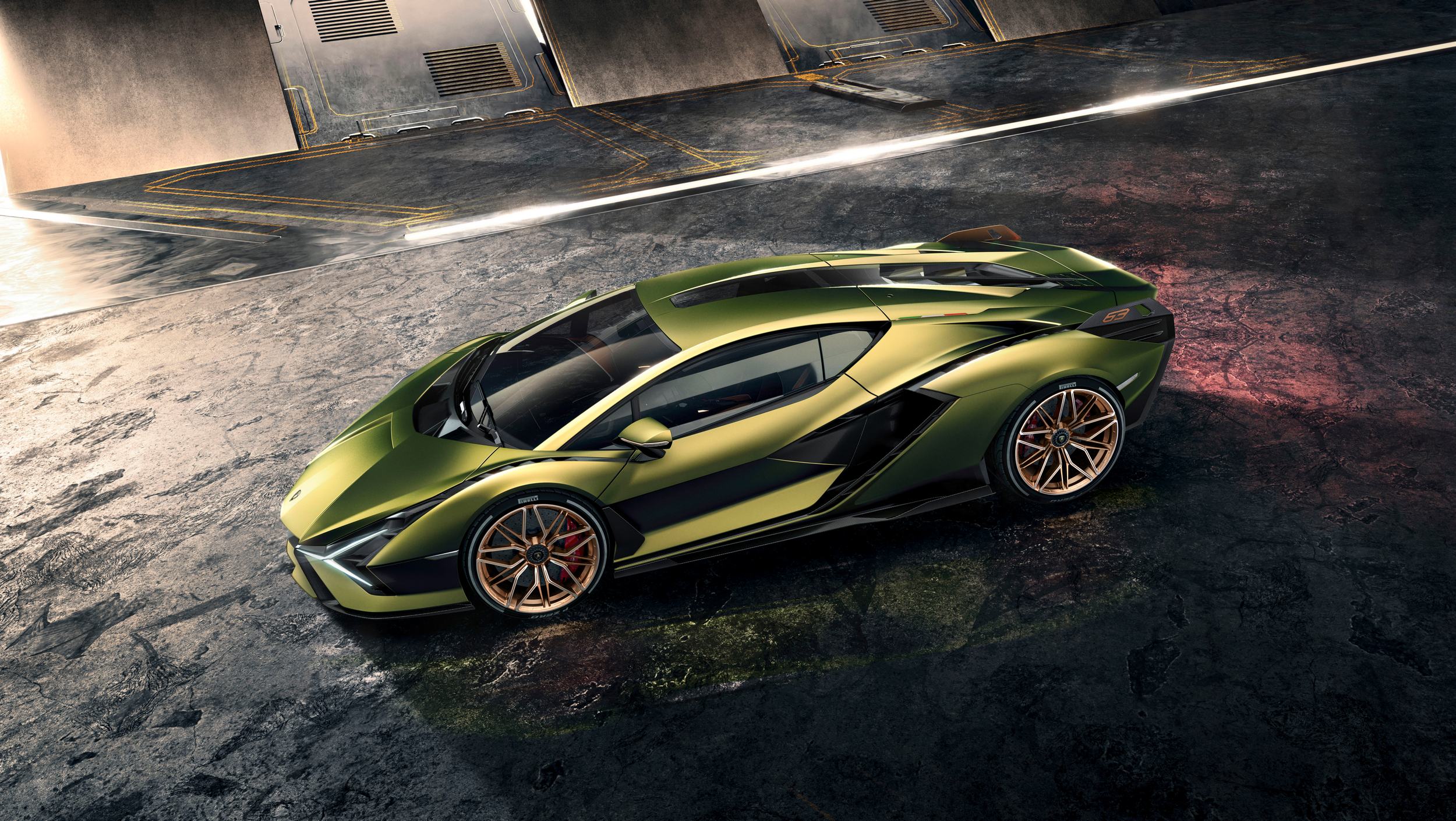
The Aventador was the last Lamborghini to get a naturally aspirated and unassisted version of the V12 engine. But Lamborghini said it’s about to turn to a new chapter. One where the V12 is backed by a hybrid system that will hopefully keep the raging bulls screaming for at least another decade.
The company has already given us a preview of what’s possible with the Aventador-based Sián FKP 37 and Countach LPI 800-4. When the company ran out of ways to increase power from its V12, it fitted a small electric motor. A supercapacitor instead of a traditional hybrid battery supplied the juice and instead of 770 horsepower, the Countach LPI 800-4 makes 803. The Sián produces 808 horsepower, showing the potential of 12 cylinders and electric power combined.
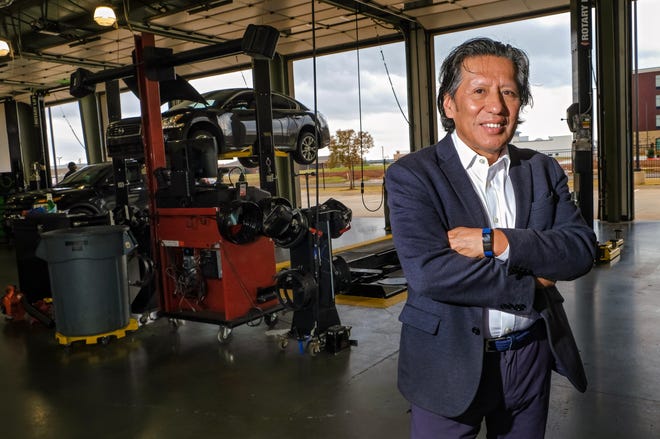
An automotive marketplace government for numerous yrs, Ned Aguilar jokingly refers to himself as a mad scientist: a scientist due to the fact of his analytical solution to evaluating and addressing troubles, and a mad one simply because he is familiar with what he implies as alternatives typically problem typical knowledge in the vehicle assistance market.
“I’m generally considering about how we’re in a position to change the space,” Aguilar mentioned. “Like in everything else, you want to depart it better than you discovered it. So for me, I’m large on attempting to identify approaches to strengthen the shopper practical experience. That is generally been the guiding principle for me.”
Aguilar’s track record stems from a long time of encounter for big tire producing businesses, an sector he’s worked in since the age of 17. From the late 1980s as a result of the 1990s, he was section of the management workforce accountable for increasing Oklahoma City’s Hibdon Tire Centre into just one of the greatest impartial dealers in the U.S. By the 2000s, when Hibdon experienced been obtained by Bridgestone Tires, Aguilar would hold many executive roles at the company about the decades, including vice president of marketing and advertising and of digital progress.
Now, as he enters a new chapter in his daily life and in his profession, he’s bringing a new type of client-centric model to Oklahoma’s vehicle marketplace. Aguilar is banking on his experience with Hibdon Tires, which disrupted the industry once, to do the exact same detail all over again.
“Ray Hibdon, the patriarch, and his son, Mark Hibdon, had been definitely in advance of their time when it arrived to the shopper supply course of action and the way we leveraged technologies, even then,” Aguilar said. “We felt we have been able to make an corporation that, when we glimpse back it, may possibly have been the very best company in our sector of the sector, due to the fact we had been prepared to do nearly anything and every thing if it was likely to be optimistic for the purchaser and for the workforce.”
The car servicing business at big does not have the very best name, admits Aguilar. Typical problems contain being also difficult and gradual to timetable and complete repairs, being as well pricey a process and getting as well exploitative a assistance.
But it’s precisely this sort of notion that Aguilar wants to tackle with FastLap, a new car services firm he 1st believed of two yrs in the past. The “beta spot,” which opened in late September at 5930 W Memorial Highway in Oklahoma City, is serving as the launchpad for a new variety of customer-centric product Aguilar hopes will change the field.
“It’s not the most pleasant experience having your automobile worked on, and in quite a few circumstances a good deal of people today never always look ahead to it,” Aguilar stated. “It’s not one of those buys that you seriously want to have to do, until you’re striving to modify your automobile. But for me, there is this burning system within the sector, and I genuinely wished to rethink about how to enhance that car knowledge.”
To carry out that, Aguilar claimed FastLap’s emphasis is on streamlined companies and electronic strategies, specifically towards young shoppers. His major intention is simplifying the servicing course of action for both prospects and staff members in today’s electronic age, whilst returning the vehicle company business back to its roots as a household-oriented, community-centered atmosphere.
“I wish I could go again in time with the younger era and demonstrate them what quality of everyday living was at 1 time, when you were capable to go to the local drugstore and sit at the counter and get a selected amount of services, that sense of group,” Aguilar said. “What takes place now is, even all through the holidays, when you are getting individuals jointly, as a substitute of talking with just about every other, they’re all just engaged on their telephones. I’m hoping, by some means and some way at the very least in Oklahoma City, to be ready to carry a feeling of that local community that could translate to our workforce and prospects and their family members and their pals.”
Born in west Texas but elevated on the West Coastline, Aguilar has regarded as himself an “adoptive Oklahoman” at any time due to the fact 1988, when the Hibdons requested him to support operate their operations in Oklahoma Metropolis. In his 20s at that time, Aguilar mirrored on his younger adulthood with deep gratitude, declaring Mark Hibdon was the champion he required in his everyday living to develop as an person and as a specialist.
When the Hibdons offered their tire business enterprise in the late 1990s, they entrusted Aguilar with operating the functions following they retired, and he ongoing to enable lead the organization properly into its Bridgestone acquisition. He spearheaded the opening of a distribution facility identified as TireHub, jointly operated by Bridgestone and rival manufacturer Goodyear.
Aguilar assisted oversee TireHub in the course of the late 2010s, prior to venturing off on his have in January 2021 to get started establishing FastLap. New ideas are usually one thing he is been inclined to check out, while Aguilar stated he is aware the marketplace is not constantly that way.
“For me, it’s an sector that continues to have chances,” he reported. “But a lot of auto dealers are emotion shed appropriate now. They never know how to do anything than what they’ve by now completed in the earlier. They don’t know the technologies they will need to be capable to latch onto to enable boost them. But I feel that we’ve fashioned the workforce to be in a position to introduce a thing for the consumer of these days.”
Very well into what must be his retirement decades, enthusiasm is what drives Aguilar, who claimed he owes a lot to his spouse Virginia and their a few sons, who all have passions of their very own. Two are singers and songwriters in the central U.S., though a different is a former athlete and owner of the VZD’s Cafe & Bar in northwest Oklahoma Metropolis. The pride Aguilar feels in his household is similarly felt for his earlier colleagues and his present-day FastLap group, whom he considers his equals.
“I’m the excellent example of ‘the minimal engine that could,’ but the ‘could’ arrived mainly because a ton of individuals were behind me, pushing me ideal alongside and aiding me believe in me,” Aguilar explained. “My hopes, as we increase, are it’s possible which is what I’ll be in a position to do with other individuals. … I may perhaps no for a longer time be that 17-12 months-old who just entered this marketplace, but my enthusiasm is again to that amount. That is what will make it all function.”
That spirit of household runs deep for Aguilar, so he isn’t carrying out this alone. In addition to a crew of gifted professionals at the Oklahoma Town site, he’s also assembled a core team of essential car market executives to support lead his corporation in significant roles. The crew includes Ivan Golubic, previous head of finance for the Goodyear retail community Joerg Mattheissen, former branding strategist for Boston Consulting Team Al Wheeler, previous vice president of Highly developed Automobile Elements and Andy Zmugg, a growth system consultant who co-established FastLap with Aguilar.
Aguilar’s strategies are formidable. With the support of what he’s identified as “immense money backing” from investors, the firm designs to open up additional than 10 spots during the Oklahoma Town metro place by the stop of 2023.
He also plans inside five many years to extend FastLap with several destinations in Florida and along the japanese U.S. seaboard, although he admits he’ll be preventing California, where his dad and mom elevated him in the 1960s and 1970s.
“Dad normally had this twist on that phrase ‘good items appear to these who hold out,’” Aguilar claimed as he remembered performing on automobiles as a teenager with his father. “He’d say, ‘I’m not telling you that’s erroneous, but fantastic things occur to all those who make it occur, way too. How are you producing it transpire?’ That normally trapped with me. I’ve normally been quite lucky to have these people today, from my very own loved ones to the Hibdon relatives and my present crew, who think in what it is I’ve been accomplishing and have authorized me the alternatives to make it happen.”