Lamborghini CTO Says Revuelto’s Electric Power Capped at 20{49e09b23eae7466ccc7574c19ebb3019301c9a11d2999feff81a3526451546a5}

Lamborghini CTO Says Revuelto’s Electric Power Capped at 20{49e09b23eae7466ccc7574c19ebb3019301c9a11d2999feff81a3526451546a5}
  • With a 3.8-kWh battery pack and three electric motors, the 2024 Lamborghini Revuelto plug-in hybrid is a performance and engineering speculate, and it tends to make 1000 hp.
  • Lamborghini has explored electrification right before, but the Revuelto is symbolic of shifting attitudes amongst even the most stubborn, previous-college supercar manufacturers.
  • Even so, Lamborghini Chief Technological Officer Rouven Mohr said the changeover, from a corporate and a mechanical standpoint, will be gradual and in the name of functionality.

    Lamborghini is heading electric powered, form of. In scenario you didn’t hear the information, Lamborghini is incorporating a plug-in hybrid electric powered supercar to its lineup, which will eventually substitute the Aventador as its flagship. Lamborghini is contacting it the Revuelto, and it characteristics a whole lot of new technological innovation well outside of its electrified heart.

    Run by a new-style, naturally aspirated 6.5-liter V12 mid-mounted motor, Lamborghini has augmented this currently stout powertrain with a few electric motors, for a full output of 1000 hp. But the placement of the electric powered motors is intriguing alone, as two of them are put inside of the entrance axle and the 3rd sits on best of the rear-mounted eight-pace twin-clutch transmission and is straight connected to equally rear wheels. This allows Lamborghini to retain its very long tradition of all-wheel generate and offer lively torque vectoring on all four corners of the Revuelto.

    Scissor doors terrific for mall parking lots.

    Lamborghini

    The transmission is mounted out back again to allow for for the 3.8-kWh pouch battery pack to be slotted into the center of the carbon-intense “mono-fuselage” as a sort of spine. Even with this further battery weight, the new carbon- and aluminum-mix chassis layout will really be 10{49e09b23eae7466ccc7574c19ebb3019301c9a11d2999feff81a3526451546a5} lighter than the outgoing Aventador, with 30{49e09b23eae7466ccc7574c19ebb3019301c9a11d2999feff81a3526451546a5} reduce emissions as nicely. It can even travel in the all-electric powered method less than the proper problems, while Lamborghini has still to say an precise array quantity. Offered its battery size, on the other hand, we would expect the assortment to be close to 20 miles.

    But this is a Lamborghini soon after all, so who cares about charging speeds or electric powered array?

    While many Revuelto prospective buyers (of which there are two years’ worth) might not have the setting in brain, the addition of electrified energy is really a shift toward modern day general performance for Lamborghini. With a 25{49e09b23eae7466ccc7574c19ebb3019301c9a11d2999feff81a3526451546a5} stiffer chassis as in comparison to the Aventador, model-certain Bridgestone Potenza Sport tires, and an overhauled braking system like decoupled brake boosters and 10-piston entrance calipers, it’s clear Lamborghini is fully commited to generational progression on the dynamics entrance.

    To understand more about Lamborghini’s change towards electrification, the relevance of correct effectiveness, and what the foreseeable future of Lamborghini retains, we chatted with Chief Complex Officer Rouven Mohr at the Lamborghini Lounge in New York Metropolis, with the Revuelto on hand.

    Revuelto interior.

    Lamborghini

    Autoweek: This factor seems to be terrific, and the new orange color is lively. Can you define which vital items are new, and why these pieces had been newly made?

    Rouven Mohr: Relating to the principal improvements, every thing is all new. The shape alone is oriented on the Aventador, for guaranteed, mainly because it really is our layout philosophy. Our cars and trucks have constantly been this sort of condition. But in truth, there is no single component that is carried about from the Aventador, in addition to a screw or some thing. The motor is entirely revised due to the fact we have to rotate it. We have a new casting for the block, and we have an all-new drivetrain. We even have an all-new gearbox and new entrance axle with two axial-flux electric motors.

    To be sincere, I even you should not know if there is any other generation auto that has two axial-flux e-motors simply because it truly is a really precise type of e-motor that permits highest torque. And we use this torque for a few good reasons mainly because people are normally imagining acceleration, which is legitimate, but we also use it for torque vectoring and electricity recuperation.

    AW: With so a great deal energy working by way of the Revuelto, what was the procedure for cooling these freshly added electric powered drivetrain parts?

    2024 lamborghini revuelto
    Rouven Mohr.

    Guizzardi Umberto

    RM: We have really labored a good deal on the cooling notion. A very first detail is a downsizing technique, so the driver has to have the rewards and the performance of the hybrid program in reality, not only measuring one time. The second thing is we preferred to have dependable driving habits. Even if the battery is acquiring empty, there really should not be a perceived differentiation amongst the efficiency. We also labored a large amount on the inconsistencies connected to the temperature: the battery should normally be in a fantastic temperature window and the motor much too.

    Therefore my philosophy in this segment is that I really don’t want to have much more than 20{49e09b23eae7466ccc7574c19ebb3019301c9a11d2999feff81a3526451546a5} of the overall electricity output coming from electric powered ability due to the fact otherwise there is a notion of a type of distinctive driving habits that would be significant.

    AW: How do you intertwine these an emotional driving knowledge with electrification, a propulsion process that is often deemed emotionless?

    RM: Electrification provides efficiency and it has, from the pure goal side, also a lot of rewards. For the initially time, we have equally a higher-revving motor, even better revving than at any time at 9500 rpm, and we can use the e-increase to have this instantaneous acceleration. We mixed the benefit of the obviously aspirated motor, so we have the sound and also the energy up top rated. But we have also more than enough torque on the small conclusion, and this functions in a extremely harmonious way that… feels like a larger displacement obviously aspirated (engine). Our focus on was the driver really should not identify this as a hybrid. Except if you push it in entire electric powered mode, of class.

    Mid-motor layout artistically shown.

    Lamborghini

    AW: You talked about electrification becoming about 20{49e09b23eae7466ccc7574c19ebb3019301c9a11d2999feff81a3526451546a5} of the total functional powerband. Is that a philosophy which is going to keep on in the coming years? What do the future five a long time maintain for partial electrification and Lamborghini powertrains?

    RM: Less than the present boundary disorders relating to battery capability, battery selection, and recuperation probable, you have to have to have management. You have to have to have as very little battery ability as attainable in the motor vehicle, but also a adequately significant stage for efficiency consistency. The battery size alone is based on the chemistry, but also on the recuperation potentials. The cells are from the Volkswagen Team and are the optimum power-density cells obtainable, so… it really is not seriously a plug-in hybrid cell but it can be ordinarily for 48-volt devices. As a result, we have preferred an appealing strategy, simply because we make recuperation not only on the entrance motor but also at the rear mainly because we use the rear motor to avoid most traction-management interventions.

    Moreover, we didn’t want to make a type of hybrid drivetrain that seems fantastic on paper but that, in truth, is vacant soon after one particular lap on the racetrack and then you can not recharge. The plug-in possibility is good since of the upcoming potential for updates as properly. Maybe, if the battery technologies is evolving, you can have far more potential and you can increase the electric powered range and you continue to have the plug-in option far too.

    2024 Lamborghini Revuelto.

    Lamborghini

    AW: Lamborghini has reported the waitlist for this auto is now more than two yrs very long, so obviously the reception has been beneficial. On the other hand, did you worry about how prospects would perceive this change towards electrification?

    RM: We started out really early in the communication with our finest clients. I believe anyone was certain at the time we spelled out the philosophy, but there were being also individuals that have been wondering ‘Oh, hybridization?’ simply because there are lousy examples of hybridization. But we say, glance, you have more ability and more emotion. You also have an electric assortment that is not dramatically superior, but at minimum it is really sufficient to exit your neighborhood.

    Talking about escalating the overall performance of the Aventador, it was a incredibly psychological and characterful auto. But from the efficiency amount, it was not any more, permit me say state-of-the-art. Consequently, there had been only 3 possibilities. Initial, we could go to a turbocharged motor, but we did not want it due to the fact it is aspect of our DNA to have the emotion and thrill of a high-revving obviously aspirated engine.

    We could maximize the revolution limiter closer to 12,000 rpm to finally raise the horsepower output, but that would entail increasing the displacement which does not make perception mainly because it is really now a enormous engine. It can rev up like hell on the race monitor, but this isn’t really so very good for every day use. From the dependability place of look at, if you are creating 10,000 cars and trucks that rev up to 12,000 rpm, it would be a whole lot of routine maintenance as properly.

    Thus, the greatest point was electrification.

    Extraordinary inside of 2024 Lamborghini Revuelto.

    Lamborghini

    AW: Another major modify seen on the Revuelto is improved infotainment capabilities. Can you chat us by way of the advancements and the decision to incorporate a display on the passenger side?

    RM: We experienced to do anything since you can generally say in this sort of motor vehicle, it’s not so suitable, but it’s not the real truth. We genuinely have the youngest customers in the supersport segment (especially in the Asian markets) with the over-all age currently being considerably less than 40 many years aged, so the persons of this generation count on a bare minimum amount of connectivity.

    (Mohr shows how the screens work, and I discover how quick the motions sign-up, but also how in-depth the graphics and aspects of the screen-displayed car are. Then, he commences swiping screen modules from the center monitor onto the dash-mounted passenger display utilizing his finger. He also clarifies that the preceding Aventador was not even set up with cruise regulate, while the Revuelto has adaptive cruise control, for all these cross-nation Lamborghini road visits that we do.)

    We preferred to do one thing for the passenger so they can also see a minimal bit of facts. Right here you see the pace and then the gear placement. It is a small little bit cinematic. It really is a toy, but I imply the full vehicle is a toy way too. You expect anything technologies-wise to be in this article, but from the emotional place of check out, you also see the overall performance.

    AW: Looks like you all believed of every thing then, huh?

    RM: No, no (laughing). There is a level in which you have to quit since now the car or truck is on the industry, but you might be never ever running out of thoughts. But at least we took treatment of a good deal of the experience that the driver is heading to have, simply because our philosophy—even in the Huracan or Urus—we constantly try to surprise the driver in a positive way. We never want to be an synthetic, decoupled brand.

    Lamborghini often has to capture the driver and provide that driver a smile on their deal with. For the reason that it is really not a automobile that you need to have to have or that you use for A to B. It’s generally a specific knowledge, and we are informed that our clients count on also this sort of ‘wow.’

    Need to Lamborghini check out turbocharging technological innovation, and further electrification? Make sure you share your thoughts down below.


    Associate Editor
    A New York transplant hailing from the Pacific Northwest, Emmet White has a passion for something that goes: vehicles, bicycles, planes, and motorcycles.

2023 Chevrolet Colorado Review: Streamlined Size, Turbo Power

2023 Chevrolet Colorado Review: Streamlined Size, Turbo Power

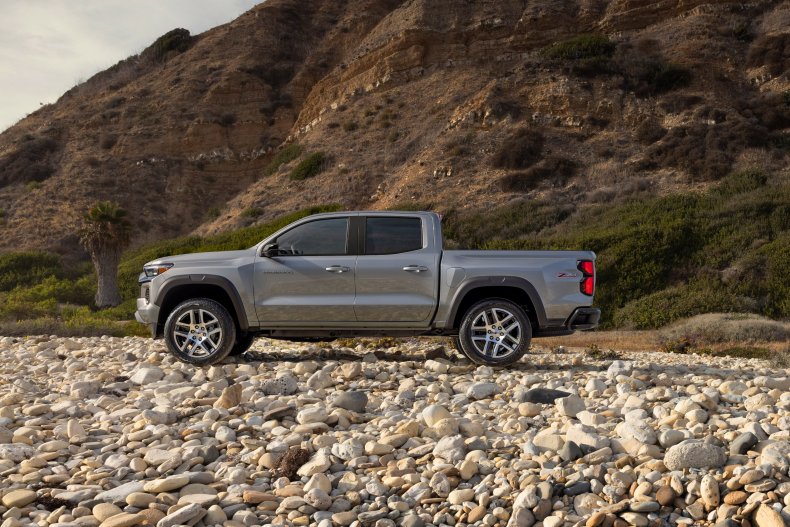
Chevrolet pared down its offerings for the new 2023 Colorado midsize pickup truck. From the least expensive Work Truck trim to the top ZR2 model, buyers get a crew cab with space for five passengers, a short 5-foot, 2-inch bed, an 11.3-inch touchscreen along with a digital instrument cluster and a 2.7-liter turbocharged four-cylinder engine.

It may seem shortsighted to narrow the truck’s cab, bed and engine offerings (last year the Colorado offered a 2.5-liter four-cylinder, a 3.6-liter V6 or a 2.8-liter diesel option), but Chevrolet explained that this configuration is what the vast majority of midsize truck buyers are purchasing anyway.

The 2023 Chevrolet Colorado lineup now includes Work Truck (WT), LT, Z71, ZR2 and a Trail Boss model that was previously reserved for the full-size Chevrolet Silverado. The Z71, Trail Boss and ZR2 get progressively more off-road ready as buyers move up the ladder. Still, the cab and bed size stay the same.

The Chevy Colorado gained 3.1 inches of length, though it used that space to make more room for the new 2.7-liter turbo engine, joining GM’s fray in 2019, which is also found in the Silverado. Previous versions had the engine on top of the front axle, forcing adjustments in the oil pan for clearance. With the 2023 Colorado that’s no longer a problem. It also allowed for bigger wheels, which off-road buyers love.

1 of 12

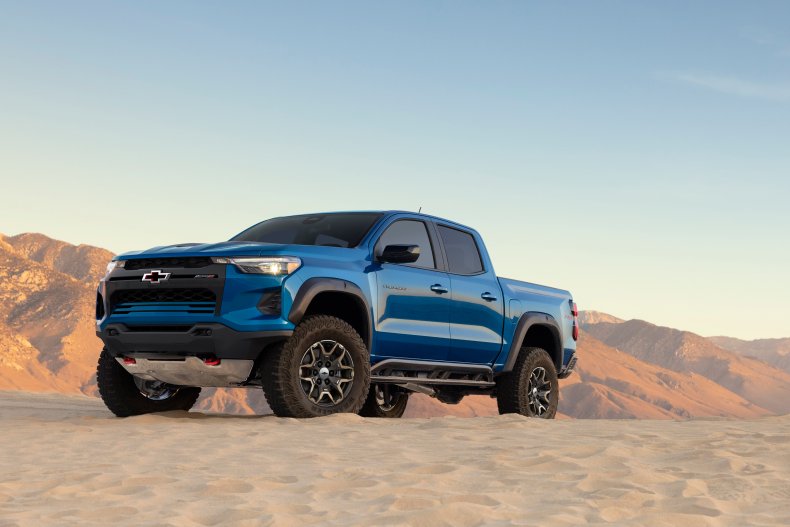
The overall design is an evolution with manager Sam Zhao in charge. The front end has a wider look though the hood still has a power bump. The headlights were upgraded and it can now accept a wider range of accessories from the Silverado parts book.

“We wanted to level the truck and make it feel like it’s really planted on the ground yet stable and strong looking. We moved the axle forward and this allows for a bigger tire and a better approach angle as well. We lifted the spare tire underneath too, which improved departure angles,” Sam Zhao, Chevrolet Colorado exterior designer told Newsweek. Approach and departure angles are a few of the things that serious off-roaders look at. It’s a measure of how steep an angle the truck can climb without bottoming out.

“The front end of the vehicle is all new, with sculpted surfaces we created, while understanding we need good forward vision down the trail. We’ve given it a more powerful look. The Z71 is a little more premium while in the Trail Boss we wanted to flag its off-road capabilities.”

The sides are new and sculpted too and the available bolt-on fender flares have been redesigned fitting both on the ZR2 and the Trail Boss. Aluminum skid plates are also optional, protecting the engine and transmission with traveling over rocks off road. New wheel choices are also offered, including a new 20-inch version that feels like something you’d see on a Chevrolet Corvette.

2023 Chevrolet Colorado
The 2023 Chevrolet Colorado offers only a turbocharged four-cylinder engine.
Chevrolet

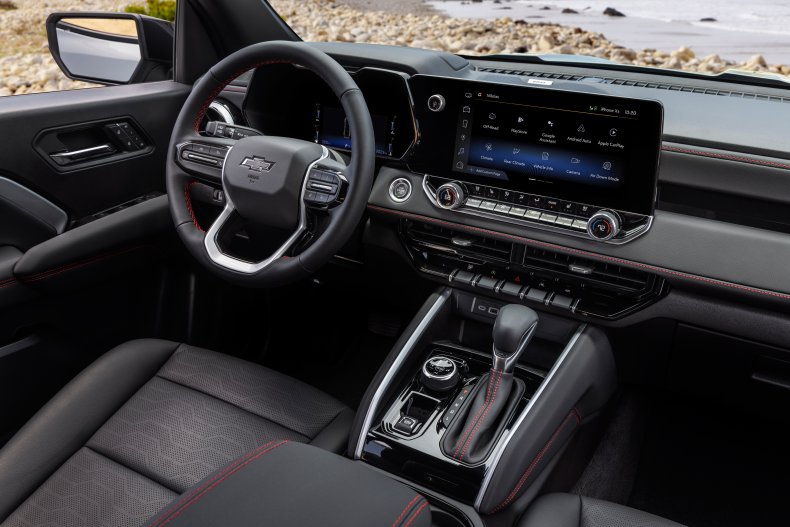
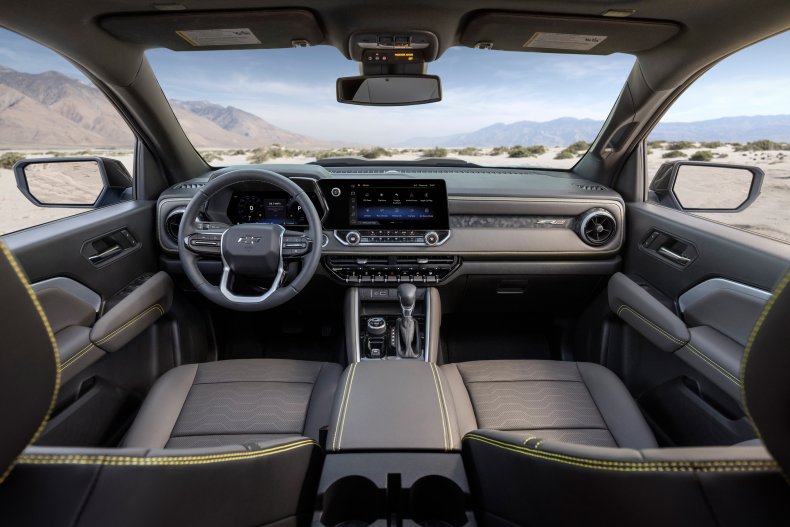
Inside, the new 11.3-inch infotainment system with wireless Apple CarPlay and Android Auto, and Google Built-in standard across the range for one of the best base setups in the industry, not just in the truck class. Work Truck, LT and Trail Boss (the latter of which is based on the WT), feature cloth seats while Z71 and ZR2 models come with perforated and heated leather-wrapped seats. The infotainment is ergonomically sound with physical knobs for climate temperature, fan speed and volume.

Below the main screen is a selection of climate and other redundant buttons. Work Trucks and Trail Boss trucks get a few, Z71 and above models come with more buttons as well as dual-zone climate control. The back of the steering wheel also has buttons for volume and tuning the radio.

In practice, the screen worked flawlessly, easily connecting first to Bluetooth then to Apple CarPlay. Like the other Chevrolets, the Colorado has mode buttons outside the main screen, allowing passengers to quickly switch from CarPlay to the native Google system, which will answer questions via Google Assistant.

The standard digital instrument cluster comes with a new Off-Road Performance Display that shows real time information in three groups. Overlanding shows altitude and GPS guidance, Terrain shows pitch, roll and tire pressure, and Baja has g-force, wheel slip indicator and transfer case status. Those screens can be viewed independently of the drive modes.

2023 Chevrolet Colorado
The 2023 Chevrolet Colorado will offer new off-road and trailering applications.
Chevrolet

The Colorado also now has 10 available camera views (best-in-class), accessible on the infotainment screen, including an underbody camera on Z71 and ZR2.

Inside, the Work Truck and Trail Boss trims are more plain, with less accent colors on the doors, seats and dashboard, but both options were comfortable and surprisingly adjustable for a lower trim pickup. Even the base models have power seats with two adjustments for the seat bottom, allowing drivers to get into a comfortable bucket seat position. The only complaint there is that the seat bottoms are a little short and without any under knee support.

Below the screen is the gear selector, drive mode dial and four-wheel drive selection button, with side-by-side cupholders behind. There is also space for drinks in the doors and in the back seats. As far as space for people, with a 5-foot, 10-inch driver in front, there is enough room for another person of the same height in back. A six-footer in front of another six-in back behind would be cramped.

On the road, all three outputs of the engine were available to test. The base engine, standard in the WT and LT trims, has the same displacement and turbocharger as the other, but makes just 237 horsepower (hp) and 259 pound-feet (lb-ft) of torque. The 2.7-liter Turbo Plus delivers 310 hp and 390 lb-ft. That engine is standard in the Z71 and Trail Boss, and optional on the WT and LT. The 2.7-liter Turbo High Output is the most powerful making the same 310 hp but 430 lb-ft of torque. Chevrolet says that buyer can upgrade from the Turbo Plus to the High Output with software at any time.

2023 Chevrolet Colorado
The 2023 Chevrolet Colorado ZR2 comes with underbody protection.
Chevrolet

Chevy notes that this engine delivers more horsepower and torque than the previous three engines offered. The new base offers 18 percent more horsepower and 36 percent more torque than the current Colorado’s base engine. The higher-output versions of the 2.7-liter produce more horsepower and torque than the current model’s available V6 and turbo-diesel engines.

There are three suspension setups offered. The standard setup is on the WT, LT and Z71 trims. The Trail Boss gets a 2-inch factory lift and a slightly wider stance. The ZR2 model, which was not available to test, comes with a 3-inch lift. Both suspensions were comfortable on the road, though the base is definitely the softer of the two.

Drive modes, which adjust the steering feel, throttle, transmission, brakes and traction control, include Normal, Tow/Haul, Off-Road, Terrain and Baja.

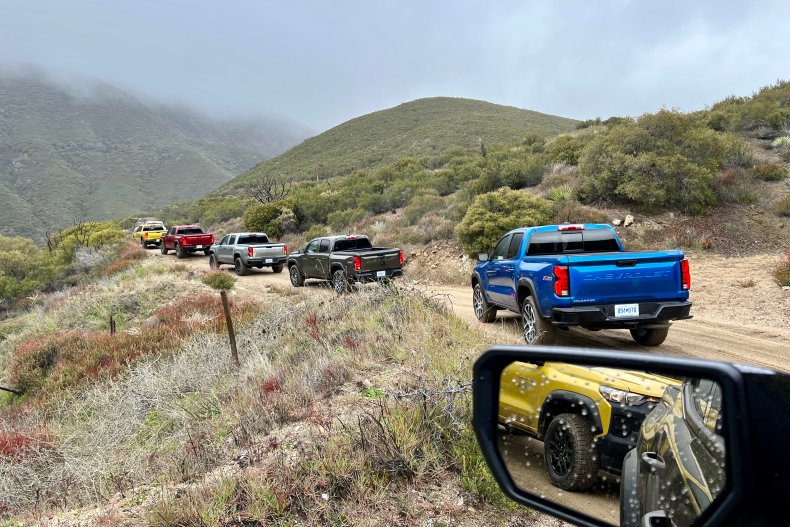
On the mountain trails outside of San Diego the 2023 Chevy Colorado sauntered through the obstacles without much fuss. Slippery dirt roads were easy in four-wheel drive low setting and Off-Road mode. That and Terrain mode enable Hill Descent Control, which helps drivers keep their speeds low and safe when traveling down a hill. It can be adjusted with the gas pedal.

2023 Chevrolet Colorado
The 2023 Chevy Colorado was small enough to take on tight and muddy mountain trails.
Jake Lingeman

Over the bigger obstacles the Colorado showed its flexibility while twisting in deep ruts and putting a wheel in the air when climbing over rocks. Its smaller size helped too with the narrow trails and dozens-to-hundred foot drops on the sides. The longer and wider Silverado would have been a tighter squeeze.

Comparing the engines, the base 2.7-liter does make the truck feel a little sluggish during passing maneuvers, but during normal driving it was fine. The 2.7 Turbo Plus feels peppy, with the eight-speed automatic shifting smoothly at any rpm mark. On slippery pavement it easily breaks the rear tires loose when traction control is off. The High Output engine is the most fun, with plenty power for any situation, including desert blasts. They can all be shifted manually with a button on the gear selector.

The Colorado is offered in two- or four-wheel drive. The Trail Boss and Z71 have a limited slip differential, the ZR2 has power locking front and rear differentials. Everything but the ZR2 can tow 7,700 pounds, that most expensive trim can pull 6,000 pounds.

2023 Chevrolet Colorado
The 2023 Chevrolet Colorado has turbine-inspired air vents.
Chevrolet

The Chevy Safety Assist package, standard on all Colorados, includes Forward Collision Alert, Automatic Emergency Braking, Front Pedestrian Braking, Lane Keep Assist with Lane Departure Warning, Following Distance Indicator and automatic high-beam assist. Blind Zone Steering Assist, Rear Cross Traffic Braking, Adaptive Cruise Control, HD Surround Vision and Rear Pedestrian Alert are available on all models.

The 2023 Chevy Colorado competes in the midsize pickup market playing second place in sales to the Toyota Tacoma (which gets a new generation later this year). The Jeep Gladiator comes next and the Nissan Frontier follows within a few thousand in sales. The Ford Ranger had been running in second place until last year with nearly a 40-percent drop in sales from 2021 to 2022. Ford launched both the F-150 Lightning EV and compact Maverick truck during this generation of Ranger.

The 2023 Colorado, starting at $29,200 before destination and handling, has the best interior, for now, and is hyper proficient off-road in both Trail Boss ($37,000) and Z71 ($39,900) trim. However, if you want a size that’s not crew cab and smaller bed, you’ll have to look elsewhere.

The Toyota ($27,750) offers a 6-foot bed and two cab sizes; the Jeep Gladiator ($38,775) only offers a 5-foot bed with the four-door cab. The Ranger ($27,400) offers 5- and 6-foot beds. The Nissan Frontier ($29,190 for the King Cab and $30,490 for the Crew Cab), just premiered a new generation and offers a 5- or 6-foot bed.

The Colorado offer less options in certain categories than the competition, but with three engine outputs catering to all manner of drivers, (you can get the Work Truck in two-wheel drive with the Turbo High Output engine), and the most popular bed and cab size, it should appeal to the heart of the midsize pickup market. The Toyota Tacoma, amazingly, more than doubled the Colorado’s sales last year, so it has a long haul to claim the first place crown. The new third-generation truck is the company’s best shot yet.

The 2023 Jeep Compass Got More Efficient Turbo Power

The 2023 Jeep Compass Got More Efficient Turbo Power

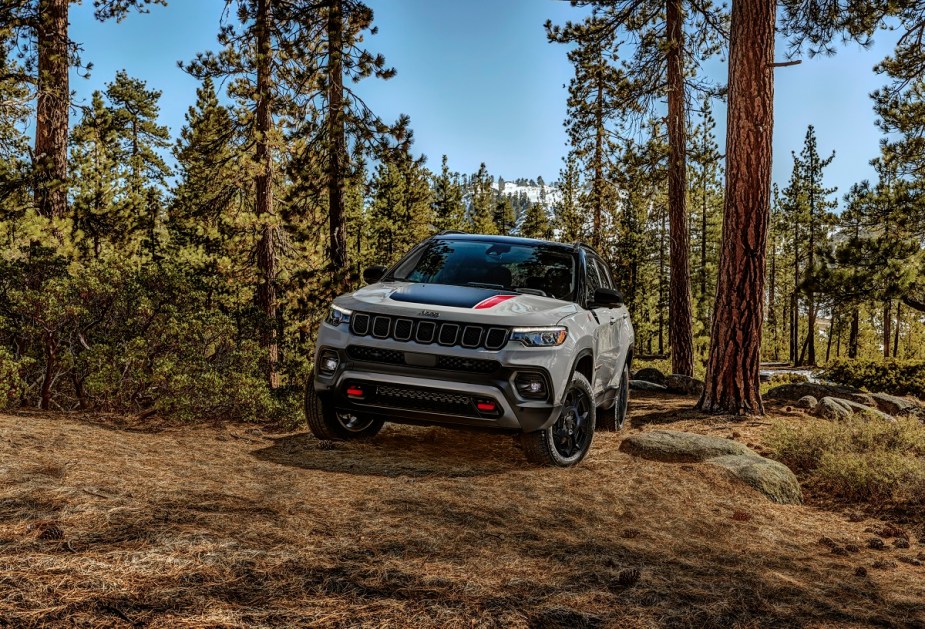
A short while ago, the minimal Jeep Compass has been striving to make a comeback. It got a much more attractive inside and then bought a crucial ability bump to help it be far more aggressive. See what the 2023 Jeep Compass has to supply from rivals. 

How a lot electric power does the 2023 Jeep Compass have? 

2023 Jeep Compass engine upgrade
2023 Jeep Compass | Jeep

The 2023 Jeep Compass has a new turbocharged 2.-liter inline-four motor that cranks out 200 hp and 221 lb-ft of torque. This device is replacing the more mature 2.4-liter four-cylinder motor with 180 hp and 175 lb-ft of torque. 

Turbochargers: Taking Power Up High

Turbochargers: Taking Power Up High

Full disclosure—we have a bias when it comes to turbosuperchargers. We like them. A lot. After flying them for more than 45 years and using them to get to altitudes that allowed a safe flight when we could not have even launched in a normally aspirated machine, we think that they are well worth the cost of care and feeding. That’s above and beyond the comfort they have given us during mountain operations and high and hot takeoffs. Apparently, our opinion is consistent with the historical market as turbocharged singles and twins have outsold their normally aspirated kin. 

Background

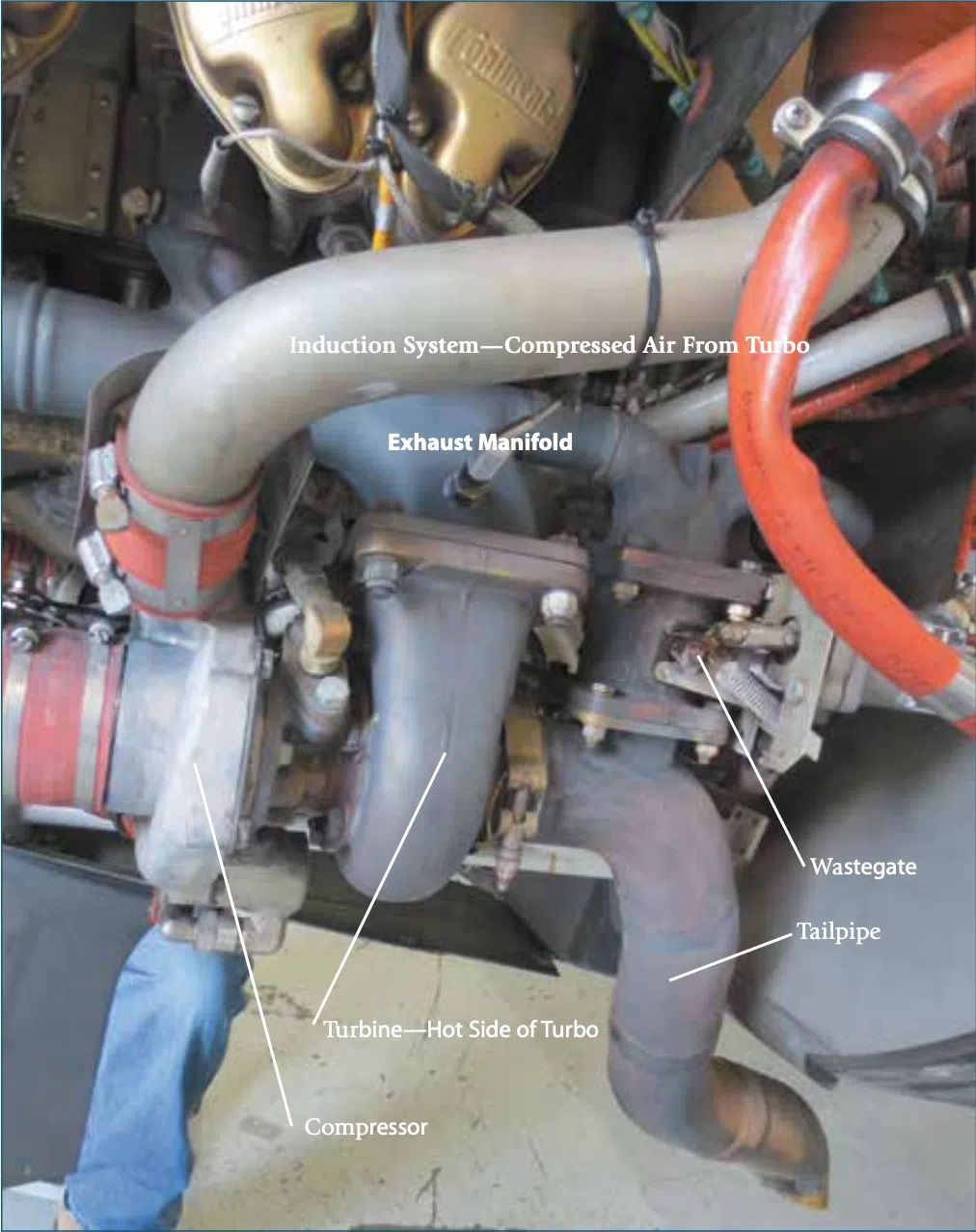
We call them by several names—turbo and turbocharger are shorthand for a turbosupercharger, which is a supercharger spun by a turbine in the exhaust system.  

They’ve been around in aviation for over 100 years; in 1920 an Army test pilot climbed to over 33,000 feet in a LePere biplane powered by a Liberty engine equipped with a General Electric turbocharger. Cessna is credited with successfully bringing turbocharging to general aviation in the Model 320 in 1962. 

Hartzell is currently the sole supplier of turbos in the U.S. Feedback from the field has been that Hartzell has cleaned up the quality control issues that it inherited when it took over Kelly Aerospace, which had acquired the Garrett and Rajay lines of turbos. 

The Basics

A turbocharger is an air pump that sends compressed air to the engine intake system. Half of it is a turbine that lives in the hellish environment of the exhaust system—its wheel is spun by those fiery gases. When fully engaged it can spin at over 100,000 RPM and glows brightly enough for a person to read a book. 

The turbine wheel shaft extends through the center housing into the cold side, where it spins the pump that compresses the ambient intake air and jams it into the induction system, allowing more power to be developed. 

Two Versions

There are two distinct underlying designs of turbo system. In one, the engine develops sea level manifold pressure up to a selected altitude—it’s referred to as a turbonormalized engine. In the other, a boosted or “blown” engine, the engine can develop greater than ambient manifold pressure up to an altitude at which the system can’t compress the ambient air enough and manifold pressure starts to drop, the engine’s critical altitude. 

A wastegate—the butterfly valve in the exhaust pipe upstream of the turbo—routes air either down the remainder of the tailpipe or diverts it into the turbo, or some mixture of the two. When closed, it all goes into the turbo. 

Some wastegates are fixed—the pilot controls power with the throttle—and some are manual—there is a second control in addition to the throttle that the pilot must use in setting power. However, most are automatic—a controller senses the pressure of the air in the upper deck of the induction system, just upstream of the throttle body, and uses engine oil pressure to set the position of the valve in the waste-gate to maintain the manifold pressure the pilot has commanded with the throttle. Properly adjusted, an automatic system requires no action by the pilot during a climb or descent—which is not the case with a fixed or a manual wastegate.

When you discover that your system can’t make the promised manifold pressure at altitude, it doesn’t mean it’s time for an overhaul. According to Scott Utz, director of maintenance at Arapahoe Aero on Denver’s Centennial Airport, turbos hold up quite well—most of the time the problem will be something other than the turbo. See the sidebar “Care And Feeding And Figuring Out What’s Wrong” below.

Preventive Maintenance

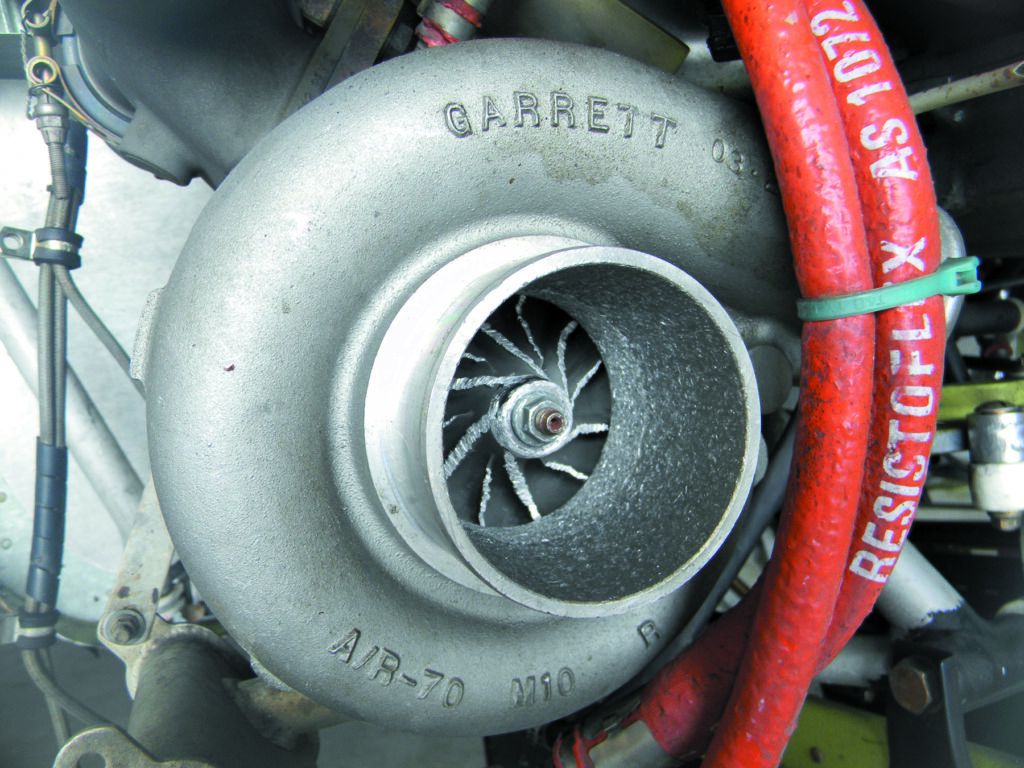
The induction system has been disconnected from the compressor side of this turbo for visual inspection. The oil supply routes into the center between the compressor and turbine. On this installation, a heat shield surrounds the turbine.

Utz pointed out that routine, preventive maintenance that keeps the engine happy is good for the turbo system as well. Keeping the air filter clean is good in general—on a turbo something as basic as a dirty filter means less air into the compressor, resulting in lower manifold pressure at altitude. 

Even with the impressive metallurgy and high-temp alloys used in their manufacture, the environment in which wastegates live mean that they sometimes fail. 

Otherwise, turbos do wear out and lubrication lines get plugged with coked oil—the result of the heat and speed at which the wheels are turning. That usually means it’s overhaul time.

Expected Life

We heard from owners and shops and spoke with Gary Main, proprietor of Main Turbo (www.mainturbo.com), a turbocharger overhaul shop, regarding expected life of turbos in service. From owners and shops we got a 50-50 split. Half said their turbos made it to TBO before needing overhaul, the others said they usually made it about halfway. 

Gary Main told us he was not surprised by the split. He said that the big turbos in the T210 and big twins are “strong and robust” and regularly make it to TBO. Where big power is demanded from the smaller ones, such as in a Cirrus, Piper Malibu or Aerostar, they don’t hold up as well. If the airplane is used for training or large, fast power changes are the rule, the turbo is more likely to expire prior to TBO.

Depending on the model of the turbocharger, overhaul costs start at $2500 for a T210 and go up—figure on at least $3700 for each one on a twin Cessna. It gets very ugly for the Aerostar as $4500 is the starting point and there are two per engine.  

Nevertheless, historically the cost of operating a turbocharged airplane has run only about 15 percent more than its normally aspirated cousin—inexpensive, in our opinion, for the added capability. We saw nothing to change that number.

Proper Operation

The bad news is that there are a couple of misconceptions about turbo system operations among pilots, and they may be reducing turbocharger life. 

First, a lot of pilots assume that the turbo is not spinning during low-power operation, such as on landing or during taxi. That is absolutely incorrect—there is always some exhaust gas going to the turbo, so it’s turning. 

Second, a surprising number of pilots did not know their airplane had limits on allowable manifold pressure above a certain altitude. Most know about critical altitude—the highest altitude at which the turbo will allow the engine to produce rated manifold pressure. However, at some point above critical altitude, the pilot must comply with a table that shows the maximum allowable manifold pressure and reduce power accordingly. 

For example, a Cessna 414A has published maximum manifold pressures for all altitudes above 20,000 feet. That’s because the turbine blades are spinning so fast and get so hot that they stretch—it’s called blade creep—and, if the maximum manifold pressure for the altitude is exceeded, there’s a high risk they will rub against the housing, causing rapid erosion. Ignore it and get welcomed to an early overhaul.

Overshoot

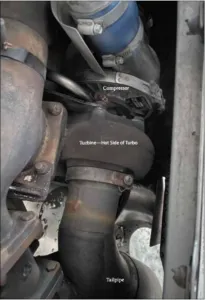
To get an idea of the harsh environment and tight quarters in which many turbochargers live, this is looking straight down on the turbo and tailpipe on the right side of the front engine of a Cessna P337 Pressurized Skymaster. The airplane is used in a Part 135 operation and the company president reports that he’s never had to overhaul a turbo prior to engine overhaul.

Because oil pressure controls the wastegate on an automatic system, it’s not unusual for the manifold pressure to overshoot—exceed redline—on the first takeoff of the day if the oil is still cold. The system is just sluggish. There is a popoff valve that should open to stop the manifold pressure from exceeding more than a few inches above redline and damaging the engine. It’s not a good idea to rely on the popoff valve—monitor manifold pressure on takeoff and stop it at redline. 

With a fixed or manual wastegate, the pilot has to set power—and because it takes a few moments for the turbo to spin up from its relatively low RPM during taxi and runup, the manifold pressure will lag behind throttle movement. Experienced pilots learn to stop throttle movement at some point below the target manifold pressure. Overshoot increases with takeoff elevation—we’ve seen it exceed 15 inches of manifold pressure on a takeoff from Leadville, Colorado, in a Turbo Arrow. 

Cruise

In cruise, back off a bit from a power setting that generates maximum Turbine Inlet Temperature (TIT). Turbo overhaulers and mechanics told us to back off at least 20 degrees to extend the life of the system, be it lean or rich of peak. 

Make all power changes gradually. After landing give the turbo time to spool down.  

At shutdown, the oil flow to the turbo ends and a hot turbo will coke the oil in the unit. That can eventually plug oil galleys and cause turbo failure.  

Many POHs call for a five-minute idle spooldown time after reaching parking. However, research performed on a Cessna Skymaster and more recently by GAMI produced the not surprising information that the turbo is the coolest it is going to get just after touchdown—unless there’s been a high-power approach and chopped throttle. 

The turbo heats up during taxi in. The conclusions were that unless you approach at high power, chop the throttle and taxi a short distance—by the time you reach parking, the turbo has spooled down to an RPM suitable for shutdown. 

Conclusion

After nearly 60 years in regular use in general aviation airplanes, we believe turbochargers have proven their worth and reliability for pilots who want to use their airplanes for more than just recreation.  

They don’t require any extraordinary care beyond what you would do to properly operate the engine. However, when there is a problem, failing to carefully troubleshoot it can send costs skyrocketing if a mechanic just starts replacing parts. 


Care And Feeding And Figuring Out What’s Wrong

In researching this article we got feedback from owners of turbocharged airplanes who reported that they had to overhaul the turbos at about 1000 hours of operation and an equal number who said that their turbos ran fine all the way to when they overhauled the engine. We came away with the opinion that an owner who follows good engine operating procedures generally—no rapid power changes, allowing the engine oil to warm up prior to takeoff and changing the oil on a schedule that reflects hours of operation as well as calendar time—can reasonably expect the turbo to make it to engine TBO.

In speaking with various shops and with Mike Busch, whose Savvy Aviation provides maintenance management to several hundred general aviation aircraft owners, we learned that when there is a problem with a turbo system it’s important to carefully troubleshoot the matter rather than blindly replacing components in hopes of fixing things. In general, there are five things that can go wrong with a turbo system: problems with the turbocharger, controller or wastegate, or leaks in the induction or exhaust systems. Most manifest initially with a loss of manifold pressure at altitude or premature bootstrapping (loss of manifold pressure control because the wastegate is closed). The underlying problems tend to have subtly different symptoms, so it’s important to carefully analyze what’s going on.

While there may be an underlying problem with the engine itself, such as a cylinder or ignition issue, most of those can be diagnosed with a good engine monitor—and we wouldn’t own a turbocharged airplane without a good engine monitor installed.

When you notice a problem, document the details as precisely as you can—power setting, manifold pressure behavior, airspeed, altitude and outside air temperature at the least.

If the problem is a sudden, dramatic loss of manifold pressure, assume worst case—that it’s due to an exhaust system leak, that hot exhaust gases are now spraying around inside the cowling and there is a very real and serious fire risk. Assuming anything else puts you and your passengers in danger. Reduce power immediately and land as soon as practical. If you’re flying a twin and can do so, shut down and secure the engine. Fires due to exhaust system failures have killed too many people. They are why there are a number of ADs calling for regular, careful inspection and maintenance of the exhaust systems of turbocharged engines.

We’re serious about this—while the ADs and awareness among A&Ps about the need for careful exhaust system maintenance have reduced the number of fires dramatically, the risk has not gone away.

After the flight it’s time for consultation with your A&P. If the cause was not an exhaust system failure, do a critical altitude check. That involves seeing if the engine will develop the manifold pressures at altitudes called out in the Airplane Service Manual. If it doesn’t make power and starts bootstrapping at a lower than expected altitude, the problem is most likely an induction system leak.

Induction system leaks may also manifest by higher than normal manifold pressure when idling on the ground. A leak may be spotted during a visual inspection or it may be necessary to pressurize the system with shop air, spray it with soapy water and look for bubbles.

Assuming that the exhaust system has truly been inspected every 50 hours, a leak is less likely than an induction system leak. Exhaust leaks are also easier to find on visual inspection as they leave stains.

Wastegates can get sticky due to lead, carbon, sulfur or coked oil accumulations. If manifold pressure seems to vary randomly, the wastegate may be going. Removing it and applying a source of adjustable air pressure can detect if it is closing smoothly as 50 PSI is approached. If not, it’s probably time for an overhaul.

We’re advised that controller problems are rare. On a twin, swap controllers and see if the problem moves. Otherwise, the poppet valve may have sludge that can be blown out with shop air in the oil return port. Make sure the upper deck reference line has no liquid in it. If it does, purge it and clean the controller’s aneroid chamber—that’s not as difficult as it sounds.

The turbo itself can go south—fortunately, that’s not high on the probability list. If that is the problem, it’s usually obvious. FOD, such as on the turbo pictured below, is easy to spot. Blades rubbing on the housing on the hot side can be observed when the exhaust pipe is pulled. A worn-out center section usually presents through oil leaking into the compressor and processing through the induction system and engine or into the turbine—resulting in oily deposits in the tailpipe and on the belly. However, oil in the turbo may be due to a bad check valve in the supply or return lines. Inspect them first as the turbo may be fine.


This article originally appeared in the May 2021 issue of Aviation Consumer magazine.

For more great content like this, subscribe to Aviation Consumer!

Ferrari admits early unreliability forced F1 engine power drop

Ferrari admits early unreliability forced F1 engine power drop

Ferrari admits it was pressured to “lower the power” of its System 1 engine through the 2022 year, subsequent quite a few failures experienced in the early element of the campaign.

The workforce endured catastrophic engine failures in three of the six races held from May’s Spanish Grand Prix – the place Charles Leclerc retired from the direct – and July’s Austrian GP – in which Carlos Sainz’s car or truck caught fire.

Leclerc’s motor also unsuccessful during June’s Azerbaijan GP, which then forced him to start from the back in Canada many thanks to demanding a new energy device and busting his permitted allocation ahead of the season had achieved halfway.

The Ferrari motor runs a more compact turbo than major rivals Mercedes and Honda, which gives Ferrari an edge underneath acceleration but involves the components to operate at a greater velocity to match their electricity output.

Group principal Mattia Binotto admitted Ferrari decreased the pace at which its engine’s turbo ran through October’s Mexican GP, owing to the slender air at high altitude putting components in hazard of failure presented all turbos need to have to get the job done more difficult to produce their regular output in these types of ailments. This price tag the crew major performance and meant it was caught in no man’s land involving Crimson Bull/Mercedes at the entrance and F1’s midfield.

Subsequent the season finale in Abu Dhabi, where Ferrari beat Mercedes and Leclerc finished second to Max Verstappen, Binotto also admitted Ferrari “had to marginally reduce the power” of its engine next those early-time failures.

This, together with weak tyre management and a lack of in-year improvement, aids clarify why Ferrari’s title challenge to Pink Bull disintegrated from the Hungarian GP onwards.

Binotto, whose personal posture at the helm of the Scuderia is probably less than risk this winter amid rumours he will be changed by Alfa Romeo’s Fred Vasseur, recognized much better motor reliability as Ferrari’s “top priority” this winter season.

“That’s our major precedence simply because in get to get you require to be trustworthy and that has not been the situation in the time, as a stability of the period by itself,” Binotto said.

“The second is the velocity of the car, since while we have been quite aggressive in quali, that has not usually been the circumstance in the race alone – and our race pace, regardless of whether it is from tyre degradation or pure race speed, was not enough for a superior position.

“If you create a rapid and reputable motor vehicle, yes you may perhaps do blunders on techniques or pitstops, but you can normally compensate by way of the reality that the car or truck by itself is fast and responsible – so which is where by we have to have to place our exertion.”

Binotto claimed earlier that Ferrari stopped acquiring its 2022 car fairly early in contrast to Mercedes and Purple Bull, which need to afford to pay for Maranello a head start in making ready its 2023 automobile for a renewed and sustained title problem.

Thank you for your responses!

What did you imagine of this story?