1985 Saab 900 Turbo Test: Replacement for Displacement

1985 Saab 900 Turbo Test: Replacement for Displacement

From the December 1984 issue of Car and Driver.

Who would have thought ten years ago that 1985 would reveal a production-car engine with a turbocharger, an intercooler, double overhead camshafts, four valves per cylinder, and digital-computer-con­trolled fuel injection? Even Formula 1 en­gines didn’t enjoy all of these features back then. The fuel crisis was in full swing, and more and more emission controls were being heaped on automobile powerplants. Vibrant and powerful engines were the last thing we expected from the future.

Yet here we have the new Saab 900 Tur­bo, equipped with all the aforementioned hardware. It’s smog legal, it delivers good fuel economy, and it chums out 160 hp from a modest 1985 cc of displacement. The small Swedish company arrived at this pinnacle of engine technology by steadfast­ly pursuing higher engine output, without allowing the fuel efficiency or the curb weight of its car to suffer.

The first step was adding a turbocharger to the corporate four-cylinder in 1978. Such a move may seem run of the mill to­day, but at the time there were only two tur­bo cars in production: Porsche’s 930 and Buick’s Regal. In 1982, Saab advanced the turbocharging art with its APC (automatic performance control) system, which mod­ulates turbo boost to control engine knock, thereby allowing a higher compression ratio, improved off-boost performance, and greater fuel efficiency.
1985 saab 900 turbo

Dick Kelley|Car and Driver

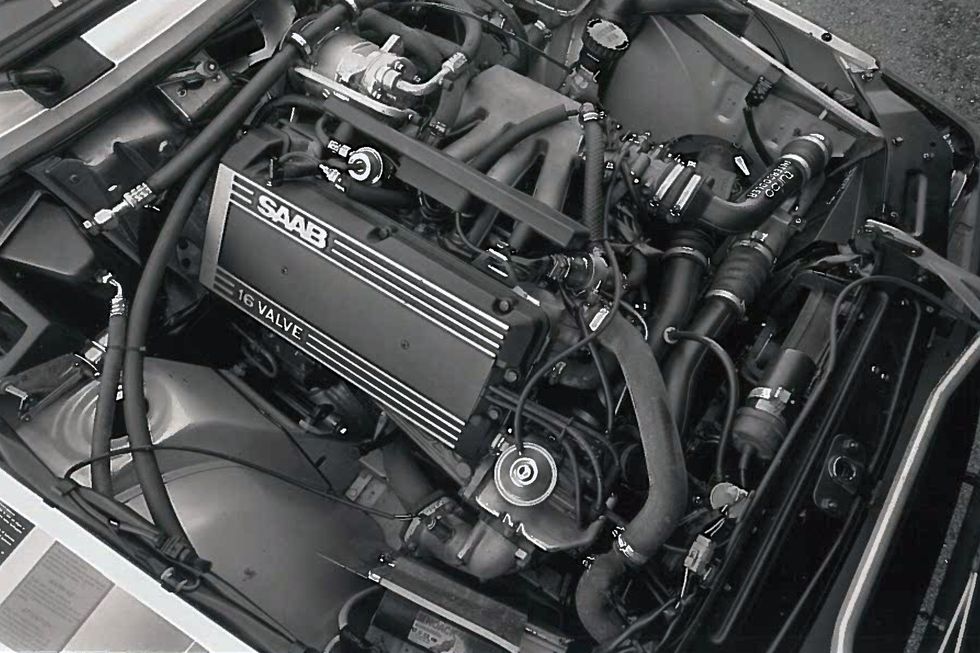
Now we have a third-generation Saab turbo motor, incorporating wholesale de­sign improvements. The most important is a new four-valves-per-cylinder head. The valves are actuated by two chain-driven overhead camshafts via bucket tappets with integral hydraulic lash adjusters. With two 32.0 mm-diameter intake valves and two 29.0 mm exhaust valves per cylinder, the engine breathes more freely than it did through a single 42.0 mm intake and a 34.5 mm exhaust valve, even though valve lift is slightly reduced and the duration of the valve events is about the same. The an­gle between the intake and exhaust valves is only 44 degrees, which yields a compact, pent-roof combustion chamber. The spark plug is centrally located and the double in­take port induces high turbulence, so flame travel is short, combustion is quick and complete, and there is little tendency to­ward detonation.

Taking one more step to minimize knocking, Saab engineers shoehorned an intercooler into the 900’s cramped engine compartment. As a result, the sixteen-valve engine’s peak boost pressure was raised to 10.9 psi (from the 9.4 psi of the eight-valve engine), and the compression ratio was bumped up half a point, to 9.0:1—higher than the compression ratios of most nor­mally aspirated engines. The healthy com­pression and the freer breathing improve the engine’s output both on and off the boost, while the intercooler and the elevated boost pressure move peak output up an­other notch.

Saab has also taken this opportunity to switch from Bosch K-Jetronic mechanical to Bosch LH-Jetronic electronic fuel injec­tion. The new system’s microprocessor controller allows more exact and elaborate regulation of the fuel injection, and a hot­wire airflow sensor comes with the pack­age. This transducer offers less flow re­striction, automatic altitude compensation, and a more precise measure of the intake-air mass.
1985 saab 900 turbo

Dick Kelley|Car and Driver

Thanks to all the new technical exotica, Saab’s star engine now develops 160 hp at 5500 rpm and 188 lb-ft of torque at 3000 rpm, compared with the old powerplant’s 135 hp at 4800 rpm and 172 lb-ft at 3500 rpm. Not only is the output substantially greater, but the spread between the power and torque peaks has increased from 1300 to 2500 rpm, signifying a much more flexible engine. Amazing­ly enough, these increases in output have not been achieved at the expense of EPA fuel economy.

Driving the new Saab brings these bene­fits into sharp focus. The new car is notice­ably quicker than prior versions, and it also seems more relaxed. The sixteen-valve en­gine revs so effortlessly that we found our­selves constantly going faster than expect­ed. Part of the engine’s good nature is its silky smoothness: The Saab sixteen-valve never emits a coarse quiver or a discordant grind. The rest is simply the joy of a healthy torque curve—once the boost is up, this en­gine positively charges for the redline.
1985 saab 900 turbo

Dick Kelley|Car and Driver

The only hardship is waiting for the boost. Despite all the mechanical and elec­tronic improvements, Saab hasn’t done much to make the turbo spin more quickly up to speed. The off-boost performance has indeed been improved, but so has the on-boost output, leaving the margin be­tween the two as great as ever. The boost builds slowly below 2500 rpm, as it does in eight-valve Saabs. Above 3000 rpm, how­ever, throttle response is immediate, even in top gear.

When full use is made of the upper rev range, the sixteen-valve Turbo scoots from 0 to 60 mph in 8.5 seconds, about 0.8 sec­ond quicker than the old car, and covers the standing quarter-mile in 16.5 seconds at 83 mph, a half-second quicker than be­fore. The difference would probably be greater but for the Saab’s traditional prob­lem of wheel hop during hard starts. The tires do stay in contact with the earth at higher speeds, so the 900 Turbo’s peak ve­locity jumps from 113 to 128 mph, making it one of the fastest sedans sold in America.

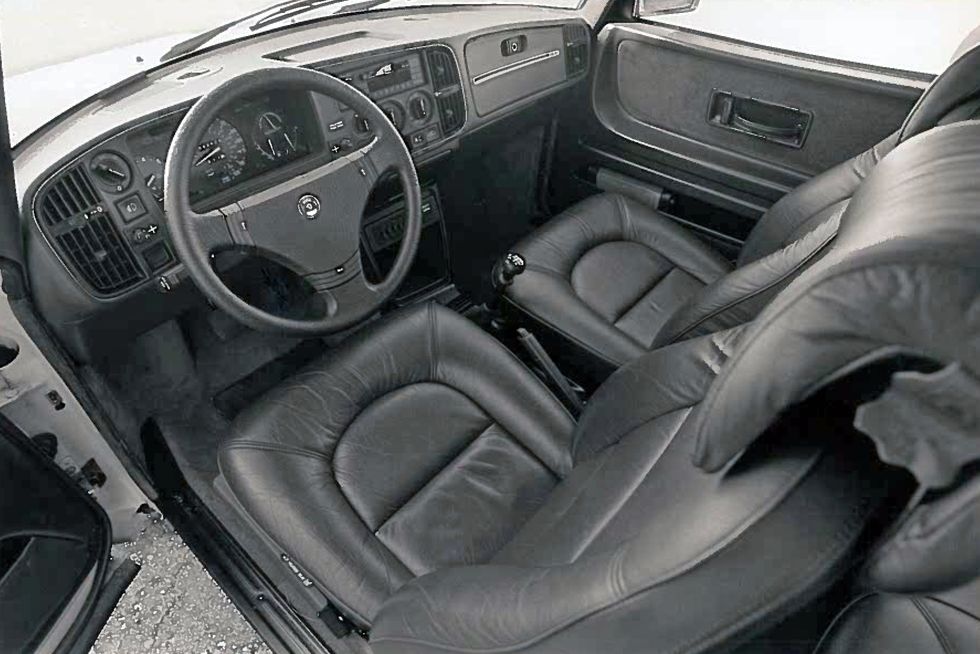
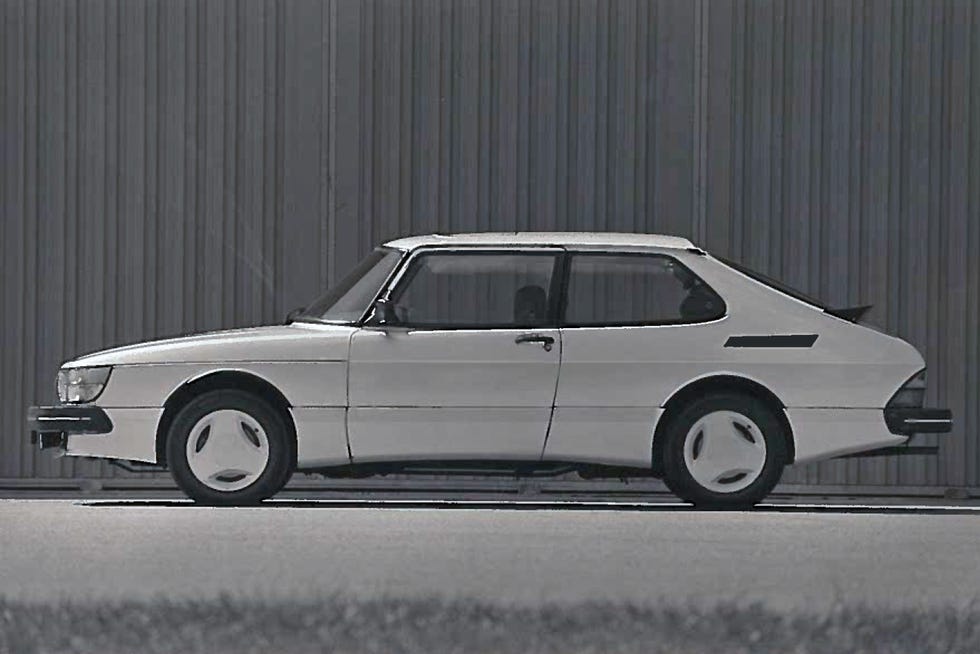
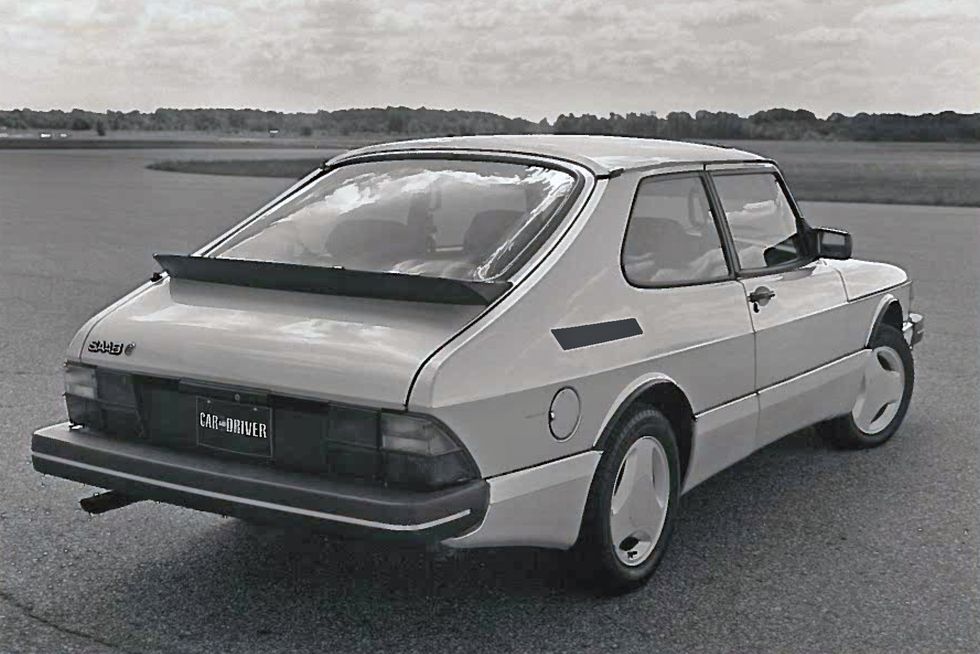
Our Saab’s high-speed talents were helped by its aerodynamic body panels, which are part of the optional Special Per­formance Group. These add-ons reduce the drag coefficient from just over 0.40 to just under 0.40 (according to Saab) and give the car a sleeker, if still blunt, appear­ance. The package also includes leather upholstery, an electric sunroof, fog lights, special three-spoked alloy wheels, V-rated tires, slightly softer rear shock absorbers, and front and rear anti-sway bars (the first such devices ever fitted by the factory to a 900). Our test car was painted a lustrous pearl white, but production versions with this package will come only in black.
1985 saab 900 turbo

Dick Kelley|Car and Driver

The suspension pieces admirably com­plement the more powerful engine. They keep the Saab more upright in hard cor­ners and give it very neutral handling, with understeer and oversteer controlled by the driver’s right foot. Yet, despite the suspen­sion’s tauter and more precise feel, ride comfort seems no worse than before. And the lack of torque-steer effects sets the standard for other powerful front-drive cars to emulate.

For 1985, all 900 Turbos sent to Ameri­ca will have the sixteen-valve engine. In the three-door configuration, they’ll carry a base price of $18,150. The Special Perfor­mance Group costs a hefty $2860 more, a penalty we’d like to see Saab ease by mak­ing the suspension components available separately.

Expensive or not, the new 900 Turbo is unquestionably the best Saab ever—as sol­id and practical as always, but now bristling with remarkable performance as well. The upcoming 9000 has a tough act to follow.

Arrow pointing downArrow pointing down

Specifications

Specifications

1985 Saab 900 Turbo
Vehicle Type: front-engine, front-wheel-drive, 5-passenger, 3-door sedan

PRICE

Base/As Tested: $18,150/$21,010
Options: Special Performance Group (leather upholstery, electric sunroof, fog lights, V-rated tires, anti-sway bars, aerodynamic aids, special wheels, special shocks), $2860; black paint, $385.

ENGINE
turbocharged and intercooled DOHC 16-valve  inline-4, iron block and aluminum head, direct fuel injection

Displacement: 121 in3, 1985 cm3

Power: 160 hp @ 5500 rpm

Torque: 188 lb-ft @ 3000 rpm 

TRANSMISSION
5-speed manual

CHASSIS

Suspension, F/R: control arms/live axle

Brakes, F/R: 11.0-in disc/10.6-in disc

Tires: Pirelli P6
195/60VR-15

DIMENSIONS

Wheelbase: 99.1 in

Length: 186.6 in

Width: 66.5 in
Height: 56.1 in

Passenger Volume, F/R: 46/42 ft3
Cargo Volume: 22 ft3
Curb Weight: 2908 lb

C/D TEST RESULTS
30 mph: 2.6 sec
60 mph: 8.5 sec
1/4-Mile: 16.5 sec @ 83 mph
100 mph: 29.6 sec

Top Gear, 30–50 mph: 11.8 sec

Top Gear, 50–70 mph: 10.0 sec

Top Speed: 128 mph
Braking, 70–0 mph: 217 ft

Roadholding, 300-ft Skidpad: 0.75 g

C/D FUEL ECONOMY
Observed: 20 mpg

EPA FUEL ECONOMY
City/Highway: 19/26 mpg 

C/D TESTING EXPLAINED

Headshot of Csaba Csere

Contributing Editor

Csaba Csere joined Car and Driver in 1980 and never really left. After serving as Technical Editor and Director, he was Editor-in-Chief from 1993 until his retirement from active duty in 2008. He continues to dabble in automotive journalism and LeMons racing, as well as ministering to his 1965 Jaguar E-type, 2017 Porsche 911, and trio of motorcycles—when not skiing or hiking near his home in Colorado. 

Here’s What You Get on a Fully Loaded Mazda CX-90 Inline 6 Turbo

Here’s What You Get on a Fully Loaded Mazda CX-90 Inline 6 Turbo
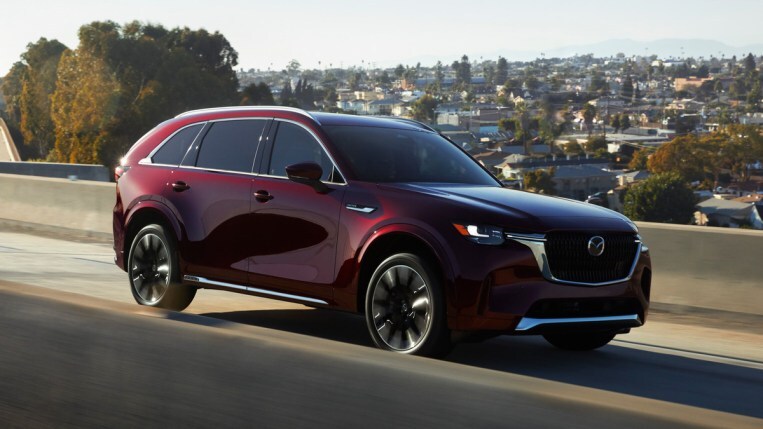
2024 Mazda CX-90 driving on the highway.Every single automaker builds a flagship – a car or truck that reveals the finest of what they can do. It’s generally the most high-priced issue in the showroom, often the major, and constantly amazing.
Mazda has an all-new a person for 2024. The 2024 Mazda CX-90 arrives with a decision of two powertrains. A single is Mazda’s first hybrid – a plug-in hybrid (PHEV) version we’ll include independently.

The other makes use of a powertrain popular to luxury vehicles – a turbocharged inline 6-cylinder motor mated to an all-wheel-generate (AWD) technique biased towards the rear wheels. It’s a set up regarded for smoothness and crisp handling.

Mazda will offer you the CX-90 in eight trim degrees. The leading-of-the-line 3.3 Turbo S Top quality As well as carries a luxury car’s price tag – commencing at $59,950 – and earns it with grand furnishing and all the makings of a great general performance motor vehicle.

340-Horsepower Turbo Engine

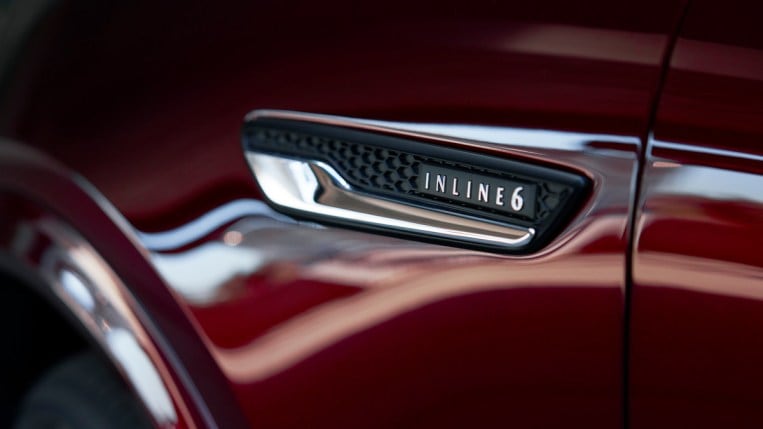
Mazda will give two different “straight six” engines on the CX-90. The standard edition has very little to be ashamed of, with 280 horsepower. But the Turbo S Quality Moreover gets a extra powerful, 340-horsepower variation.

Straight-6 engines are regarded for their superb equilibrium and smooth electric power supply. And 340 horsepower is a usual determine for the luxurious classes, outdueling everything Toyota or Honda puts in a utility vehicle and landing firmly in the territory of midsize SUVs from BMW and Audi.

2024 Mazda CX-90 engine badge.

Rear-biased i-ACTIV AWD Procedure

We haven’t had the likelihood to travel the CX-90 but (no one in the automotive press has as of this crafting), so we simply cannot vouch for how it handles.

But it has a promising setup. Mazda’s AWD procedure sends extra power to the rear wheels in day-to-day driving, going that power to the entrance only when needed for extra grip. That gives you the day-to-working day really feel of a rear-wheel-travel motor vehicle like fanatics appreciate, but serious cold-weather security. Incorporate it with Mazda’s Kinematic Posture Handle procedure for extra dealing with harmony, and the CX-90 has the technical specs of a fun-to-push SUV.

Deluxe Appointments

Most automakers can give you leather. With the CX-90, Mazda will provide you Nappa leather-based – a finer quality of conceal that goes via extra softening methods in the tanning procedure. The front seats are 8-way electrical power-adjustable, heated, and ventilated. So, remarkably, are the second-row seats.

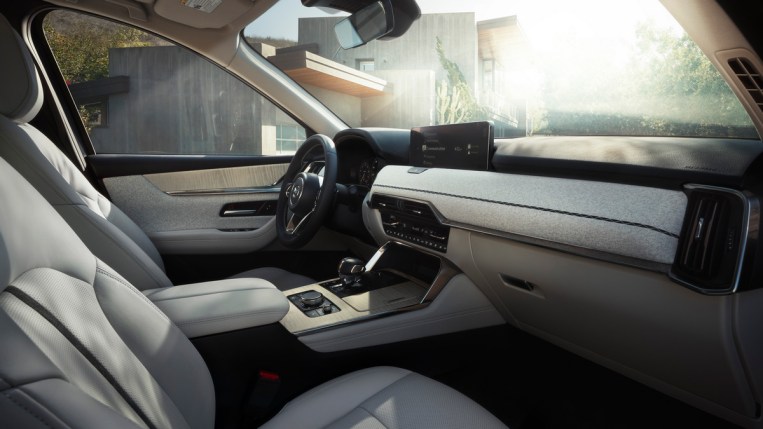
3-zone automatic local climate control with a pollen filter, LED accent lighting through, and a 12.3-inch entire-color heart touchscreen show (bigger than the 10.25-inches of the entry-level trim) make the CX-90’s cabin feel a lot more upscale than you could assume from what is traditionally considered a mainstream manufacturer.

2024 Mazda CX-90 interior passenger side.

Thoughtful Design

It’s not just the elements, nevertheless. It is how thoughtfully they’re assembled.

Some automobiles feel nicely-produced. Some others experience crafted. The CX-90 pushes Mazda into new territory. We’re notably fond of, oddly adequate, the stitching on the dashboard.

Tone-on-tone oatmeal-coloured dashboard fabrics are nicely established off by hanging stitches — “specifically influenced by hand-bookbinding and an intricate Japanese weaving technique acknowledged as Kumihimo,” Mazda claims. We’ve never ever viewed it on an additional car, which can make it sense specific.

Those people Nappa leather-based seats have quilting, which will make them seem more complex.

Basic safety Tech

The Mazda CX-90 3.3 Turbo S Premium Plus will come with a whole suite of modern day security aids. That incorporates sophisticated driver assists like radar cruise handle with quit and go and computerized speed restrict assist, and lane-preserving guide that can flippantly help steering to support retain you centered in your lane. It is not fairly the self-driving automobiles of the long run, but it can be very helpful on very long freeway drives.

Far more Mazda CX-90

Browse our total assessment or create and selling price your personal Mazda CX-90. If you are completely ready to choose some motion, verify out the Mazda CX-90 styles for sale near you.

The Best Toyota Engine is a Twin-Turbo Hybrid V6

The Best Toyota Engine is a Twin-Turbo Hybrid V6

The V8 engine holds a hallowed status in automotive lifestyle, from powering stock auto racers to ruling around Valhalla in specific sci-fi movie franchises. It is no surprise – V8s have prolonged been the alternative for simple, reasonably priced, tough electricity. But new technology has it on the ropes. Turbocharging and electrification are encouraging lesser engines reach equal ability with superior gas overall economy. Toyota’s new i-Power MAX twin-turbo V6 hybrid powertrain is a fantastic illustration of the movement. Not only has it replaced V8s in Toyota’s lineup, but it is also just the greatest Toyota motor available now. Toyota and Lexus should put it in all the things. 

What is the i-Pressure MAX Hybrid powertrain?

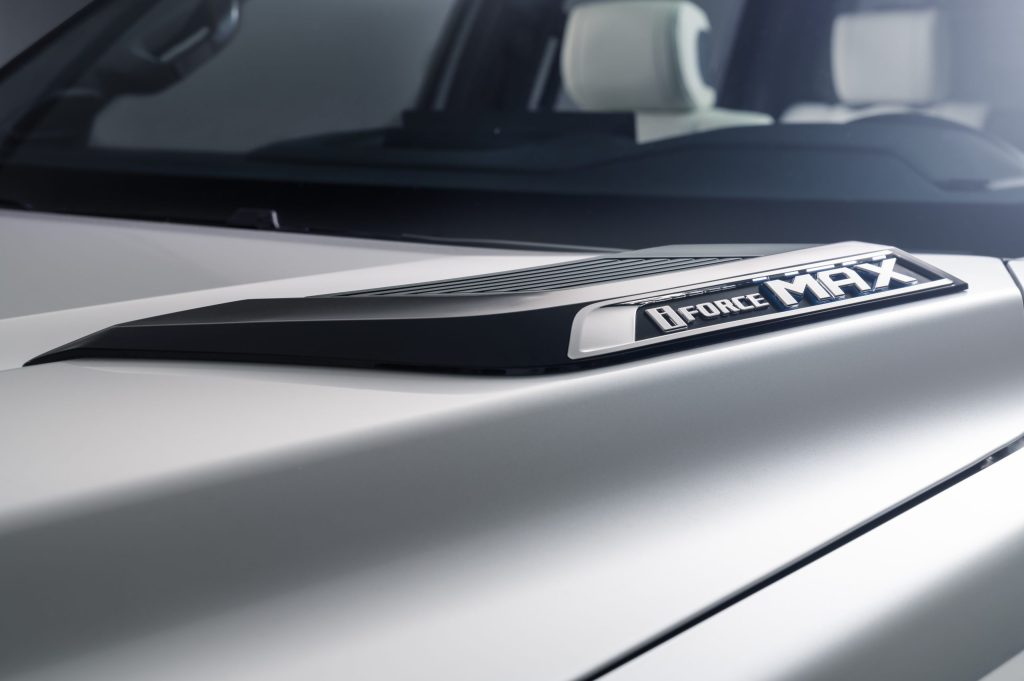
Close up of the i-FORCE MAX engine badge on a new Toyota Tundra.
i-Drive MAX Motor Badge | Toyota

Toyota created the i-Pressure MAX hybrid motor to replace its V8. The powertrain includes a 3.4-liter V6 fuel motor with twin turbos and a 1.87-kwh battery with an electric motor. 

5 Craziest Mazda Miata Engine Swaps

5 Craziest Mazda Miata Engine Swaps

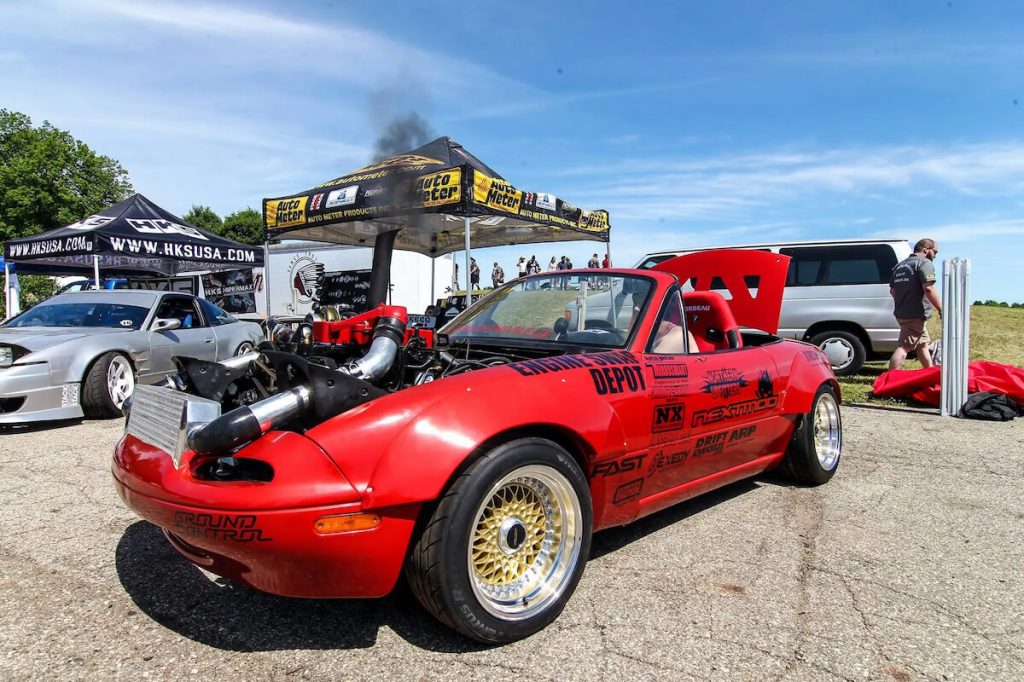
The Mazda Miata is one of the most preferred sports activities autos at any time built, recognised for its agile handling, impressive reliability, and affordability. But for some enthusiasts, the inventory engine isn’t enough. That’s exactly where motor swaps come in – changing the convertibles’ primary motor with a thing extra highly effective, unique, or just basic mad. In this write-up, we’ll appear at five of the craziest Mazda roadster engine swaps at any time completed, from a V8-powered monster to a rotary motor that spins to above 10,000 RPM.

Hellcat Miata

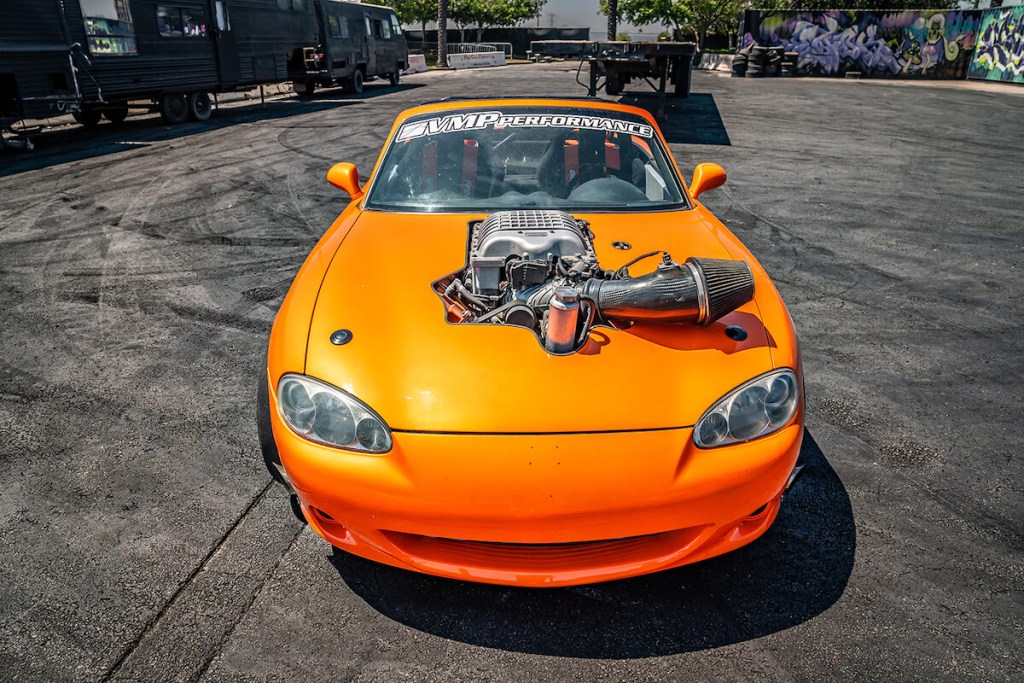
Hellcat Miata orange
Hellcat Miata | Hoonigan

Coming in at number a single on this record has to be the Hellcat swapped Miata. You would think about a large engine like the 6.2-liter supercharged Hemi would not match in a roadster. However, a single gentleman produced it happen although pursuing 707 horsepower in a 2400-pound car or truck. Would you travel a compact convertible with the energy-to-body weight ratio of most hypercar?

5 of the Worst Porsche Engines Ever Made

5 of the Worst Porsche Engines Ever Made

Porsche is synonymous with superior efficiency, precision engineering, and innovation. Above the years, they have manufactured some of the most iconic sporting activities autos in the world. Regretably, even so, not all of their engines have been thriving. From reliability troubles to effectiveness shortcomings, these engines have remaining a large amount to be sought after. Even though Porsche has acquired from these problems, analyzing the significantly less effective engines is vital to have an understanding of the brand’s evolution.

Porsche M96 – Infamous IMS bearing challenge

Porsche 911 silver
Porsche 996 911 | Getty Pictures

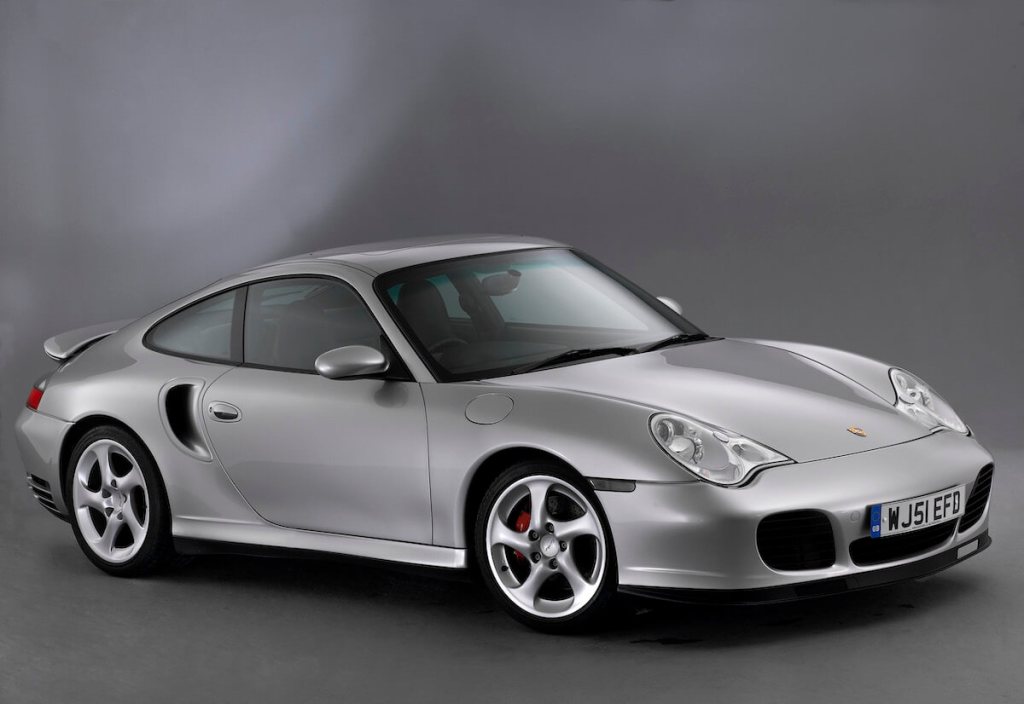
The Porsche 996 Carrera 4, developed involving 1997 to 2006, was plagued with a extreme issue regarded as the Intermediate Shaft Bearing (IMS) issue. The challenge could result in the automobile to turn out to be inoperable with as minor as 3,000 miles on the odometer. This trouble is in the 986 Boxster as nicely, made in the identical product decades. The IMS bearing is situated the place the flywheel meets the crankshaft, and a faulty bearing could sabotage the whole motor.

The Subaru BRZ Will Get A Turbocharged Engine? A New Report Says Yes

The Subaru BRZ Will Get A Turbocharged Engine? A New Report Says Yes

Will the Subaru BRZ at last get a turbocharged motor? It will if a new report from BestCarWeb is appropriate. The Japanese site says the upcoming-generation Subaru BRZ and Toyota GR86 sport coupe will get a new 1.6-liter turbocharged motor. And it will make its debut with hybrid technological know-how.

The report says in the movement toward electrification, the two Japanese automakers are worried it will be the close of the rear-travel BRZ and GR86 activity coupes with their recent powertrain.

2025 Subaru BRZ
photo credit rating: Opposition Subaru

They stated the upcoming-technology Subaru BRZ and Toyota GR86 are by now staying developed and will launch with a 1.6-liter turbocharged engine plus hybrid ability with the target of launching the new design in 2025.

Toyota is taking the lead in the 2025 Subaru BRZ/Toyota 86 enhancement. And plans are that the 2.4-liter horizontally-opposed Subaru Boxer motor will be dropped in favor of the new powertrain. And the upcoming-era sports coupe will be created with Toyota’s engineering.

2025 Subaru BRZ
photo credit rating: Competition Subaru

The present-day prepare is to use a 1.6-liter 3-cylinder turbocharged engine from the GR Yaris or GR Corolla with a 2-clutch 1-motor hybrid technique. The report further states the new BRZ/GR86 will undertake the Lexus IS system with a shorter wheelbase.

The upcoming-technology Subaru BRZ and Toyota GR86 will dwell on but with a hybrid electric powered powertrain. Toyota’s latest 1.6-liter turbo makes 272ps (268 horsepower) in the GR Yaris. Nevertheless, they could enhance electricity and functionality with the new hybrid motor assist, and it will be additional gasoline economical than the 2.4-liter Subaru Boxer engine. The report claims the new 2025 Subaru BRZ/Toyota GR86 will have 295 horsepower.

The 2023 BRZ/GR86 2.4-liter by natural means aspirated Boxer engine produces 228 horsepower and 184 lb.-ft. of torque, so the new athletics car will get a considerable electric power upgrade. Subaru Corporation is restricted-lipped and has not verified this new details from Japan.

For the subsequent-generation Subaru BRZ and Toyota GR86 to endure, there will have to be powertrain changes manufactured. Adopting a modest turbocharged engine coupled with a Toyota hybrid technological innovation helps make perception. Keep tuned.

You Could Also Like: Remember The Subaru Outback Sport? Report Says It’s Coming Back again Quickly As A Levorg

Denis Flierl has invested over 30 yrs in the automotive field in a consulting position operating with each individual significant car or truck brand. He is an accredited member of the Rocky Mountain Automotive Push. Test out Subaru Report, where he covers all of the Japanese automaker’s products. More stories can be identified on the Torque Information Subaru page. Comply with Denis on Fb, Twitter, and Instagram

Subaru Report – We have obtained you lined! Test back again tomorrow for far more distinctive, educational SUBARU news, critiques, and previews you can trust.

Leave your responses under, share the article with good friends, and tweet it out to your followers!

Photograph credit rating: Opposition Subaru