The carmaker has been missing fascinating powertrains from its lineup for the longest time while its rivals have made available them for time
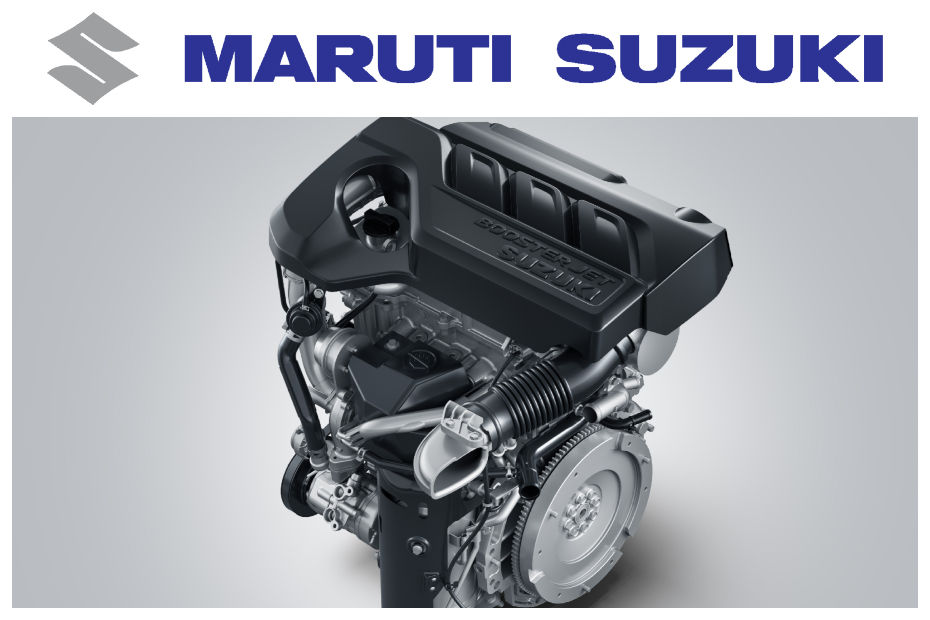
Maruti took the covers off the Baleno-primarily based crossover, the Fronx, at the 2023 Vehicle Expo. One of the essential highlights about the Fronx is the reintroduction of the 1-litre Boosterjet turbo-petrol engine alternative last found in the Baleno RS a few a long time in the past. Although getting a detuned turbo-petrol it is not specifically packed with performance, it is a promising begin and Maruti’s lineup could advantage from the prolonged-awaited introduction of turbocharged petrol engines throughout the lineup.
The Odd-one particular Out
Grand Vitara hybrid powertrain
In recent years, turbo-petrol engines have become rather frequent in most premium compact offerings. However, Maruti has not presented the gain of punchier and smaller sized engines whilst rivals like Hyundai and Tata have utilized them to placement them selves as additional enjoyable brand names. As an alternative, the model gives TWO petrol engines across 12 styles. A 1.2-litre petrol unit for hatchbacks and the Dzire, though the others share a 1.5-litre petrol engine. Even the newly released sturdy hybrid powertrain in the Grand Vitara offers less than 120PS of general performance.
In addition, manufacturers like Mahindra, Kia, and MG have also introduced strong turbocharged engines that supply extra punch than their Maruti rivals in nearly just about every class. Even Nissan and Renaul supply the alternative of a 100PS turbo-petrol engine with their subcompact SUVs.
Also Examine: Maruti Programs To Start 6 EVs In India By 2030, Anticipate Electrical Versions Of Wagon R, Fronx & Swift
Maruti’s Prior Turbocharged Featuring
The Fronx 1-litre Boosterjet motor is to some degree common to the Indian current market. It premiered as the powertrain for the sportier Baleno RS with a efficiency score of 102PS and 150Nm, mated to a five-speed guide only. However, it entered the top quality hatchback area way too late and with much too small. Even then, the likes of the Volkswagen Polo and Fiat Punto Abarth provided 105PS/175Nm and 145PS/212Nm respectively, leaving the Baleno RS in the dust. The Polo GT TSI also experienced the advantage of the 7-pace dual-clutch computerized. So, right after a quick operate of just 3 decades, the Boosterjet engine and the Baleno RS have been demonstrated the door.
Similar: An All-electrical Maruti Fronx Is In The Performs, Very likely To Rival The Tata Nexon EV
How Maruti Can Do It Appropriate With Turbo-petrol Engines
With Maruti reintroducing a turbo-petrol engine option at the cusp of new emission norms coming into outcome, we sense the carmaker also sees some truly worth in bringing these types of engines to its lineup. But the sector has advanced and the 100PS 1-litre Boosterjet device is not sufficient to choose on the competition. In its place, Maruti should deliver Suzuki’s 1.4-litre BoosterJet device to India, as an solution with products these as the new Grand Vitara and XL6.
This motor, in world-wide markets, is rated at 140PS and 220Nm, making it a ton much more suitable for the career. It would also bring those Maruti styles up to par with their rivals from Hyundai and Kia that also occur with an motor generating 140PS.
Which Maruti Product Requires It The Most?
We experience that the Grand Vitara is in dire require of an enjoyable powertrain choice. A premium giving, though beloved for its extremely productive potent hybrid powertrain, it is obviously underpowered for the phase. In our serious-entire world general performance assessments, the 103PS Grand Vitara took an agonising 15.24 seconds to accelerate from zero to 100kmph. In the meantime, the turbo-petrol variants of the Hyundai Creta and Kia Seltos did the identical in less than 9.5 seconds. Even the 1-litre turbo-petrol variants of the Skoda Kushaq and Volkswagen Taigun are more quickly than the Grand Vitara.
Exactly where Would The Recent Turbo Device Make Feeling?
The Maruti design bringing back again the turbo-petrol engine is the Fronx. Even with 100PS and 148Nm on tap from the up-to-date 1-litre Boosterjet unit, it falls shorter in comparison to other turbocharged subcompact offerings like the Tata Nexon, Hyundai Location and Kia Sonet that give 120PS. Even so, it would be far much more captivating in a thing like the Swift to placement it as a warm hatch in the Indian market and be more inexpensive than the Grand i10 Nios Turbo that was priced all over Rs 9.5 lakh (ex-showroom).
Maruti will supply the 1-litre Boosterjet engine with the decision of five-velocity handbook and six-velocity computerized transmissions. Whilst the latter is more refined than what is presented by Mahindra and Tata rivals, Hyundai and Kia’s turbo-petrol engines get the option of a twin-clutch automated.
Also Browse: Maruti And Hyundai India Blended Have Around 5 Lakh Pending Orders
Do you also really feel the deficiency of turbo-petrol engines in the Maruti lineup? Enable us know which Maruti model you would most like to have with a extra strong turbo-petrol motor in the remark segment.
A short while ago, the minimal Jeep Compass has been striving to make a comeback. It got a much more attractive inside and then bought a crucial ability bump to help it be far more aggressive. See what the 2023 Jeep Compass has to supply from rivals.
How a lot electric power does the 2023 Jeep Compass have?
2023 Jeep Compass | Jeep
The 2023 Jeep Compass has a new turbocharged 2.-liter inline-four motor that cranks out 200 hp and 221 lb-ft of torque. This device is replacing the more mature 2.4-liter four-cylinder motor with 180 hp and 175 lb-ft of torque.
This is an superb power bump that really should be apparent at the rear of the wheel. The previous motor aided the Compass speed up from to 60 mph in about 10.1 seconds, which is underwhelming.
It’s paired with a new eight-pace computerized transmission to greatly enhance its performance and has typical all-wheel drive.
Plus, Mopar Insiders shares that the engine has a twin-scroll low inertia turbocharger with an actuated squander electric gate for increased responsiveness and general performance. Hydraulic mounts lessen vibrations, and immediate gas injection cuts down emissions.
A devoted cooling circuit cools intake air, and a h2o-cooled exhaust manifold reduces emissions though building the motor extra responsible. General, the motor is additional sturdy, responsible, smoother, and much more productive.
It helps the 2023 Compass get an EPA-believed 24 mpg in the town and up to 32 mpg on the freeway. This is an maximize of two mpg throughout the lineup.
The 2023 Jeep Compass cost begins at $29,995, and the assortment-topping Compass Trailhawk design requires the cost up to $35,745. These are the MSRPs and don’t involve the $1,595 spot rate or dealership markups.
The 2023 Toyota RAV4 commences at $27,975, and the 2023 Honda CR-V starts at about $31,610, when the Subaru Crosstrek will come in at $29,215. So, it falls in the center of the selling price array. However, normal AWD advert an increased overall performance give it an edge.
As well as, it comes with tons of price. The 2023 Compass Sport has 17-inch wheels, LED headlights, roof rails, heated mirrors, a 10.1-inch infotainment screen, wireless Apple CarPlay/Android Automobile, USB ports in just about every row, and an adjustable load ground.
Moving up in trim ranges presents access to heated/ventilated seats, a electric power liftgate, a 360-diploma digital camera, parking sensors, a wireless charging pad, high quality leather-based upholstery, twin-zone climate control, keyless ignition, and a panoramic sunroof.
Is the 2023 Compass Trailhawk great for off-roading?
2023 Jeep Compass Trailhawk | Jeep
Of course, the 2023 Jeep Compass Trailhawk has higher than-typical off-roading abilities. The new motor will support it climb more than and energy by way of hurdles with a lower possibility of overheating or straining.
The suspension raise provides it about 8.07-inch floor clearance, and it rides on 17-inch wheels wrapped in beefy all-terrain tires. It characteristics tow hooks and protective underbody skidplates with hill descent management.
In addition, the Selec-Terrain program attributes modes for snow, sand/mud, rock, and very low-variety gearing. It has a 20:1 crawl ratio.
The Compass has an enhanced inside with an fascinating new motor that ought to make it sportier and enhance its capabilities. We just cannot wait around to get driving the wheel.
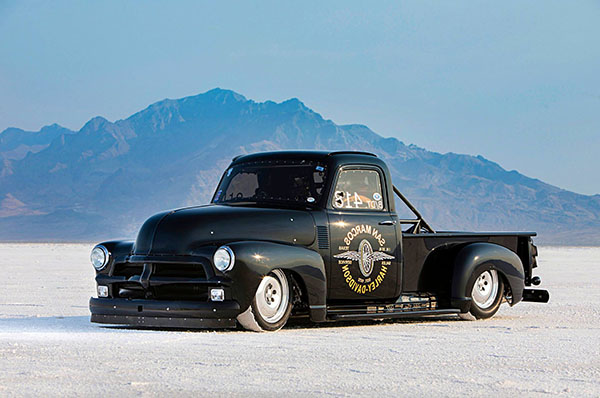
Resto-mods are some of the coolest builds out there, and there’s no shortage of guys who will entirely deck out an previous-model car or truck or truck. Regardless of whether it be for pure nostalgia or aesthetic, they normally switch out fantastically and change the unique into something unbelievable. This sort of is the scenario of David Pilgrim’s 1954 Chevrolet 3100 that we received to test out at PRI final calendar year.
Pilgrim’s father very first acquired the truck new the 12 months it entered output as a get the job done truck, and drove it for close to 20 many years ahead of passing it on to his son. It then saw use hauling for the Harley-Davidson dealership Pilgrim started off and aided in his work in the Texas oil fields. By the late ’80s the Chevy entered storage for a couple a long time although Pilgrim started to emphasis on other areas of existence. Racing experienced often been a spouse and children enthusiasm although, and he understood he’d be saving it for later.
David and his wife Debbie started looking into drag racing right after attending an NHRA event, which inevitably led to the pair coming into the Bonneville Salt Flats scene. Pursuing a handful of turbocharged bike builds and a C5 Corvette that strike a most effective pace of 246.148 mph, he got the thought for the 3100.
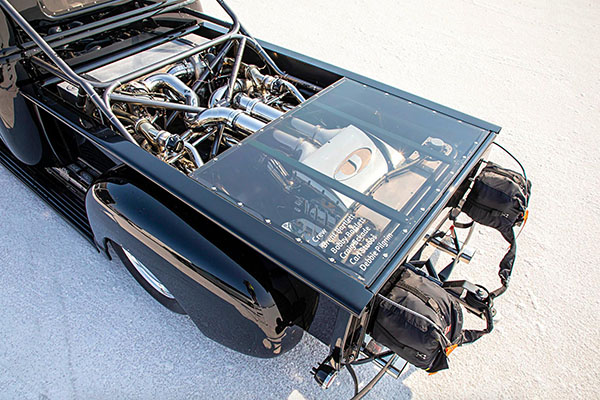
The develop started off at Johnson’s Very hot Rod Shop in Gadsden, AL, wherever the chassis was engineered to maintain the rules-expected factory frame rails beneath the taxi. A number of other custom made touches let for the truck to be hyper aggressive even though nonetheless keeping its vintage body. The whole control bodyweight is somewhere around 7,700 lbs. so that Pilgrim can get sufficient traction on the strip.
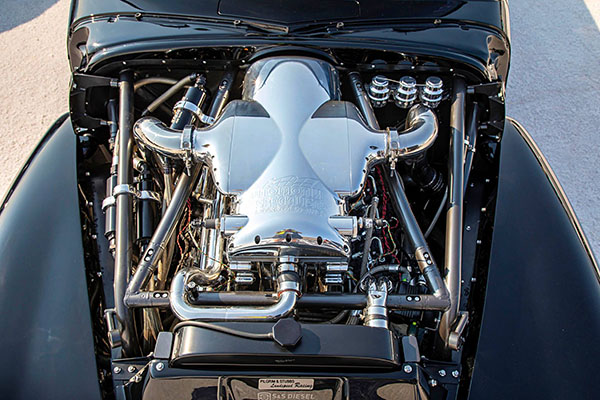
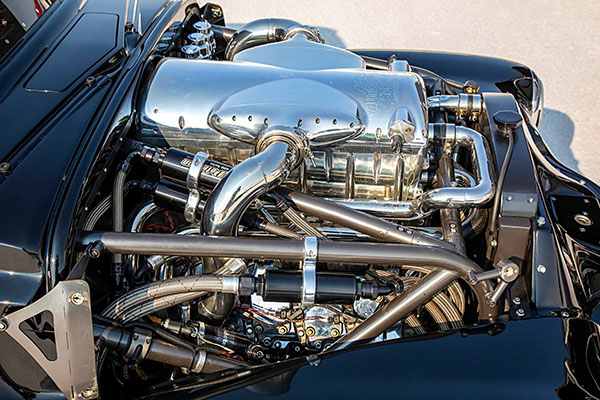
The most amazing element of the develop is simply just that the 6.6L LBZ Duramax engine can healthy within just the body of the truck at all. At first, it touted a little 235 cid straight-6. Now the little-frame truck not only has to residence a enormous diesel motor, but also an spectacular quad-turbo set up with enough piping to blow your thoughts.
“It’s basically all in the tune-up,” Pilgrim reported. “It’s a de-stroked motor with a Winberg crank constructed by Automotive Specialists Racing Engines in Harmony, NC. It’s acquired Carrillo rods, Mahle 16.5:1 pistons, Edelbrock heads, and the intercoolers and very substantially almost everything else is personalized fabrication.”
Rick Squires and STS Turbo were paramount in the quad-turbo set up that separates the develop from competitors. It’s comprised of two sets of compound turbochargers that sit concerning the phase-sides of the first extensive mattress. The very first stage are Comp 62mm units, when the second phase is made up of Comp 72mm units.
“There’s 4 turbos and two intercoolers, a single in the entrance and 1 in the back again,” he says. “Air goes by way of the a person in the back soon after the initial turbos, then receives stepped on yet again and will come up front to get cooled.”
As for fueling, Pilgrim’s set up is supported by a variety of S&S Diesel Motorsport items that make improvements to performance, ability output and dependability. It has two big long-stroke pumps together with 250{49e09b23eae7466ccc7574c19ebb3019301c9a11d2999feff81a3526451546a5} above injectors that perform in conjunction with a Waterman raise pump.
Altogether, the LBZ tends to make a whopping 1,500 horsepower many thanks to all the effectiveness additions. That amount of electrical power was ample to propel Pilgrim and his 1954 Chevy to the land pace report in his course in 2021 with a pace of 220.226 mph.
Diesel of the 7 days is sponsored byAMSOIL. If you have an engine you’d like to emphasize in this collection, make sure you email Engine Builder Editor Greg Jones at [email protected]
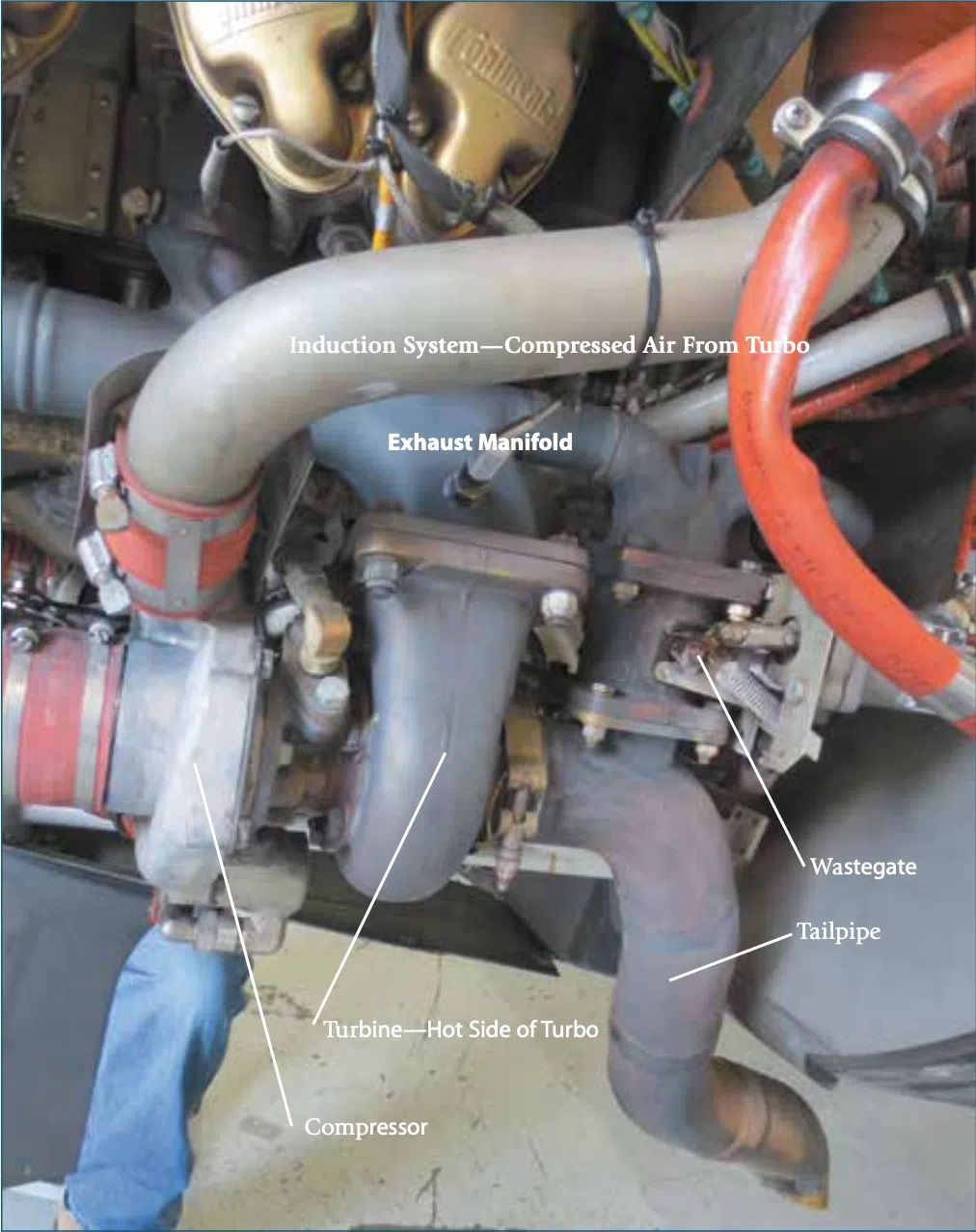
Wastegate and one of the two turbochargers on a Cessna 400.
Full disclosure—we have a bias when it comes to turbosuperchargers. We like them. A lot. After flying them for more than 45 years and using them to get to altitudes that allowed a safe flight when we could not have even launched in a normally aspirated machine, we think that they are well worth the cost of care and feeding. That’s above and beyond the comfort they have given us during mountain operations and high and hot takeoffs. Apparently, our opinion is consistent with the historical market as turbocharged singles and twins have outsold their normally aspirated kin.
Background
We call them by several names—turbo and turbocharger are shorthand for a turbosupercharger, which is a supercharger spun by a turbine in the exhaust system.
They’ve been around in aviation for over 100 years; in 1920 an Army test pilot climbed to over 33,000 feet in a LePere biplane powered by a Liberty engine equipped with a General Electric turbocharger. Cessna is credited with successfully bringing turbocharging to general aviation in the Model 320 in 1962.
Hartzell is currently the sole supplier of turbos in the U.S. Feedback from the field has been that Hartzell has cleaned up the quality control issues that it inherited when it took over Kelly Aerospace, which had acquired the Garrett and Rajay lines of turbos.
The Basics
A turbocharger is an air pump that sends compressed air to the engine intake system. Half of it is a turbine that lives in the hellish environment of the exhaust system—its wheel is spun by those fiery gases. When fully engaged it can spin at over 100,000 RPM and glows brightly enough for a person to read a book.
The turbine wheel shaft extends through the center housing into the cold side, where it spins the pump that compresses the ambient intake air and jams it into the induction system, allowing more power to be developed.
Two Versions
There are two distinct underlying designs of turbo system. In one, the engine develops sea level manifold pressure up to a selected altitude—it’s referred to as a turbonormalized engine. In the other, a boosted or “blown” engine, the engine can develop greater than ambient manifold pressure up to an altitude at which the system can’t compress the ambient air enough and manifold pressure starts to drop, the engine’s critical altitude.
A wastegate—the butterfly valve in the exhaust pipe upstream of the turbo—routes air either down the remainder of the tailpipe or diverts it into the turbo, or some mixture of the two. When closed, it all goes into the turbo.
Some wastegates are fixed—the pilot controls power with the throttle—and some are manual—there is a second control in addition to the throttle that the pilot must use in setting power. However, most are automatic—a controller senses the pressure of the air in the upper deck of the induction system, just upstream of the throttle body, and uses engine oil pressure to set the position of the valve in the waste-gate to maintain the manifold pressure the pilot has commanded with the throttle. Properly adjusted, an automatic system requires no action by the pilot during a climb or descent—which is not the case with a fixed or a manual wastegate.
When you discover that your system can’t make the promised manifold pressure at altitude, it doesn’t mean it’s time for an overhaul. According to Scott Utz, director of maintenance at Arapahoe Aero on Denver’s Centennial Airport, turbos hold up quite well—most of the time the problem will be something other than the turbo. See the sidebar “Care And Feeding And Figuring Out What’s Wrong” below.
Preventive Maintenance
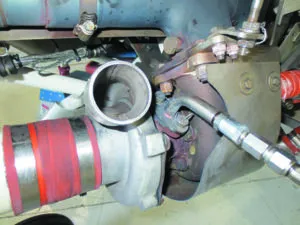
The induction system has been disconnected from the compressor side of this turbo for visual inspection. The oil supply routes into the center between the compressor and turbine. On this installation, a heat shield surrounds the turbine.
Utz pointed out that routine, preventive maintenance that keeps the engine happy is good for the turbo system as well. Keeping the air filter clean is good in general—on a turbo something as basic as a dirty filter means less air into the compressor, resulting in lower manifold pressure at altitude.
Even with the impressive metallurgy and high-temp alloys used in their manufacture, the environment in which wastegates live mean that they sometimes fail.
Otherwise, turbos do wear out and lubrication lines get plugged with coked oil—the result of the heat and speed at which the wheels are turning. That usually means it’s overhaul time.
Expected Life
We heard from owners and shops and spoke with Gary Main, proprietor of Main Turbo (www.mainturbo.com), a turbocharger overhaul shop, regarding expected life of turbos in service. From owners and shops we got a 50-50 split. Half said their turbos made it to TBO before needing overhaul, the others said they usually made it about halfway.
Gary Main told us he was not surprised by the split. He said that the big turbos in the T210 and big twins are “strong and robust” and regularly make it to TBO. Where big power is demanded from the smaller ones, such as in a Cirrus, Piper Malibu or Aerostar, they don’t hold up as well. If the airplane is used for training or large, fast power changes are the rule, the turbo is more likely to expire prior to TBO.
Depending on the model of the turbocharger, overhaul costs start at $2500 for a T210 and go up—figure on at least $3700 for each one on a twin Cessna. It gets very ugly for the Aerostar as $4500 is the starting point and there are two per engine.
Nevertheless, historically the cost of operating a turbocharged airplane has run only about 15 percent more than its normally aspirated cousin—inexpensive, in our opinion, for the added capability. We saw nothing to change that number.
Proper Operation
The bad news is that there are a couple of misconceptions about turbo system operations among pilots, and they may be reducing turbocharger life.
First, a lot of pilots assume that the turbo is not spinning during low-power operation, such as on landing or during taxi. That is absolutely incorrect—there is always some exhaust gas going to the turbo, so it’s turning.
Second, a surprising number of pilots did not know their airplane had limits on allowable manifold pressure above a certain altitude. Most know about critical altitude—the highest altitude at which the turbo will allow the engine to produce rated manifold pressure. However, at some point above critical altitude, the pilot must comply with a table that shows the maximum allowable manifold pressure and reduce power accordingly.
For example, a Cessna 414A has published maximum manifold pressures for all altitudes above 20,000 feet. That’s because the turbine blades are spinning so fast and get so hot that they stretch—it’s called blade creep—and, if the maximum manifold pressure for the altitude is exceeded, there’s a high risk they will rub against the housing, causing rapid erosion. Ignore it and get welcomed to an early overhaul.
Overshoot
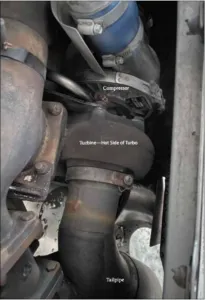
To get an idea of the harsh environment and tight quarters in which many turbochargers live, this is looking straight down on the turbo and tailpipe on the right side of the front engine of a Cessna P337 Pressurized Skymaster. The airplane is used in a Part 135 operation and the company president reports that he’s never had to overhaul a turbo prior to engine overhaul.
Because oil pressure controls the wastegate on an automatic system, it’s not unusual for the manifold pressure to overshoot—exceed redline—on the first takeoff of the day if the oil is still cold. The system is just sluggish. There is a popoff valve that should open to stop the manifold pressure from exceeding more than a few inches above redline and damaging the engine. It’s not a good idea to rely on the popoff valve—monitor manifold pressure on takeoff and stop it at redline.
With a fixed or manual wastegate, the pilot has to set power—and because it takes a few moments for the turbo to spin up from its relatively low RPM during taxi and runup, the manifold pressure will lag behind throttle movement. Experienced pilots learn to stop throttle movement at some point below the target manifold pressure. Overshoot increases with takeoff elevation—we’ve seen it exceed 15 inches of manifold pressure on a takeoff from Leadville, Colorado, in a Turbo Arrow.
Cruise
In cruise, back off a bit from a power setting that generates maximum Turbine Inlet Temperature (TIT). Turbo overhaulers and mechanics told us to back off at least 20 degrees to extend the life of the system, be it lean or rich of peak.
Make all power changes gradually. After landing give the turbo time to spool down.
At shutdown, the oil flow to the turbo ends and a hot turbo will coke the oil in the unit. That can eventually plug oil galleys and cause turbo failure.
Many POHs call for a five-minute idle spooldown time after reaching parking. However, research performed on a Cessna Skymaster and more recently by GAMI produced the not surprising information that the turbo is the coolest it is going to get just after touchdown—unless there’s been a high-power approach and chopped throttle.
The turbo heats up during taxi in. The conclusions were that unless you approach at high power, chop the throttle and taxi a short distance—by the time you reach parking, the turbo has spooled down to an RPM suitable for shutdown.
Conclusion
After nearly 60 years in regular use in general aviation airplanes, we believe turbochargers have proven their worth and reliability for pilots who want to use their airplanes for more than just recreation.
They don’t require any extraordinary care beyond what you would do to properly operate the engine. However, when there is a problem, failing to carefully troubleshoot it can send costs skyrocketing if a mechanic just starts replacing parts.
Care And Feeding And Figuring Out What’s Wrong
In researching this article we got feedback from owners of turbocharged airplanes who reported that they had to overhaul the turbos at about 1000 hours of operation and an equal number who said that their turbos ran fine all the way to when they overhauled the engine. We came away with the opinion that an owner who follows good engine operating procedures generally—no rapid power changes, allowing the engine oil to warm up prior to takeoff and changing the oil on a schedule that reflects hours of operation as well as calendar time—can reasonably expect the turbo to make it to engine TBO.
In speaking with various shops and with Mike Busch, whose Savvy Aviation provides maintenance management to several hundred general aviation aircraft owners, we learned that when there is a problem with a turbo system it’s important to carefully troubleshoot the matter rather than blindly replacing components in hopes of fixing things. In general, there are five things that can go wrong with a turbo system: problems with the turbocharger, controller or wastegate, or leaks in the induction or exhaust systems. Most manifest initially with a loss of manifold pressure at altitude or premature bootstrapping (loss of manifold pressure control because the wastegate is closed). The underlying problems tend to have subtly different symptoms, so it’s important to carefully analyze what’s going on.
While there may be an underlying problem with the engine itself, such as a cylinder or ignition issue, most of those can be diagnosed with a good engine monitor—and we wouldn’t own a turbocharged airplane without a good engine monitor installed.
When you notice a problem, document the details as precisely as you can—power setting, manifold pressure behavior, airspeed, altitude and outside air temperature at the least.
If the problem is a sudden, dramatic loss of manifold pressure, assume worst case—that it’s due to an exhaust system leak, that hot exhaust gases are now spraying around inside the cowling and there is a very real and serious fire risk. Assuming anything else puts you and your passengers in danger. Reduce power immediately and land as soon as practical. If you’re flying a twin and can do so, shut down and secure the engine. Fires due to exhaust system failures have killed too many people. They are why there are a number of ADs calling for regular, careful inspection and maintenance of the exhaust systems of turbocharged engines.
We’re serious about this—while the ADs and awareness among A&Ps about the need for careful exhaust system maintenance have reduced the number of fires dramatically, the risk has not gone away.
After the flight it’s time for consultation with your A&P. If the cause was not an exhaust system failure, do a critical altitude check. That involves seeing if the engine will develop the manifold pressures at altitudes called out in the Airplane Service Manual. If it doesn’t make power and starts bootstrapping at a lower than expected altitude, the problem is most likely an induction system leak.
Induction system leaks may also manifest by higher than normal manifold pressure when idling on the ground. A leak may be spotted during a visual inspection or it may be necessary to pressurize the system with shop air, spray it with soapy water and look for bubbles.
Assuming that the exhaust system has truly been inspected every 50 hours, a leak is less likely than an induction system leak. Exhaust leaks are also easier to find on visual inspection as they leave stains.
Wastegates can get sticky due to lead, carbon, sulfur or coked oil accumulations. If manifold pressure seems to vary randomly, the wastegate may be going. Removing it and applying a source of adjustable air pressure can detect if it is closing smoothly as 50 PSI is approached. If not, it’s probably time for an overhaul.
We’re advised that controller problems are rare. On a twin, swap controllers and see if the problem moves. Otherwise, the poppet valve may have sludge that can be blown out with shop air in the oil return port. Make sure the upper deck reference line has no liquid in it. If it does, purge it and clean the controller’s aneroid chamber—that’s not as difficult as it sounds.
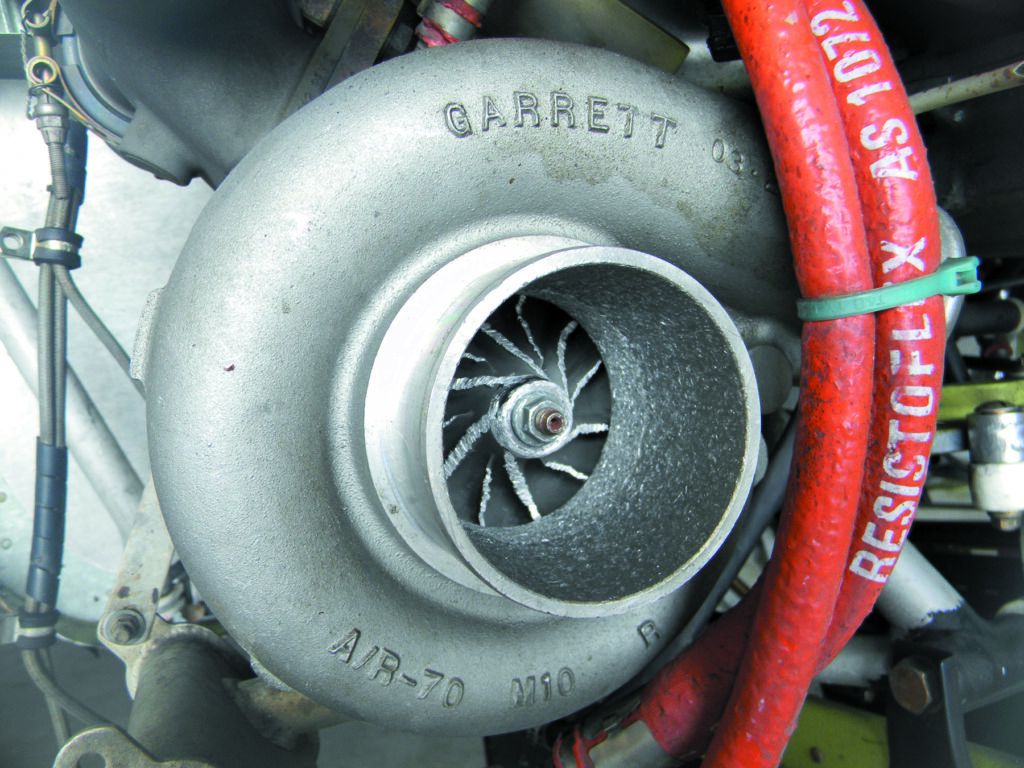
The turbo itself can go south—fortunately, that’s not high on the probability list. If that is the problem, it’s usually obvious. FOD, such as on the turbo pictured below, is easy to spot. Blades rubbing on the housing on the hot side can be observed when the exhaust pipe is pulled. A worn-out center section usually presents through oil leaking into the compressor and processing through the induction system and engine or into the turbine—resulting in oily deposits in the tailpipe and on the belly. However, oil in the turbo may be due to a bad check valve in the supply or return lines. Inspect them first as the turbo may be fine.
FLINT, MI — Normal Motors states it is bringing V-8 engine manufacturing back again to Flint, investing $579 million at Flint Motor Functions and another $216 million in its Bay City engine factors plant.
Business officers were envisioned to make a joint announcement of the commitments throughout news conferences on Friday, Jan. 20, in Flint, Bay Town, and two other North American crops that will be included in setting up components for the sixth-technology family of smaller block V-8 fuel engines that have typically powered a variety of full-sized vehicles and SUVs.
The new engines will be assembled in Flint, where 45 million V-8 engines have been designed from 1954 right until creation ended at the outdated Powertrain Flint V-8 Engine Plant, which was situated south of Flint Engine Operations, according to Flint Journal files.
GM did not instantly announce any additional positions that would be produced mainly because of the new motor do the job, did not say no matter if other plants would also be associated in assembling the significant-quantity V-8 powertrains, and did not announce products details about the upcoming-technology engine.
Some of individuals questions could be addressed for the duration of Friday’s news conferences that are scheduled at the 4 vegetation that have been specific for the new expense.
In addition to Flint and Bay City, GM claimed it’s also committing to updates at engine element plants in Rochester, New York, and Defiance, Ohio, bringing the company’s whole financial commitment in the new generation to $918 million.
In Flint, the company designs to spend $579 million to put together Flint Engine to assemble the new V-8 alongside with connected block, crank and head machining. That perform will begin quickly as the plant continues to develop the 3.0L turbo-diesel engine in the course of facility renovations.
Presently, Flint Motor, which started out creation in 2002, builds GM’s 1.5L turbo engine for the Chevrolet Malibu and the 3.0L turbo diesel for the Chevrolet Silverado LD and Tahoe as properly as the GMC Sierra LD and Yukon, according to a corporation truth sheet for the facility.
A lot more than 700 personnel are presently based at Flint Motor, roughly the exact number as when it started production here, quickly right after GM shut its outdated Powertrain Flint V-8 Engine Plant.
Bay City’s Normal Motors Powertrain plant, which employs a lot more than 400 workers, initially opened in 1892 as National Cycle Production Corporation and produced a new bicycle to substitute aged significant-wheeled varieties, in accordance to a company truth sheet. In 1916, William Durant and Louis Chevrolet bought the plant and it was included to the Standard Motors portfolio in 1918.
It builds engine components made use of in Chevrolet, Buick, GMC and Cadillac vehicles, including connecting rods, good camshafts, and sliding camshafts.
Even though GM has reported its target is to be completely electrical by 2035, the company will will need fuel engines for additional than a 10 years even if it meets that intention, significantly for its well known and remarkably rewarding line of vans.
The return of V-8 motor output in Flint will come more than 20 yrs immediately after GM shut its Powertrain Flint V-8 Engine Plant, which was situated north of Flint Engine Operations.
Production at the plant ended in 1999 and for decades, United Auto Workers officials speculated that the business could finally carry V8 generation back to the city.
“Our union celebrates the announcement of these new investments into our GM facilities, which will reward our users at Locals 659 (Flint), 362 (Bay City), 211 (Defiance) and 1097 (Rochester),” UAW President Ray Curry stated in a statement introduced by the corporation. “The talent and dedication of UAW members are a essential part of GM’s accomplishment, and this expense acknowledges that our members will keep on being a important section of GM’s upcoming.”
GM said Friday’s announcement delivers its production facility financial commitment commitments to much more than $37 billion due to the fact 2013, which includes the Ultium Cells LLC joint venture plants.
“Today we are asserting considerable investments to bolster our industry-top lineup of whole-dimension pickups and SUVs by getting ready 4 U.S. services to construct GM’s sixth era modest block V-8 motor,” Gerald Johnson, GM government vice president of world producing and sustainability, mentioned in a statement from the firm. “These investments, coupled with the challenging get the job done and commitment of our staff members in Flint, Bay Metropolis, Rochester and Defiance, help us to establish environment-course products for our shoppers and deliver job stability at these plants for yrs to occur.”
The investments bolster GM’s U.S. manufacturing functions, which incorporate additional than 50 assembly, stamping, propulsion and ingredient plants and components distribution facilities nationwide. It also highlights the company’s motivation to keep on giving customers with a potent portfolio of inside combustion automobiles perfectly into the long run although continuing to speed up its transformation to an all-electric upcoming, the company’s announcement suggests.
Read through extra at The Flint Journal:
GM to make ‘positive plant producing announcement’ at Flint Engine
17 file for 2 seats on Genesee County Board of Commissioners. Here’s who they are
Genesee County commissioner claims appointment procedure ‘reeks of racism’
The naturally-aspirated E-Ray promises the effortless performance of a turbo engine with none of the lag
by Chris Chilton
January 18, 2023 at 12:33
by Chris Chilton
What’s the most interesting thing about Chevrolet’s 2024 Corvette E-Ray? You’re not exactly short of options when it comes to answering that. You might argue that it’s Chevy’s decision to make the E-Ray a conventional hybrid rather than than a PHEV, or the fact that it costs almost exactly the same as a Z06 and actually beats the track car to 60 mph (97 km/h) by a tick. Or it could be that it weighs as much as a BMW 5-Series.
Valid points, all of them, but for me it’s that the first ever all-wheel drive C8 mates an electric motor with a naturally aspirated gasoline engine to deliver its 655 hp (664 PS). This is extremely unusual for a performance car, putting the C8 hybrid in company with Lamborghini’s limited edition $3.6 million V12 Sian, and it might just be one of the E-Ray’s coolest characteristics.
Related: 2024 Corvette E-Ray AWD Hybrid Is The Quickest ‘Vette Ever, Hits 60 In 2.5 Seconds
Let’s remind ourselves of the car that Chevy benchmarked for the C8 program. In case you’ve forgotten it was the 2010-15 Ferrari 458, the last naturally aspirated V8 Ferrari sports car, and a car that was universally loved at the time and is so sought after on the used market that late models are often worth more than the turbocharged 488s that replaced them.
Ferrari 458: light on torque, big on emotion
The 458, or more specifically its 4.5-liter naturally aspirated F136 V8 engine, was lauded for its razor sharp throttle response and orgasmic soundtrack, two qualities that didn’t make it to its successor. Don’t get me wrong, the 488 was a great car with plenty of benefits over the older machine, not least that it’s 3.9-liter F154 V8 made an additional 99 hp (100 PS) and 163 lb-ft (220 Nm) of torque.
advertisement scroll to continue
Naturally aspirated Ferrari 458 was benchmark for C8
At the 488 GTB press launch in 2015 Ferrari engineers told me that yes, going the turbo route was helpful from an emissions standpoint (and dropping below 4.0-liters made the car much cheaper in China where cars are taxed according to engine size) but the cold hard truth was that there was no way they could achieve their self-imposed performance targets for the 458’s replacement without bolting on a couple of blowers.
The 488 was undoubtedly the quicker of the two, and with so much more torque on hand at sub-stratospheric engine speeds, it required far less effort to extract that performance. Ferrari’s boost management system did a decent job of mimicking a non-turbo engine and its attempts to keep turbo lag to a minimum were also very successful, making the 488 feel far less laggy than its McLaren 650S, and later, 720S, rivals.
The turbo trade-off
But the lag didn’t disappear altogether, the rev counter’s redline encroached a further 1,000 rpm into the play zone, and worst of all, the soundtrack was pretty much ruined. Instead of delivering a rich mix of sounds and the kind of scream that was so good at erecting hairs you could use your forearm as a wire brush, the noise was now dominated by bassy tones. Think: hearing a live band or DJ up close in a club, then going for a pee and hearing the same thing from inside the restroom.
So when word came through that Ferrari (and McLaren) were planning to switch to hybrid power, I wondered if this might be an opportunity to ditch the turbos. Maybe electrical assistance could make up the power and torque shortfall experienced by switching back to a naturally aspirated configuration, and you’d get instant lag-free throttle response, an unmuffled soundtrack and, of course, the option to drive in EV mode.
McLaren Artura
But that didn’t happen. Both Ferrari and McLaren kept their turbochargers when adding volts, which has admittedly allowed both the 986 hp (1,000 PS) V8 SF90, bonkers 818 hp (829 PS) V6 296 GTB and 671 hp (680 PS) baby Artura make far more power than they would without those hamster wheels ramming air into the cylinders. I haven’t driven the Artura (Carscoops’ Michael Gauthier has; read his review here), but I have tried the 296 and I was left blown away by its pace, which is outrageous for a six-cylinder car, but convinced Ferrari had over-egged the “mini V12” soundtrack claims. It sounds good, but not that good.
Related: You Can Now Spec Out Your $104k Corvette E-Ray Online
Which is why the idea of the Corvette E-Ray is so intriguing. Personally, I’d rather it be rear-wheel drive, like the 296 and Artura, with the motor integrated into the transmission rather than acting on the front axle. But sticking it at the front was a neat way of giving the E-Ray all-wheel drive, which is one of the other key features of a car that’s designed to compete with that all-weather sports car king, the Porsche 911 Turbo, rather than encroach on the hardcore Z06’s turf. That’s the car you’d buy if you want the purest C8 driving experience, not a heavy, all-wheel drive hybrid.
Though a few people have ridden shotgun, no one outside of the factory has yet driven the E-Ray, and I can’t wait to hear what reviewers think of its unusual drivetrain combination. Looking further ahead, Lamborghini is also believed to be working on a hybrid-assisted V12 for this year’s Aventador replacement. In the meantime you’ll find me out in my Mazda CX-60 SUV (2.5-liter naturally aspirated inline four, single electric motor) making V8 noises on the school run.


 Grand Vitara hybrid powertrain