HAL Will Provide MRO Support for GA-ASI MQ-9B Turbo-Prop Engines

HAL Will Provide MRO Support for GA-ASI MQ-9B Turbo-Prop Engines

BENGALURU – 14 February 2023 – Typical Atomics Aeronautical Methods, Inc. (GA-ASI) and Hindustan Aeronautics Constrained (HAL) have jointly announced that turbo-propeller engines, which electric power GA-ASI’s point out-of-art MQ-9B Remotely Piloted Plane System (RPAS), will be supported by the HAL Engine Division at Bengaluru for the Indian marketplace.

“GA-ASI is very pleased to collaborate with HAL on this prestigious task,” explained Dr. Vivek Lall, Main Govt, General Atomics International Corporation. “HAL is the foremost Indian public sector Aerospace and Defence agency, and its vast expertise in the domain of aero-motor technologies would make it our pure husband or wife in India.”

While the turboprop engine equipped onboard the MQ-9B RPAS appears to be like very similar to other industrial engines in its group, it is exclusive in its configuration and procedure, necessitating distinctive teaching and gear to retain, mend and overhaul.

The Expression of Curiosity was exchanged in presence of Mr. C B Ananthakrishnan, Chairman and Controlling Director, HAL and Mr. Mihir Kanti Mishra, CEO (Bangalore Intricate), among Dr. Vivek Lall, Main Government, Typical Atomics Global Company and Mr. B. Krishna Kumar, Govt Director (Engines & IMGT).

“HAL has been manufacturing and offering MRO assistance for TPE 331-5 engines for the last 40 many years. We are also establishing services for producing TPE 331-12B engines for HTT-40 challenge. The engine applied on the MQ-9B RPAS belongs to the identical family of engines with upgraded configuration to adapt to the RPAS technologies. I am glad that HAL Engine Division, Bangalore would be supplying MRO assistance to the motor for MQ-9B RPAS, just one of the most innovative tools in the earth,” said Mr. C B Ananthakrishnan, Chairman and Taking care of Director, HAL.

GA-ASI and HAL eagerly look forward to formulating a complete engine MRO software for approaching RPAS projects. This joint collaboration echoes India’s clarion connect with for ‘Atmanirbhar’ or ‘Self-Reliance’, when underscoring the deep industrial link amongst U.S. and Indian Aerospace Firms.

About GA-ASI

General Atomics Aeronautical Techniques, Inc. (GA-ASI), an affiliate of Typical Atomics, is a leading designer and manufacturer of established, responsible Remotely Piloted Plane (RPA) devices, radars, and electro-optic and relevant mission methods, including the Predator® RPA series and the Lynx® Multi-mode Radar. With a lot more than seven million flight several hours, GA-ASI provides extensive-stamina, mission-capable aircraft with built-in sensor and information url methods required to deliver persistent flight that permits situational consciousness and speedy strike. The firm also makes a selection of floor manage stations and sensor regulate/picture analysis computer software, provides pilot training and help solutions, and develops meta-content antennas. For more information and facts, go to www.ga-asi.com

Avenger, Lynx, Predator SeaGuardian and SkyGuardian are registered trademarks of Standard Atomics Aeronautical Techniques, Inc.

How Electric Turbochargers Are Changing Internal Combustion

How Electric Turbochargers Are Changing Internal Combustion

Now more than ever, automotive engineers have to chase efficiency wherever they can. In an internal-combustion engine, a turbocharger is a great way to boost power and efficiency for an engine of a given displacement, and over the last decade we’ve seen a proliferation of downsized, turbo engines replacing larger naturally aspirated units. Yet, the turbocharger itself is far from perfect.

A turbocharger is a crude device. It takes a while to spool up, the spool is entirely dictated by the flow of exhaust gasses, it wastes a lot of those exhaust gasses, and it’s hot. Plus a traditional turbo can only be operated well below its maximum speed, because if it exceeds this, damage to the turbo and/or engine can occur.

An electric turbocharger can solve a lot of these problems, and more.

Let’s dip into a quick, perhaps unnecessary, sum-up of turbocharger basics. Within the snail-shaped housing are two turbines on either side connected by a small shaft. Exhaust gasses blow on one turbine, which in turn spins the other called the compressor wheel. The compressor wheel increases air density in the intake, boosting engine power. Fresh air also feeds the compressor, and typically, the air from the compressor goes through an intercooler of some sort to reduce intake air temperature. On the exhaust side, there is usually a valve that opens and sends excess air downstream to the rest of the car’s exhaust system once the turbine is up to a desired speed. This is called the wastegate.

garrett e turbo

Garrett Motion

An electric turbocharger is basically just a regular turbocharger with a motor attached to the turbine shaft. Simple in concept, difficult in execution, filled with possibilities. “It brings another degree of freedom, says Craig Balis, CTO at Garret Motion, in an interview with Road & Track. “Automakers can use it for power, they can use it for efficiency, they can use it for emissions, they can use it for drivability.”

Garrett has been in the turbo business for decades, and it was the first to bring an electric turbocharger to the market. Mercedes-AMG is the first automaker to offer it, in both the C43 and C63, which pair an e-turbo with AMG’s 2.0-liter M139 for 402 and a staggering 476 hp, respectively. The C63 has the most power-dense engine on the market today, with 251 hp/liter, and because enough is never enough, the four-cylinder is augmented by a plug-in hybrid system for 671 hp.

It’s easy to think that the sole job of an electric turbocharger is to reduce lag. That’s what I thought, and indeed, that is a huge benefit of its use. In very simple terms, a larger turbocharger—with larger turbine and compressor wheels—can force more air into an engine, making more power, but the bigger you go in turbo size, the longer it takes to achieve the target boost level. Add an electric motor to the shaft, however, and you can get the whole thing up to maximum speed without waiting on exhaust gasses. (Turbo lag cannot be eliminated but it can be reduced to such a small amount that it’s inconsequential.)

Balis prefers to use the term transient response—what happens when you press the accelerator—rather than turbo lag. He points out that improving transient response not only helps with drivability, but emissions too. “You’re able to control the air that goes into the engine more precisely, matching it with the fuel and the demand on the engine.”

garrett e turbo

Garrett Motion

Then, there’s the efficiency an e-turbo brings. An electric motor can spin in two directions, and spun in reverse, it can act as a generator. In hybrid and battery-electric vehicles, the slowing of the motors can be used to slow down the car while putting energy into the battery. On a much smaller scale, you can do the same thing with the motor of an electric turbo. “The funny thing about the turbo is over various drive cycles, typically it can be energy neutral,” Balis says. “Meaning you can generate as much as you use. It’s at different points in time, but over various drive cycles, it can become energy neutral, or even energy positive.”

Garrett’s electric turbo still uses a wastegate, though the more precise level of boost control means less exhaust gas is wasted, and thus, a smaller wastegate can be used. Having a motor on the shaft means that the precise speed of the turbo is always known. Typically, a modern car’s ECU estimates the speed of the turbo and uses the wastegate to manage boost pressure, but leaves a huge margin for error for safety and durability. This leaves performance on the table for a given turbocharger size. If you know the exact speed of your turbo, however, you can run it much closer to its operating limit without fear of exceeding it. It’s not a benefit unique to e-turbos—Ferrari and Nissan both use traditional exhaust-gas turbochargers with speed sensors—but it’s important to note.

2023 mercedes amg c 63 e performance

The new Mercedes-AMG C63.

Mercedes-Benz

Garrett started working on e-turbos 20 years ago, but found that they simply weren’t viable with 12-volt electrics. Balis says you could only have a 3-kW motor on the shaft at the maximum, and even then, it was a big draw on the system. With the rise of higher-capacity electrical architectures, electric turbocharging became viable. Most versions of the current C-Class use a 48-volt “mild-hybrid” architecture, while the C63 uses an AMG-designed 400-volt plug-in hybrid system. Mercedes also decided that the new C-Class would only receive four-cylinder power. Electric turbocharging made a lot of sense here.

According to Jan Habermann, one of the engineers behind AMG’s application of e-turbos, the company wanted to give the C43 a more special engine than its predecessor, which used a V-6 shared with non-AMG products. The M139 is made by hand at AMG’s factory in Affalterbach, and while it can be found in AMG’s 45-series cars, those have 12-volt electrics, and thus, traditional exhaust-gas turbochargers. The C43 gets the e-turbo not for more power—the CLA45 S makes 415 hp to the C43’s 402—but for all the other benefits the hardware brings.

mercedes c 63 powertrain

The Mercedes-AMG C63 powertrain.

Mercedes-AMG

The C63 represents a different story. Its four-cylinder plug-in powertrain replaced a much-loved 4.0-liter V-8, and AMG knew it had to pack a huge punch. “[Going] hybrid has a lot of advantages,” Habermann says. “You can have a very small and fuel-efficient engine on one side; you can drive fully electric, and you have really insane performance, much, much, much better than the predecessor.” AMG felt that the C63 had to not only compete with traditional gas-powered super-sedans but with new, ultra-powerful EVs. (In a world where Kia sells a 577-hp version of the EV6, you can see the logic.)

To get the sort of power out of a 2.0-liter turbo four AMG was after, Habermann says that you’d have “turbo lag like hell” with a traditional turbocharger. The C63’s turbo has a compressor wheel diameter of 71 mm to generate maximum boost of 37.7 psi (!), which is something you’d more likely see in a truck or a thousand-horsepower tuner car. It’s gargantuan. (It also has variable-geometry vanes, for even more flexibility.) You may think that the C63’s hybrid system, which has a 204-hp electric motor, could compensate for any turbo lag, so why go through the trouble of using an electric turbo? There’s not a simple answer.

“It’s again for performance and efficiency,” Habermann says. AMG’s hybrid system uses a 6.1-kWh battery and the idea behind the control strategy is to keep the battery plenished up enough so the motor can deliver full power whenever the driver wants. By using the electric turbo to get the engine to full power quickly, the electric motor can remain on standby with energy stored in the battery. “It’s a funny thing. You have an electric traction drive, but you do not want to use it so that you can store the energy. You just want to use it for performance.”

Funny as it might be, it’s easy to see the logic when you consider that the motor on the C63’s electric turbo has just 6 kW (8 hp), so it takes a lot less energy to spin that up than it does to spin a drive motor 25 times as powerful.

tecday amg future of driving performance eigenständige e performance antriebsstrategie für performance hybride antriebsstrang 4 zylinder m139 elektrischer abgasturbolader tecday amg future of driving performanceindependent e performance drivetrain strategy for performance hybrids drivetrain 4 cylinder m139 electric exhaust gas turbocharger

Cutaway of the e-turbo used in the C63.

MERCEDES-BENZ AG – GLOBAL COMMUNICATIONS MERCEDES-BENZ CARS & VANS

AMG naturally does a lot of interesting things with the turbocharger throughout the engine’s rev range. At low engine speeds, the motor spins the turbocharger up while pressure from exhaust gasses are still building. Since this increases the volume of air going into the engine, it also increases the volume coming out, further aiding boost generation. In and around 3500 rpm and at constant throttle, the motor doesn’t do much, if anything, as there is enough exhaust gas to keep the turbocharger spinning at its maximum of 175,000 rpm. At higher speeds, up to the C63’s 7000-rpm redline, however, the motor puts out around 1 kW to keep the turbo spinning, helping extend the power band and improving throttle response. Normally turbocharged engines “die out” closer to redline, but AMG wanted a turbo engine that felt more like a naturally-aspirated one, with power building across the rev band.

As you’d expect, AMG also uses the turbo’s motor to improve transient response across the power band, and as needed. Habermann says that at lower engine speeds it can take up to a second to reach full boost pressure, in the mid-range, it’s almost instantaneous, and at high RPM, it’s around 0.4 seconds. That’s impressive for such a large turbocharger, and small enough that you don’t feel it, according to Habermann. The turbo also sends energy back to the battery off throttle during gear shifts, harnessing the air that would otherwise be sent out of a wastegate back into the atmosphere.

Spare a thought for the calibration engineers, and the guys at AMG who have to make sure the bottom end of a 2.0-liter four-cylinder doesn’t blow up in spectacular fashion when faced with 37.7 psi of boost. One also imagines the difficult task for those who designed the turbocharger’s motor as it has to spin up quickly to 200,000 rpm in an extremely hot, vibration-heavy environment.

garrett e turbo

Garrett Motion

Balis says that more automakers will embrace electric turbocharging in the near future, and not just for high-performance applications, as mild- and plug-in-hybrid vehicles become more popular and necessary. Truck manufacturers are also interested in the tech. “It’s an efficiency play, it’s an emissions play, of course, it’s also a power density play, but it’s bringing all of those benefits,” he explains. “In the end, it’s bringing a new degree of freedom to engine design that didn’t exist before…. You can kind of have air on demand with more precision.” He adds that the costs of all the hardware is coming down, making this a more viable solution for mainstream applications.

The rest depends on how our transition to fully electric motoring progresses. Perhaps e-turbos are an interim solution, but they also make internal-combustion engines more viable. It’s proof that there’s a lot more efficiency to be extracted from the internal-combustion engine.


Senior Editor
Chris Perkins is the Web Editor for Road & Track magazine.

An Integrated Turbo Engine Head Might Be In Dodge or Jeep’s Future

An Integrated Turbo Engine Head Might Be In Dodge or Jeep’s Future

We know it is only a make a difference of time before Dodge drops its next turbocharged Challenger or Charger muscle car now that the Hurricane I-6 is out. Even so, Stellantis engineers are currently looking at means to affix the turbo to the head as motor bays get far more and a lot more cramped. When some brands have absent the route of the “sizzling Vee” and Stellantis on their own have removed the exhaust manifold from their turbocharged engines, the engineers are searching to radically alter how the turbo is attached to the cylinder head.

That radical transform arrives from a U.S. Patent filing previously this thirty day period, in which it describes how to integrate the entire turbocharger housing into the unit’s cylinder head. We are not speaking about just integrating a manifold or even the turbine aspect of the housing, but the comprehensive turbocharger housing which includes the compressor.

The plan is that this casting would have provisions for automatic arms to grab on to and the cartridge would also have guideline pins with matching bores to line it up with the integrated housing just before becoming bolted in. From there, a compressor housing protect would be hooked up to the integrated housing, sealing the compressor facet and forming the aperture wherever the compressed air would scroll by ahead of heading to an intercooler or straight into the consumption. The wastegate is also built-in into the head casting, lowering parts even further by not demanding new warmth shields.

Why Integrate the Turbo Into the Cylinder Head?

There are numerous advantages that the patent lays out on the reasoning for this radical integration of turbo and head. The most evident part is reduction in components, as you get rid of the manifold and forged the turbo straight into the head, you lose the require for some numerous gaskets, added fasteners, and some of the complexity through motor assembly at its plant. This could also make servicing a bit simpler, as properly, as you are going to be ready to switch a complete cartridge without the need of tearing the turbo off the manifold and then consider it even more apart. You would just unbolt the entrance go over, unbolt the cartridge, and change that part of the assembly.

Then there is a thing you’ve most likely not considered of: noise, vibration, and harshness (NVH). Though you will not see points that are bolted alongside one another relocating (provided the assemblies are mounted effectively), everything that is bolted on creates microscopic movements. The more you need to have to fasten alongside one another, the extra individuals actions incorporate up and enhance noises and vibrations inside of certain frequencies. Then there is the integration of the wastegate, which also eliminates noises associated to the resonance produced when it opens and closes, the noises of the airflow from the manifold (that is no for a longer period there) to the turbocharger and wastegate, and some whine from the rotor group wherever some unbalance can occur.

The closing advantage to point out is the expense in each the reduction of sections but also the velocity of installation time, but the patent does not truly mention how integrating the turbo housing to the head does that. We would level out that there would be further charges in the casting, and not just since of it getting a new casting. In purchase to get some of the turbocharger’s interior functions into this integrated sort, use of expenditure casting would be necessary.

How Would You Even Forged This “TurboHead?”

If you happen to be unfamiliar, this is a casting course of action that forms a temporary mould. In this unique situation, a short-term mold would be put among the mould of the principal casting for the internal characteristics of this integrated turbocharger. This internal mildew would then be damaged apart or melted (relying on how the inside mold was produced) in advance of finish machining is executed.

This means that you wouldn’t just need a mold for the most important casting, but an extra mildew plus product to produce the financial investment cast. The excellent news is that expense cast mold content can be reused after breaking it down once more, so there is a reduction of some expenditures right after the first operate, but that does not account for the supplemental labor and time to take away it. The only other way is to use 3D printing, which it seems the patent does leave open to interpretation by declaring, “In purchase to decrease or avoid these kinds of problems in the existing disclosure, the turbocharger housing is integrated (e.g., forged) into an aluminum cylinder head…”

Sad to say, 3d metallic printing hasn’t pretty achieved this amount of generation. When elements by enthusiasts and smaller providers perform for a compact or individual scale of output, the velocity and precision necessary for mass production is continue to a approaches out for this kind of generating elements.

Again, as with any patent, this doesn’t issue to any instant manufacturing of just about anything. It is an concept that has been set to paper and probably into a single part to show an illustration of explained thought. While all Stellantis manufacturers are going to be fully electric powered at some point in the in close proximity to long run, the autos that will continue on to use ICE and require as a lot engine bay home as attainable will see a fantastic gain from this patent coming to production fruition.

EngineLabs’ Godzilla Giveaway Engine Winner Announced

EngineLabs’ Godzilla Giveaway Engine Winner Announced

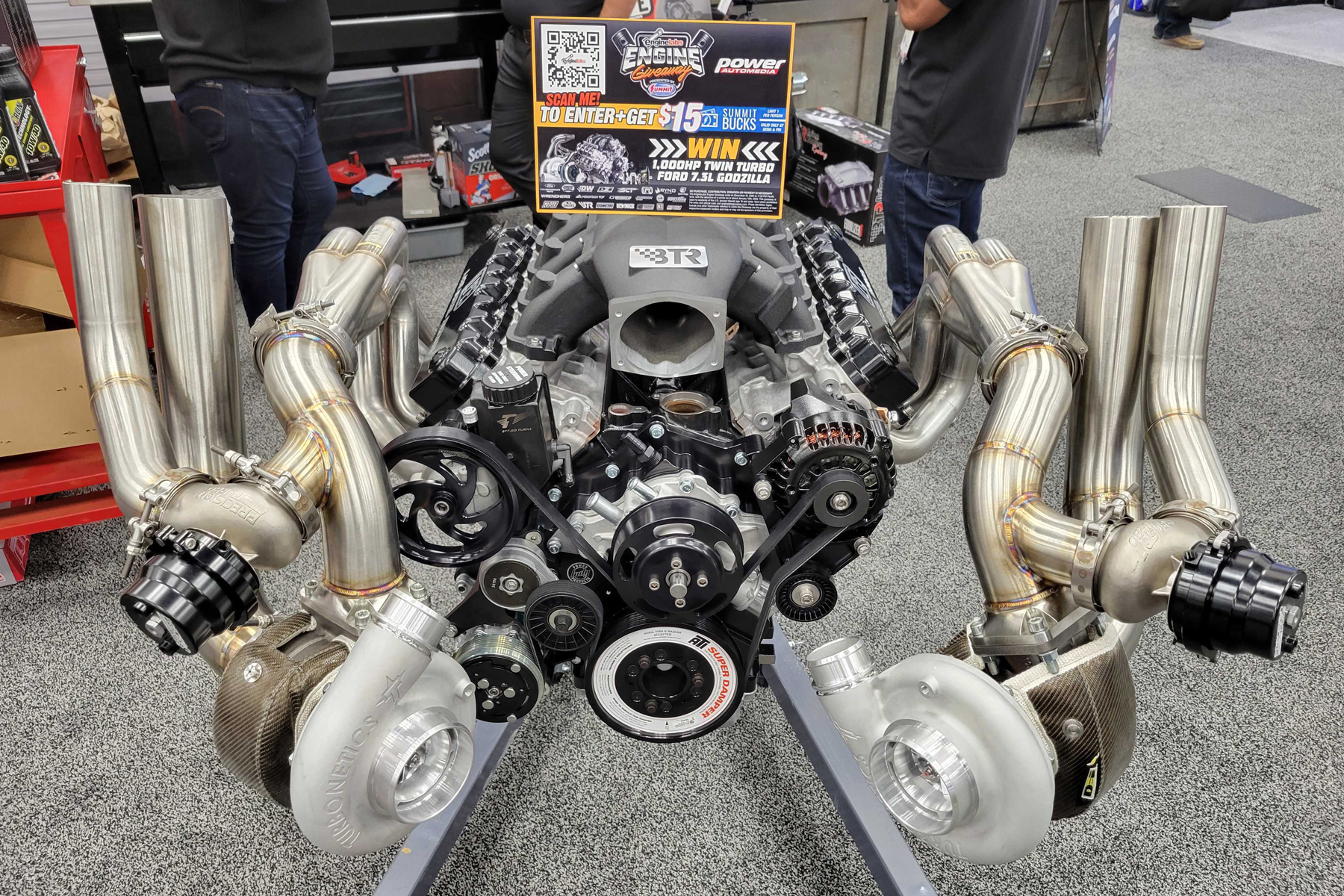
The time has arrive to announce the giveaway winner of the EngineLabs 7.3L V8 “Godzilla” crate motor! And this contest would not have took place with out the assist of Summit Racing Equipment and some of the industry’s top suppliers. 

The Ford Efficiency 7.3-liter Godzilla crate motor was cast into a hearth-respiratory 1,000-horsepower able twin-turbo engine at the fingers of Late Product Engines (LME) If you stopped by the Ability Automedia booth at PRI 2022, you likely noticed this monster of an engine finding assembled and a actual Godzilla inquiring individuals to enter. Alright, our Godzilla was inflatable, but you get the stage. 

The EngineLabs 7.3 giveaway formally finished on December 31st, 2022. The randomly picked out winner, John K. of Wimberly, Texas, was notified on January 13th, 2023. John experienced this to say about winning the EngineLabs giveaway: “This was a complete surprise, and it was on my birthday, so that made it doubly amazing. The car I want to put this in is a 1951 F-1 Ford Pickup. I have had the truck due to the fact I was 19, and this is the next time I am heading by way of it. The 7.3-liter is going to make the truck’s story even greater.”

The upcoming residence of the twin-turbo Godzilla motor. It is really likely to shift the 1951 F1 pickup brief, quick, and in a hurry.

If you have not been next the make approach on our twin-turbo Godzilla, it has been just one wild experience. Greg Acosta, Editor of EngineLabs, experienced this to say about the 7.3-liter powerplant: “Seeing the most current and finest the aftermarket has to give, all coming alongside one another to make this sort of a powerful powerplant, is genuinely what we all are living for. Furthermore, figuring out the engine will be likely to a very good dwelling will help soften the blow of getting to send it off.”  

Ahead of John gets his palms on the new motor, the Godzilla will make its way back to the Lone Star Condition, to LME. The fellas at Late Design Engines will then bolt the twin-turbo Godzilla to the dyno just one remaining time and get that 1,000-horsepower dyno sheet. Just after it will get all buttoned up, John will get his 1,000 horsepower (or far more) EngineLabs giveaway motor! We have a excellent experience that when John finishes his 1951 F-1 pickup, he will be the discuss of the city with the twin-turbo beast lurking beneath the hood of the old truck.

If you did not get a opportunity to tag along with the create, all of the videos are situated on our YouTube channel, Ability + Functionality. So, Make positive you subscribe and really do not overlook the future dyno online video to see the remaining quantities the Godzilla pumps out. 

The engine

On behalf of EngineLabs, Summit Racing, and Ford Effectiveness, we would like to lengthen a heartfelt “thank you” to everybody who entered. Be positive you continue to keep an eye out for our future engine giveaway proper in this article on EngineLabs.com. The awesome EngineLabs’ giveaway motor journey to 1,000 horsepower is designed feasible thanks to our companions in this job: Summit Racing Devices, Late Model Engines, Ford Efficiency Sections, Mountain Prime, ATI General performance Goods, BOOSTane, Brian Tooley Racing, Callies Overall performance Merchandise, Cometic Gasket, DeatschWerks, Design Engineering, E3 Spark Plugs, Indy Power Goods, Johnson Lifters, K1 Systems, Klotz Synthetics, Kooks Headers, Operational Velocity Provide, Precision Turbo, Ryno Classifieds, SCT, Wiseco Pistons, and Wrenchers.

Compound-Turbo 5.9L Cummins Powered Mercedes Unimog

Compound-Turbo 5.9L Cummins Powered Mercedes Unimog

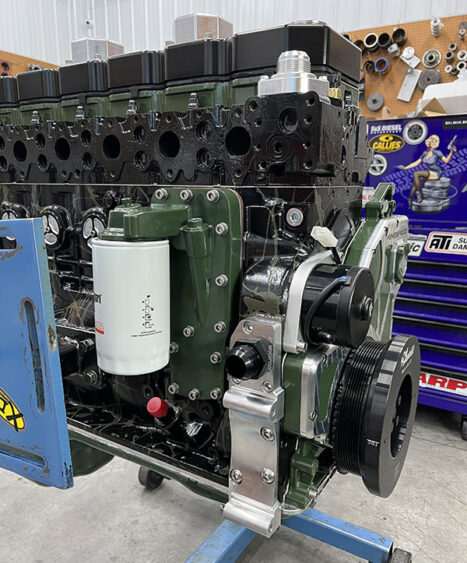
We can confidently say that Jeff McCord of LinCo Diesel Effectiveness appreciates his way around a diesel engine. He’s made a identify for himself setting up some quite badass diesel engines for clients, a several of which have been showcased in our diesel of the 7 days collection in years prior. He also won our America’s Ideal (diesel) Motor Store award in 2021, has proven us the distinction involving a Mild and a Wild engine construct at his store, and given engine builders a load of handy academic material by means of our LinCo Lessons collection.

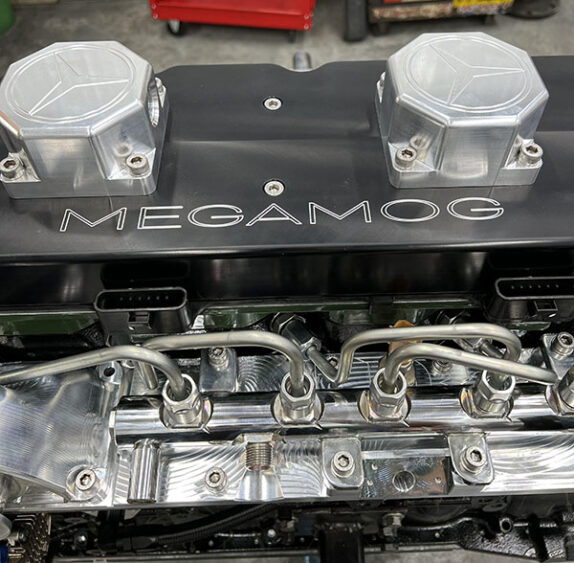
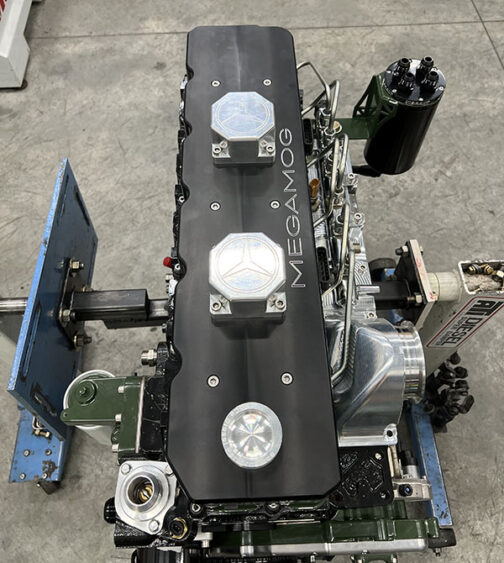
It would seem like he’s generally bought some thing cooking, and just lately he’s been no diverse. McCord arrived at out to us previous week to convey to us about a somewhat special challenge he just completed at the store – a specialised 5.9L Cummins motor he constructed for a custom 1965 Mercedes Unimog multi-purpose truck.

The car alone is relatively unique, but even a lot more so are the circumstances it will be pushed in. The Unimog is being built by Craven Effectiveness for a shopper who owns a non-public ski-ranch in central Colorado. The ~$500,000 truck will be working from close to 6,000 to 11,500 ft. in elevation. We’ll have to hold out until finally this year’s SEMA show to get a proper search at the cab, but McCord currently has the motor crafted up and completely ready to dive into.

Remaining that it will be operating at these superior altitudes, the initially issue to look at was the skinny air the Cummins would be working at. For that motive, the staff at LinCo decided on a 5.9L bored .040” over alternatively than a 6.7L to maintain the displacement minimal and ran 01’-02’ 24 valve superior-output forged pistons.

“Those have the best compression of any manufacturing unit piston,” McCord mentioned. “We required the greatest static compression since of the altitude it will be running at, so she’ll be place about 17.2 to 17.5:1 for the compression ratio. And we utilized a Hamilton 178/208 camshaft for the performance in the reduced-conclude torque since this factor will be want to continue to keep momentum climbing up some deep packed snow. It is a metal camshaft that we line bored and set cam bearings all the way through.”

The motor has a Beans Equipment 12mm girdle, it was line honed and decked, and offers LinCo’s personal LDP Reman head with stock-dimensions Inconel valves. D&J 115 lb. valve springs with titanium retainers retain the valves closed.

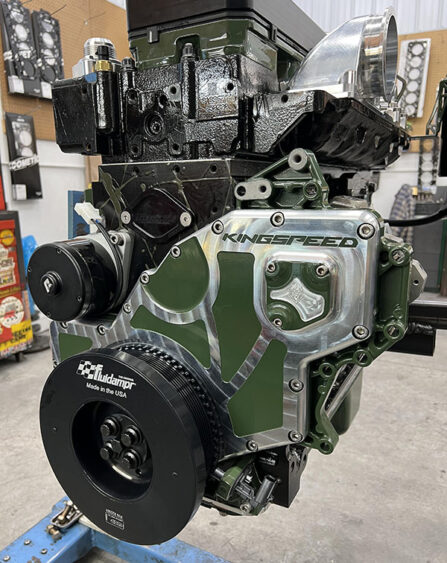
It also options Overall Seal gapless rings, Clevite H-sequence bearings, a Fluidampr balancer, a Kingspeed billet timing deal with and ingestion horn, LDP’s 6.7L-design billet consumption plate, and a Jegs Electrical h2o pump.

“It’s received Boostline solid connecting rods in it, a factory 5.9L crank that’s been keyed and balanced, Hamilton pushrods, Fleece billet valve bridges, a Cometic MLX head gasket, and ARP .625 head studs.”

On the air aspect of issues, McCord went with a Diesel Electric power Source Turbonator, which is a mechanical, variable geometry turbine housing.

“The travel stress essentially moves the veins, so when all the things is closed and there is no drive pressure applied to the actuator, it is like a .50 AR ratio. So, a super limited housing that spools fast. And then as drive pressure builds, it pushes on the wastegate actuator head and works the veins just like an electronic actuator would. It regulates itself off generate, and it’s fantastic for this set up.”

The entire setup took a bit of engineering to get every thing proper, but a Turbonator mechanical VGT housing on a DPS t3 manifold was finally resolved upon. Paired with the Turbonator housing is a 5-blade 362.68 substantial strain charger. For the atmospheric, it is a Stainless Diesel-designed 5-blade S480.93 with a 1. T4 housing in an hard work to hold every little thing as limited-spooling as doable.

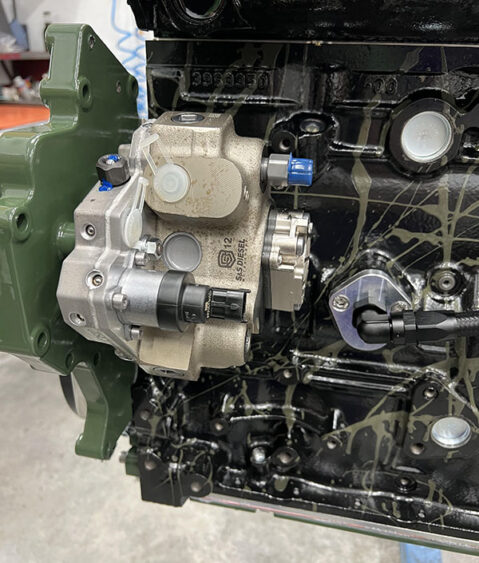
As significantly as fuel goes, S&S spec’d out the overall set up. The workforce went with 200{49e09b23eae7466ccc7574c19ebb3019301c9a11d2999feff81a3526451546a5} above injectors, a 12mm CP3 pump, and a 6.7L fuel rail, sensor and aid valve.

The Cummins powerplant has not been dyno’d nonetheless, but McCord expects the engine to make 1,200 horsepower, or all around 600 horsepower in the altitude and operating problems it will be functioning in. Paired with a 6-pace Allison transmission, this beast will have far more than more than enough ability to have its passengers up the ski slope.

To see the concluded products, make guaranteed to quit by the Craven Effectiveness booth at this year’s SEMA present!

Diesel of the 7 days is sponsored by AMSOIL. If you have an motor you’d like to highlight in this series, be sure to email Engine Builder Editor Greg Jones at [email protected]

2023 Kia K5 vs. 2023 Nissan Altima Comparison

2023 Kia K5 vs. 2023 Nissan Altima Comparison

The midsize sedan segment is full of good options. The Nissan Altima has been around for decades and is a trusted name in this class, but the Kia K5 is an appealing newcomer. They have a lot in common, like similar sizing, a similar price tag, and available all-wheel drive (AWD). However, there are a few key differences you should know about.

Let’s take a closer look at the Kia K5 and Nissan Altima and find the right sedan for you.

2023 Kia K5

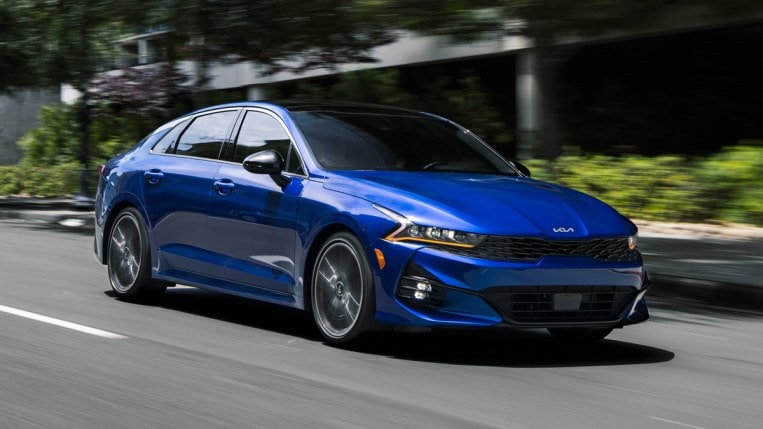
2023 Kia K5 in blue

The Kia K5 is a relative rookie to the midsize sedan segment. It replaced the Optima in 2021 as a sporty and stylish 4-door that’s still practical and affordable. Pricing starts at $25,290.

Kia K5 Highlights

Long warranty — The Kia K5 comes with a class-leading warranty, giving the driver peace of mind. It’s backed by a 5-year/60,000-mile basic warranty and a 10-year/100,000-mile powertrain warranty. By comparison, the Altima comes with a 3-year/36,000-mile basic warranty and a 5-year/60,000-mile powertrain warranty.

Bigger interior — The Kia K5 has a slightly roomier interior than the Nissan Altima. It has more cargo space in trunk, too. The seating space is also a little roomier in the Kia, with an extra inch of headroom in the back seats.

Sporty GT model — The Kia K5 GT is a veritable sport sedan with performance beating the Altima SR VC-Turbo. The turbocharged 4-cylinder engine pumps out 290 horsepower and a best-in-class torque rating of 311 lb-ft. On top of the engine upgrade, it has a sport-tuned suspension, quad-tip dual exhaust, and bigger brakes.

Check this week’s Fair Purchase Price or see the K5 models for sale near you

2023 Nissan Altima

White 2023 Nissan Altima at sunset

The Nissan Altima celebrates its 30th anniversary this year with a modest refresh and updated tech features like more standard safety features and an available 12.3-inch infotainment system. Pricing starts at $25,290.

Nissan Altima Highlights

Great fuel economy — The Nissan Altima beats the Kia K5 regarding efficiency. The most efficient variant of the Altima achieves 32 combined mpg, and even with all-wheel drive, it still returns 30 combined mpg. The result is lower fuel costs than the Kia, which can add up over the years.

VC-Turbo engine option — The available VC-Turbo engine in the Altima isn’t as powerful as the K5 GT, but it uses clever engineering to achieve robust performance and good fuel economy with little compromise. It uses variable compression to optimize the right balance of performance and efficiency based on the driver’s inputs.

More affordable AWD — The Kia K5 with all-wheel drive starts at $28,390, while the most affordable AWD-equipped Altima begins at $27,590. Additionally, the Altima has three trims available with AWD, and the K5 only has one. This is worth considering if AWD is a must-have feature for you.

Check this week’s Fair Purchase Price or see the Altima models for sale near you

Similarities

Similar pricing, similar sizing, available AWD, IIHS Top Safety Pick+, similar infotainment features, nice interior for the money

Conclusion

The Nissan Altima has some practical advantages over the Kia K5, like slightly better fuel economy and more variety in its AWD-equipped trims. However, the K5 has a longer warranty, sportier performance with the GT model, and a bit more interior space. Which is right for you depends on your priorities.

2023 Kia K5 2023 Nissan Altima
Starting Price $25,290 $25,290
Popular Powertrains
Engine 1.6-liter turbocharged 4-cylinder 2.5-liter 4-cylinder
Horsepower 180 hp @ 5,500 rpm 188 hp @ 6,000 rpm
Torque 195 lb-ft @ 1,500-4,500 rpm 180 lb-ft @ 3,600 rpm
Transmission 8-speed automatic CVT automatic
Fuel Economy 27 city/37 highway/31 combined mpg 28 city/39 highway/32 combined mpg
Also Available 2.5-liter turbocharged 4-cylinder; 7-speed dual-clutch transmission; AWD 2.0-liter turbocharged inline-4; AWD
Specs
Basic Warranty 5 years/60,000 miles 3 years/36,000 miles
Powertrain Warranty 10 years/100,000 miles 5 years/60,000 miles
NHTSA Overall Safety 5 stars 5 stars
Max Seating Capacity 5 5
Wheelbase 112.2 inches 111.2 inches
Overall Length 193.1 inches 192.9 inches
Width 73.2 inches 72.9 inches
Height 56.9 inches 56.7 inches
Turning Diameter 36.0 feet 36.1 feet
Headroom, Front 40.2 inches 39.1 inches
Headroom, Rear 37.8 inches 36.9 inches
Legroom, Front 46.1 inches 43.8 inches
Legroom, Rear 35.2 inches 35.2 inches
Shoulder Room, Front 58.0 inches 58.2 inches
Shoulder Room, Rear 56.1 inches 57.1 inches
Cargo Volume 16 cubic feet 15.4 cubic feet