
NASCAR Reveals the Modified Camaro Stock Car That Will Race at Le Mans

NASCAR Reveals the Modified Camaro Stock Car That Will Race at Le Mans
  • This year’s 24 Hrs of Le Mans will see a modified NASCAR Cup Sequence Chevrolet Camaro ZL1 inventory motor vehicle operate in the Garage 56 entry designated for experimental race cars and trucks.
  • The car or truck, unveiled now ahead of the Daytona 500, continue to packs a 5.8-liter V-8 motor, but provides a huge fuel cell, upgraded brakes, and exclusive aerodynamics.
  • The embellished driver lineup features Jimmie Johnson, Jenson Button, and Mike Rockenfeller, and the workforce has currently racked up above 3600 miles of testing.

NASCAR is going to the 24 Several hours of Le Mans. Wait around, what?! Yep, you study that right—a Chevrolet Camaro ZL1 inventory vehicle is taking on the grueling and legendary day-extensive race at the Circuit de la Sarthe in Le Mans, France, this yr. The NASCAR racer will run in the Garage 56 location, an entry reserved for experimental motor vehicles, and the auto was disclosed right now at Daytona Worldwide Speedway in advance of this weekend’s Daytona 500.

Because 2012, Garage 56 has provided vehicles like the unorthodox, triangle-shaped DeltaWing and a modified LMP2 automobile piloted by two motorists who are paralyzed from the waistline down. This calendar year, even so, the entry will be occupied by a muscular Cup Series–spec Camaro run by a snarling 5.8-liter smaller-block V-8. The project is becoming operate by Hendrick Motorsports, the most productive Cup Collection workforce with 291 race victories to day.
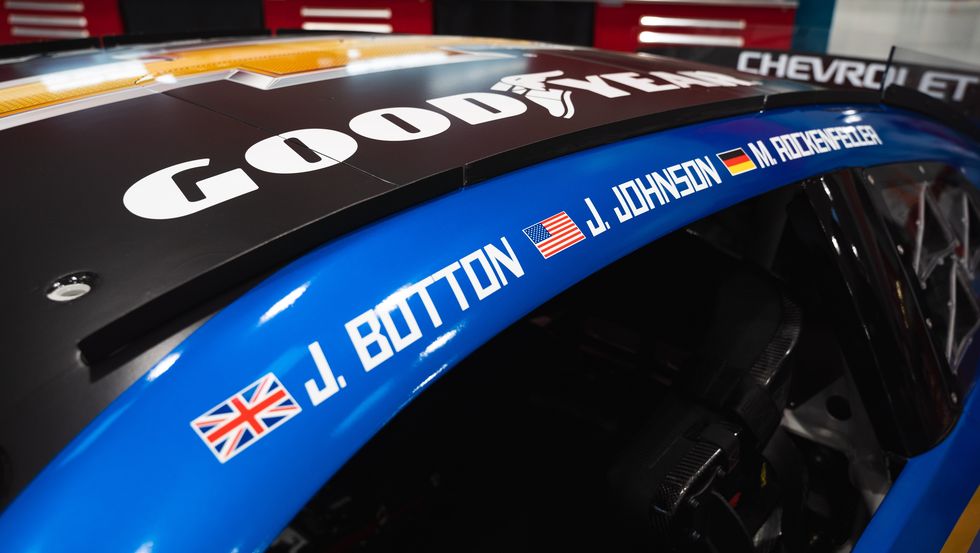
nascar garage 56 chevrolet camaro zl1

NASCAR

The Garage 56 Camaro stays close to its roots, but several variations have been essential for 24-hour race responsibility. Practical headlights and taillights substitute the imitation stickers commonly plastered on to the inventory auto bodywork, and the crew also in good shape a more substantial 32-gallon fuel cell and carbon brake discs. The motor vehicle will journey on exceptional Goodyear Eagle tires, and will use exclusive aerodynamic things with a revised front splitter, dive planes on the entrance bumper, a new rear diffuser, and a unique rear spoiler protruding out of the bodywork.

While a regular Cup vehicle weighs 3200 lbs ., the Garage 56 automobile has shaved that down to 2960 kilos and tacks on an additional two inches of size. The Le Mans–spec racer retains the entrance and rear double wishbone suspension with adjustable coil-over shocks.

Powering the wheel will be 3 best-notch motorists. Jimmie Johnson brings his huge working experience in inventory cars and trucks as a seven-time NASCAR Cup Sequence winner, although two-time 24 Hrs of Le Mans winner Mike Rockenfeller knows the observe like the back again of his hand. When he has under no circumstances pushed a stock vehicle and only has a single Le Mans start out, 2009 System 1 planet champion Jenson Button is no slouch, either.

The team has been testing the Garage 56 Camaro due to the fact past August, racking up about 3600 miles at Street Atlanta, Virginia International Raceway (the place we operate out once-a-year Lightning Lap competitiveness), Goodyear Proving Grounds, Carolina Motorsports Park, Sebring Worldwide Raceway, and Daytona Global Speedway. The group will return to Sebring this Monday for an endurance examination, and the staff hopes to have its entry permitted by the race’s regulatory entire body in the up coming number of months. The 24 Hours of Le Mans will get started on Saturday, June 10, 2023.

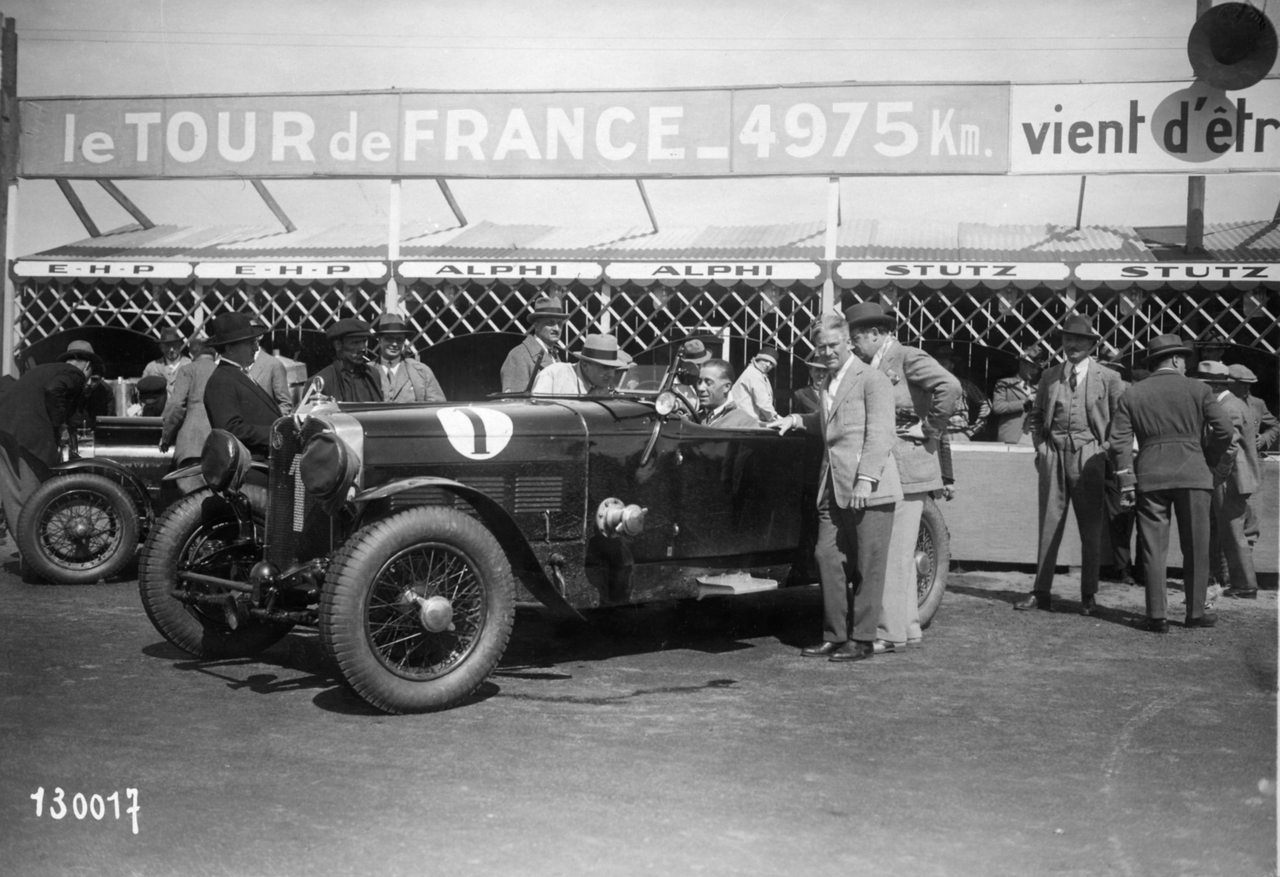
The supercharged history of the turbo at the 24 Hours of Le Mans

The supercharged history of the turbo at the 24 Hours of Le Mans

24 Hrs CENTENARY – PERPETUAL INNOVATION ⎮ All through the background of the 24 Several hours of Le Mans, quite a few innovations introduced for the race have observed their way into day to day automobiles. The quest to enhance motor ability initial appeared in the late 1920s with compressors revolutionary the technology seen in today’s turbo systems.

The 1928 24 Hrs of Le Mans observed the arrival of forced induction in the condition of a compressor, bringing a distinct advancement in obtainable electricity. This addition so launched a difference among traditional, by natural means aspirated engines, and forced induction or supercharged engines.

An engine operates on an air/fuel mixture with a distinct ratio. To deliver more electrical power, the quantity of gasoline admitted have to be increased, and hence the amount of air far too. The most straightforward way to obtain this is by raising the displacement but constraints on the cubic potential of engines created into race rules limit the scope of action. Superchargers overcame this issue by rising the volume of air drawn into the motor by elevating stress from .8 to 1.5 bar. More gas could as a result be fed in while trying to keep the richness of the combination at a affordable amount, as a result boosting electric power.

Having said that, superchargers should be driven in get to compress the air. The variations developed in the 1920s and ’30s utilized the rotary motion of the crankshaft to generate a screw compressor or tooth compressor (with “tooth” rotors compressing the air inside of the supercharger). This gadget was significantly recognizable at the entrance of Bentleys, at the stop of the crankshaft, less than the radiator.

The edge of superchargers was that they could be used with any size of engine. French expert Cozette made use of the know-how with the Tracta’s 998 cm3 engine. It was approximated that supercharging resulted in 30{49e09b23eae7466ccc7574c19ebb3019301c9a11d2999feff81a3526451546a5} better displacement than the simple geometric displacement. Boosted by this technological know-how, Bentley, Mercedes and Stutz all created 200 horsepower by the end of the 1920s.

From the supercharger to the turbo

As superchargers are energetic even at small engine speeds, they are specifically powerful on acceleration. However, as the engine ‘s crankshaft powers the supercharger, it causes a decline of horsepower. They had been consequently abandoned following the 2nd Earth War in favour of much larger engines coupled with fuel injection programs.

By the mid-seventies, on the other hand, Porsche and Renault experienced designed a program to use squander exhaust gasoline electrical power with a smaller turbine to push a smaller blade-kind compressor. The turbocharger 1st appeared at the 24 Several hours of Le Mans in 1974 on a Porsche, just before the 1976-78 period made a sequence of turbocharged facial area-offs among the German maker and Renault.

Generations of engineers have labored to defeat the most important downside of this technologies: the reaction time on accelerating. This is for the reason that a big amount of money of hot gas is necessary to generate the turbine. Even so, on decelerating into a switch, the driver releases the throttle, minimizing the amount of exhaust gases and the force. For that reason, when accelerating out of the change, the turbine is jogging at minimal pace and tiny air is compressed. The turbocharger only becomes energetic yet again when engine velocity has crafted back again up.

Tremendous- and turbocharger technology has assisted limit the cubic capability of engines and for that reason the volume to be integrated into the chassis. The compact measurement of the latest era of engines is very revealing of the progress accomplished in this respect. Whereas they had been originally employed practically exclusively with monumental truck engines, turbo techniques now aspect on 1500 cm3 to 2-litre types – or even scaled-down engines on manufacturing automobiles. In the meantime, the ACO and the FIA keep on to work on the equivalences involving by natural means aspirated and super- or turbocharged engines, with multiplication things ranging from 1.4 to 2 according to technological developments. This coefficient signifies that a 1500 cm3 turbocharged engine with a multiplication factor of 2 corresponds to a 3000 cm3 engine.

Evening time at Le Mans has often held a specific sort of magic. The introduction of the turbo has additional further sparkle with the rear of the cars lit up by pink-warm turbos and exhaust pipes spitting out flames as they decelerate into the bends.

Pics: LE MANS (SARTHE, FRANCE), CIRCUIT DES 24 HEURES, 24 Several hours OF LE MANS – FROM Best TO Base (© ACO archives). A few shots capturing the changeover from the supercharger to the turbocharger: in 1930, the supercharger on the Bentley Blower of Henry Birkin/Jean Chassagne can be seen right here beneath the radiator in 1928, Robert Bloch/Edouard Brisson completed 2nd in the Stutz DV16 Blackhawk: the very best end result obtained by a US company until finally Ford’s maiden get in 1966 in 1976, the Porsche 936 of Jacky Ickx (at the wheel) and Gijs van Lennep became the initially turbocharged automobile to earn the 24 Hrs of Le Mans.