An Integrated Turbo Engine Head Might Be In Dodge or Jeep’s Future

An Integrated Turbo Engine Head Might Be In Dodge or Jeep’s Future

We know it is only a make a difference of time before Dodge drops its next turbocharged Challenger or Charger muscle car now that the Hurricane I-6 is out. Even so, Stellantis engineers are currently looking at means to affix the turbo to the head as motor bays get far more and a lot more cramped. When some brands have absent the route of the “sizzling Vee” and Stellantis on their own have removed the exhaust manifold from their turbocharged engines, the engineers are searching to radically alter how the turbo is attached to the cylinder head.

That radical transform arrives from a U.S. Patent filing previously this thirty day period, in which it describes how to integrate the entire turbocharger housing into the unit’s cylinder head. We are not speaking about just integrating a manifold or even the turbine aspect of the housing, but the comprehensive turbocharger housing which includes the compressor.

The plan is that this casting would have provisions for automatic arms to grab on to and the cartridge would also have guideline pins with matching bores to line it up with the integrated housing just before becoming bolted in. From there, a compressor housing protect would be hooked up to the integrated housing, sealing the compressor facet and forming the aperture wherever the compressed air would scroll by ahead of heading to an intercooler or straight into the consumption. The wastegate is also built-in into the head casting, lowering parts even further by not demanding new warmth shields.

Why Integrate the Turbo Into the Cylinder Head?

There are numerous advantages that the patent lays out on the reasoning for this radical integration of turbo and head. The most evident part is reduction in components, as you get rid of the manifold and forged the turbo straight into the head, you lose the require for some numerous gaskets, added fasteners, and some of the complexity through motor assembly at its plant. This could also make servicing a bit simpler, as properly, as you are going to be ready to switch a complete cartridge without the need of tearing the turbo off the manifold and then consider it even more apart. You would just unbolt the entrance go over, unbolt the cartridge, and change that part of the assembly.

Then there is a thing you’ve most likely not considered of: noise, vibration, and harshness (NVH). Though you will not see points that are bolted alongside one another relocating (provided the assemblies are mounted effectively), everything that is bolted on creates microscopic movements. The more you need to have to fasten alongside one another, the extra individuals actions incorporate up and enhance noises and vibrations inside of certain frequencies. Then there is the integration of the wastegate, which also eliminates noises associated to the resonance produced when it opens and closes, the noises of the airflow from the manifold (that is no for a longer period there) to the turbocharger and wastegate, and some whine from the rotor group wherever some unbalance can occur.

The closing advantage to point out is the expense in each the reduction of sections but also the velocity of installation time, but the patent does not truly mention how integrating the turbo housing to the head does that. We would level out that there would be further charges in the casting, and not just since of it getting a new casting. In purchase to get some of the turbocharger’s interior functions into this integrated sort, use of expenditure casting would be necessary.

How Would You Even Forged This “TurboHead?”

If you happen to be unfamiliar, this is a casting course of action that forms a temporary mould. In this unique situation, a short-term mold would be put among the mould of the principal casting for the internal characteristics of this integrated turbocharger. This internal mildew would then be damaged apart or melted (relying on how the inside mold was produced) in advance of finish machining is executed.

This means that you wouldn’t just need a mold for the most important casting, but an extra mildew plus product to produce the financial investment cast. The excellent news is that expense cast mold content can be reused after breaking it down once more, so there is a reduction of some expenditures right after the first operate, but that does not account for the supplemental labor and time to take away it. The only other way is to use 3D printing, which it seems the patent does leave open to interpretation by declaring, “In purchase to decrease or avoid these kinds of problems in the existing disclosure, the turbocharger housing is integrated (e.g., forged) into an aluminum cylinder head…”

Sad to say, 3d metallic printing hasn’t pretty achieved this amount of generation. When elements by enthusiasts and smaller providers perform for a compact or individual scale of output, the velocity and precision necessary for mass production is continue to a approaches out for this kind of generating elements.

Again, as with any patent, this doesn’t issue to any instant manufacturing of just about anything. It is an concept that has been set to paper and probably into a single part to show an illustration of explained thought. While all Stellantis manufacturers are going to be fully electric powered at some point in the in close proximity to long run, the autos that will continue on to use ICE and require as a lot engine bay home as attainable will see a fantastic gain from this patent coming to production fruition.


The 2023 Jeep Compass Got More Efficient Turbo Power

The 2023 Jeep Compass Got More Efficient Turbo Power

A short while ago, the minimal Jeep Compass has been striving to make a comeback. It got a much more attractive inside and then bought a crucial ability bump to help it be far more aggressive. See what the 2023 Jeep Compass has to supply from rivals. 

How a lot electric power does the 2023 Jeep Compass have? 

2023 Jeep Compass engine upgrade
2023 Jeep Compass | Jeep

The 2023 Jeep Compass has a new turbocharged 2.-liter inline-four motor that cranks out 200 hp and 221 lb-ft of torque. This device is replacing the more mature 2.4-liter four-cylinder motor with 180 hp and 175 lb-ft of torque. 

The supercharged history of the turbo at the 24 Hours of Le Mans

The supercharged history of the turbo at the 24 Hours of Le Mans

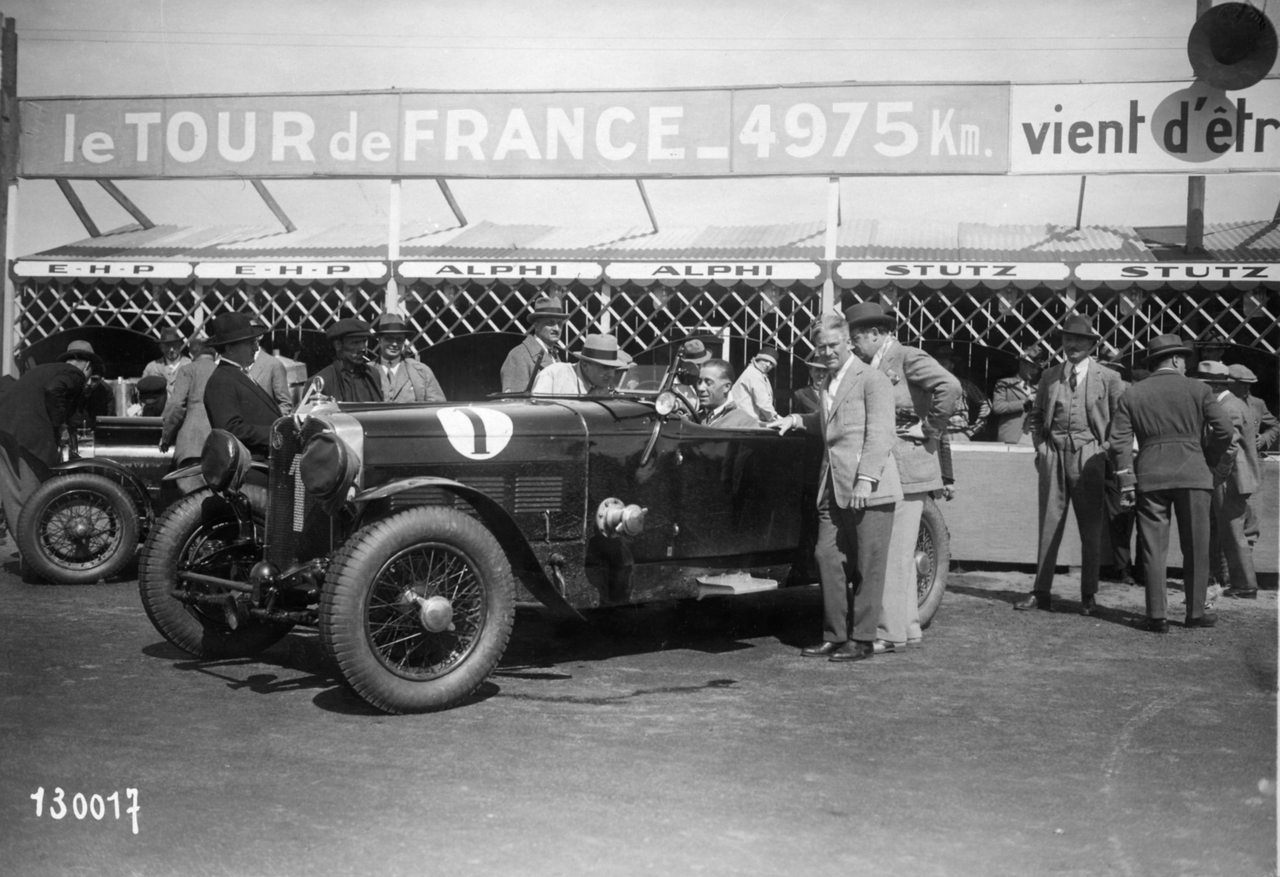
24 Hrs CENTENARY – PERPETUAL INNOVATION ⎮ All through the background of the 24 Several hours of Le Mans, quite a few innovations introduced for the race have observed their way into day to day automobiles. The quest to enhance motor ability initial appeared in the late 1920s with compressors revolutionary the technology seen in today’s turbo systems.

The 1928 24 Hrs of Le Mans observed the arrival of forced induction in the condition of a compressor, bringing a distinct advancement in obtainable electricity. This addition so launched a difference among traditional, by natural means aspirated engines, and forced induction or supercharged engines.

An engine operates on an air/fuel mixture with a distinct ratio. To deliver more electrical power, the quantity of gasoline admitted have to be increased, and hence the amount of air far too. The most straightforward way to obtain this is by raising the displacement but constraints on the cubic potential of engines created into race rules limit the scope of action. Superchargers overcame this issue by rising the volume of air drawn into the motor by elevating stress from .8 to 1.5 bar. More gas could as a result be fed in while trying to keep the richness of the combination at a affordable amount, as a result boosting electric power.

Having said that, superchargers should be driven in get to compress the air. The variations developed in the 1920s and ’30s utilized the rotary motion of the crankshaft to generate a screw compressor or tooth compressor (with “tooth” rotors compressing the air inside of the supercharger). This gadget was significantly recognizable at the entrance of Bentleys, at the stop of the crankshaft, less than the radiator.

The edge of superchargers was that they could be used with any size of engine. French expert Cozette made use of the know-how with the Tracta’s 998 cm3 engine. It was approximated that supercharging resulted in 30{49e09b23eae7466ccc7574c19ebb3019301c9a11d2999feff81a3526451546a5} better displacement than the simple geometric displacement. Boosted by this technological know-how, Bentley, Mercedes and Stutz all created 200 horsepower by the end of the 1920s.

From the supercharger to the turbo

As superchargers are energetic even at small engine speeds, they are specifically powerful on acceleration. However, as the engine ‘s crankshaft powers the supercharger, it causes a decline of horsepower. They had been consequently abandoned following the 2nd Earth War in favour of much larger engines coupled with fuel injection programs.

By the mid-seventies, on the other hand, Porsche and Renault experienced designed a program to use squander exhaust gasoline electrical power with a smaller turbine to push a smaller blade-kind compressor. The turbocharger 1st appeared at the 24 Several hours of Le Mans in 1974 on a Porsche, just before the 1976-78 period made a sequence of turbocharged facial area-offs among the German maker and Renault.

Generations of engineers have labored to defeat the most important downside of this technologies: the reaction time on accelerating. This is for the reason that a big amount of money of hot gas is necessary to generate the turbine. Even so, on decelerating into a switch, the driver releases the throttle, minimizing the amount of exhaust gases and the force. For that reason, when accelerating out of the change, the turbine is jogging at minimal pace and tiny air is compressed. The turbocharger only becomes energetic yet again when engine velocity has crafted back again up.

Tremendous- and turbocharger technology has assisted limit the cubic capability of engines and for that reason the volume to be integrated into the chassis. The compact measurement of the latest era of engines is very revealing of the progress accomplished in this respect. Whereas they had been originally employed practically exclusively with monumental truck engines, turbo techniques now aspect on 1500 cm3 to 2-litre types – or even scaled-down engines on manufacturing automobiles. In the meantime, the ACO and the FIA keep on to work on the equivalences involving by natural means aspirated and super- or turbocharged engines, with multiplication things ranging from 1.4 to 2 according to technological developments. This coefficient signifies that a 1500 cm3 turbocharged engine with a multiplication factor of 2 corresponds to a 3000 cm3 engine.

Evening time at Le Mans has often held a specific sort of magic. The introduction of the turbo has additional further sparkle with the rear of the cars lit up by pink-warm turbos and exhaust pipes spitting out flames as they decelerate into the bends.

Pics: LE MANS (SARTHE, FRANCE), CIRCUIT DES 24 HEURES, 24 Several hours OF LE MANS – FROM Best TO Base (© ACO archives). A few shots capturing the changeover from the supercharger to the turbocharger: in 1930, the supercharger on the Bentley Blower of Henry Birkin/Jean Chassagne can be seen right here beneath the radiator in 1928, Robert Bloch/Edouard Brisson completed 2nd in the Stutz DV16 Blackhawk: the very best end result obtained by a US company until finally Ford’s maiden get in 1966 in 1976, the Porsche 936 of Jacky Ickx (at the wheel) and Gijs van Lennep became the initially turbocharged automobile to earn the 24 Hrs of Le Mans.

Blueprint Engines’ 3.6-liter turbo four gasser makes 340 hp and 500 lb-ft*

Blueprint Engines’ 3.6-liter turbo four gasser makes 340 hp and 500 lb-ft*

Blueprint Engines in Kearney, Nebraska has been creating crate engines for cars for more than 40 years. The Blueprint division called Origin Engines develops “intent-created industrial engines.” The professional motors array from a 3.6-liter four-cylinder gasoline mill for utilizes like energy machines and forestry to a 23.9-liter V12 diesel for serious major duty. Somebody on the Blueprint automotive aspect evidently bought the thought to put a GM LS head on Origin’s 3.6-liter and run the quantities to see what resulted. Blueprint like the idea so a lot that it took the 3.6-liter four to the exact same Efficiency Racing Business clearly show in Indianapolis the place Ford was debuting Megazilla, the company saying it had an motor on the lookout for a industry. The Drive studies that the motor tends to make 340 horsepower and 500 pound-feet of torque “with a modestly sized turbo.” PRI attendees favored the engine so a great deal that Blueprint now believes you can find a current market and has started off a listing of hand-raisers.  

Let us make crystal clear that this very little man continue to only exists on a drawing board, indicating the quantities are also only conceptual. On the other hand, the 3.6-liter is authentic, sporting a head from Ford’s 302 modest block V8. Blueprint informed The Drive that it truly is the heart of a generator marketed by an unnamed key manufacturer. On major of that, the 3.6 is currently obtainable in an EPA-accredited bundle and can operate on organic gasoline and propane in addition to pump gas. We would think that with Blueprint obtaining been all around given that 1981, the engineering group understands how to operate the software program functioning output simulations when switching from the 302 head to the LS head.

Blueprint informed The Drive the quoted torque determine comes on from 1,800 rpm. The obviously aspirated 2.7-liter 4-cylinder in the Toyota Tacoma would make 159 horsepower and 5,900 rpm and 180 pound-toes of torque at 3,800 rpm. The turbocharged 2.7-liter I4 in GM entire-measurement vans — when explained as “pushing the restrictions of the four-cylinder motor” — would make 310 horsepower at 5,600 rpm and 430 pound-feet of torque from 3,000 rpm. Going way back in time, the turbocharged 3.-liter I4 in the 1993 Porsche 968 Turbo S produced 301 hp at 5,400 rpm and 368 lb-ft at 3,000 rpm. 

On Facebook, Blueprint reported people today who stopped by the PRI booth advised the corporation they could see the motor heading into “pontoon boats, midgets, S10’s, early Jeeps, and additional.” With a ton of do the job to be completed to get the motor completely ready for road use — the thought is still operating with the industrial cam — powersports and off-highway rigs might the be very best, least complicated remedy for programs. That has not stopped the comments from currently being full of restomod tips like 1980s Toyota pickups, the Suzuki Samurai, Jaguar XJ, Chevrolet Vega, TJ Wrangler or Mazda Miata, and we have to admit the Opel GT comes up additional normally than we would have anticipated. If you would like Blueprint to finish the job on this a single, feel totally free to send them a be aware at social@blueprintengines.com to sign-up your interest.

Connected video:

1 year with my Tata Altroz Turbo: Performance, fuel efficiency & more

1 year with my Tata Altroz Turbo: Performance, fuel efficiency & more

There’s sufficient space in the cabin for all the passengers and the air conditioning is superb.

BHPian SavoyWalrus not long ago shared this with other enthusiasts.

The iTurbo has completed a year and particularly 10,000 kilometres given that I acquired it in December 2021. The car has served me effectively and I have not encountered any problems therefore significantly.

It has mostly been utilised on the freeway (I perform from household, so no commutes for me) and has been amazing for extended-distance drives (very a number of 8-10+ hour journeys). The suspension operates effectively at higher speeds, the seats are fairly comfortable, enough space for all travellers, fantastic AC, a good deal of cubby holes, huge door pockets, and a spacious glove box (can quickly keep a few 1-litre bottles and the cooling is outstanding), and decent ability to continue to keep it in triple-digit speeds.

The motor, as described by most entrepreneurs and reviewers, is sort of a weak point it could’ve been a outstanding deal with a very little much more torque. There’s enough energy to chug along on the freeway, but you can expect to have to improve gears rather a little bit on the hills. There’s also the really annoying momentary hesitation down small in the rev array.

Gasoline economy has been really consistent — 13-14 in the town and 15-16 on the highway. I run the car or truck with AC just about all the time so I’m happy with these figures.

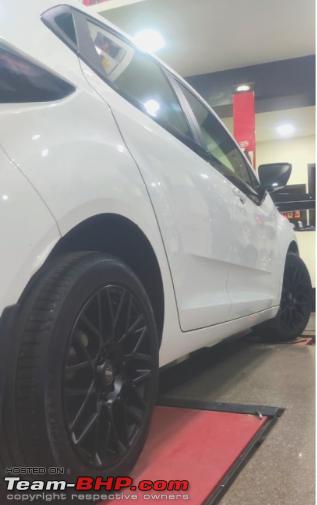
I have not performed any modifications to the car (this is the top-spec XZ+) apart from underbody rust safety, Michelin Primacy 4 tyres, and swapped the stock wheels for Momo Revenge wheels.

There was a minimal bit of rattling from the roof liner at triple-digit speeds which was rectified in the course of services. The gearbox was a tiny clunky in the initially few months of possession, but that was typically sorted out in the course of a single of the providers and I’ve sort of gotten made use of to functioning all-around the clunkiness.

I have a few mods prepared for the motor vehicle which I’ll probably do in the subsequent year or so.

  • Seem deadening to lower the motor sounds in the cabin.
  • Dechrome some bits up front
  • Get sportier pedals these make an troublesome squeaky noise at instances
  • Remap (soon after the warranty expires)
  • A sportier conclusion can (like the ones in the JTP)

I am in two minds about acquiring lowering springs — Bangalore streets are awful and the Altroz is previously reduced than most hatchbacks, but it would give it a nice stance and improve dealing with a very little.

Will in all probability get a downpipe later on down the highway.

Satisfied with the car so far and hope to put on extra kilometres in the upcoming number of months!

Check out out BHPian opinions for far more insights and information.

Monster MK1 VW Golf Packs Two Turbo VR6s, Two Transmissions

Monster MK1 VW Golf Packs Two Turbo VR6s, Two Transmissions

When it comes to tuning a vehicle, far more is generally better. Adding more gas, additional air, and far more turbo raise are the common procedures of receiving extra electric power out of a motor vehicle. But what about including far more engines? Willem Jacobus from South Africa resolved that he required far more electrical power from his 1979 Mk1 Volkswagen Golf but as a substitute of just tuning or turbocharging it like most tuners would, he extra a 2nd engine.

Up front, his Mk1 Golf packs a Volkswagen VR6 engine, which powers the entrance wheels through its typical 5-speed guide transmission. That motor was swapped in a long time ago, changing the authentic 1.1-liter 4-cylinder. And Jacobus was content to live with just the typical VR6 swapped Golfing right up until he saw a different tuner’s videos of a twin-motor Golfing and the idea was born to add one more VR6 motor to its rear. So he purchased a different engine, the motor mounts, and one more gearbox, and custom fit it all into the again of the car.

The second 2.8-liter V6 engine powers the rear wheels but both of those engines are operated by means of the exact same fuel pedal and with the exact transmission. So just one clutch pedal operates each of the car’s clutches and the same equipment linkage operates each transmission’s gears. And whilst it necessitates two diverse starters, they are merely operated with two independent buttons once the vital is in. So in reality, as elaborate as it is, it form of drives like a rather normal all-wheel travel Golfing. Just a single that helps make a ton much more sounds and a whole lot a lot more electric power.

That was not ample for Jacobus, though. Following taking it to the track, he determined it essential even extra energy and fitted the two VR6 engines with turbochargers. After putting the auto on a dyno and testing the horsepower of each and every motor separately, and then together, Jacobus says the twin-engine Golfing will make 536 horsepower (400 kW) and 590 pound-toes (800 Nm) of torque. Even so, the electric power is put down in an odd kind of way. With its digital engine administration, Jacobus tuned the auto to speed up with its entrance engine 1st, permitting the rear engine step by step appear in shortly immediately after. That prevents the rear from obtaining overwhelmed with electric power and sending the vehicle sideways.

Twin-motor cars and trucks are fascinate me simply because it’s the way a youngster would be expecting to make a motor vehicle far more impressive: want much more electricity, insert far more motor. But to essentially engineer such a factor and make it functionality like a normal-ish vehicle is unbelievably complicated and spectacular. Jacobus deserves some serious praise for not only having this car to operate but to do the job perfectly more than enough to push on the highway routinely.

Obtained suggestions? Ship ’em to tips@thedrive.com